YELLOWSTONE
Protected Area
Porto das Capelas-Ponta das Calhetas
Why dive here
With 219+ marine species recorded in the area - including blue sharks, blue whales, dolphins, dwarf minke whales and hammerhead sharks - YELLOWSTONE offers some of Azores's richest wreck diving. Water ranges 16-24°C, warmest August, September, October.
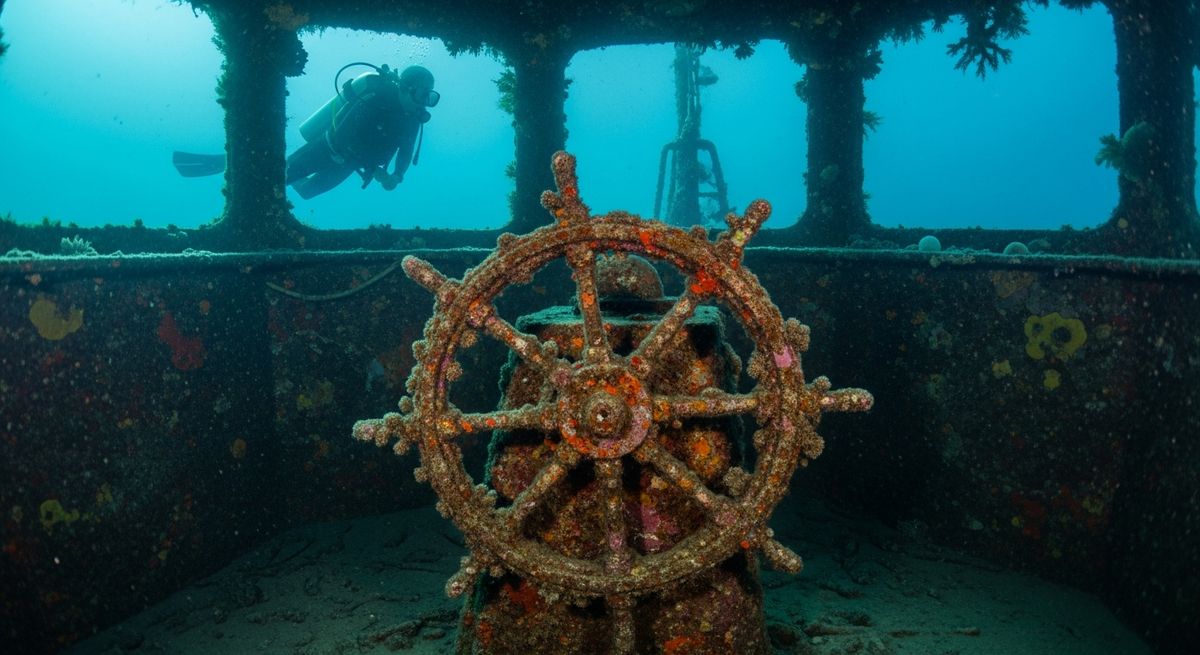
Yellowstone isn't your typical Azores dive. Forget deep volcanic walls for a minute; this is a big, shallow wreck with a real story. Built in 1918, this steamship ended up dragging anchors and being blown ashore in Ponta Delgada Harbour just two years later. You’re diving history, barely five metres down. We love it because it’s so accessible, yet feels like a proper wreck dive. Because it’s so shallow, you get incredible light, playing through the skeletal remains of the hull. You can swim right over the massive metal beams and plating, imagining the ship in its prime. This isn't a penetration dive, but there are plenty of nooks and crannies to peer into. Schools of damselfish shimmer around the rusted structures, and we’ve often spotted large parrotfish grazing on algae that’s taken hold. Our favourite is spotting the octopus tucked away in a shadowed corner, blending perfectly until it decides to move. It’s a completely different vibe to the offshore pinnacles, and a great way to spend an afternoon after a morning of deeper diving, especially if you want a long bottom time to just explore and photograph. Visibility can vary, but generally, inside the harbour, it’s decent enough to appreciate the scale.
Typical YELLOWSTONE Dive Profile
Illustrative profile based on site depth and type. Actual dive profiles vary - always follow your dive computer and training.
Safety Notes
Wreck site - avoid penetration without wreck diving certification. Watch for sharp metal and entanglement hazards.
Nearest Dive Centres to YELLOWSTONE
Dive shops near YELLOWSTONE
Season Challenge diving center
AZZURRO - Dive Academy
Azores Low Dive
Azores Sub Dive Center
Espírito Azul Dive Center
Reviews for YELLOWSTONE
Conditions
Ocean conditions, forecast and tides for YELLOWSTONE
YELLOWSTONE Ocean Conditions
Monthly averages for YELLOWSTONE, sourced from Open-Meteo marine data - nearest station: Open-Meteo marine grid (37.87, -25.92) (22km away)
October Averages
Sea Temperature
22°C
72°F · Range: 20.5–24.2°C
Air Temperature
21°C
70°F
Wind Speed
10 m/s
19.4 knots
Atmospheric Pressure
1018.8 hPa
Based on 4 years of monitoring data · Data sources: Open-Meteo marine data
Plan & book
Ways to dive Azores, from day trips to liveaboards.
Day trips & courses
via GetYourGuideGuided dives, courses and snorkel trips with instant booking.
Find dive trips in AzoresPlaces to stay
via Booking.comHotels and dive resorts near Azores.
Search stays in AzoresDive insurance
Most travel insurance excludes or limits scuba. Check what you need before you go.
Dive insurance explainedPartner links: we may earn a commission if you book, at no extra cost to you. How we make money
Where to Stay near YELLOWSTONE
Prices from Booking.com. We may earn a commission at no extra cost to you.