APOLONIA
Protected Area
Illa de l'Aire
Why dive here
With 148+ marine species recorded in the area - including dolphins, octopuses, sea turtles, sperm whales and cuttlefish - APOLONIA offers some of Balearic Islands's richest wreck diving. Water ranges 15-29°C, warmest July, August, September.
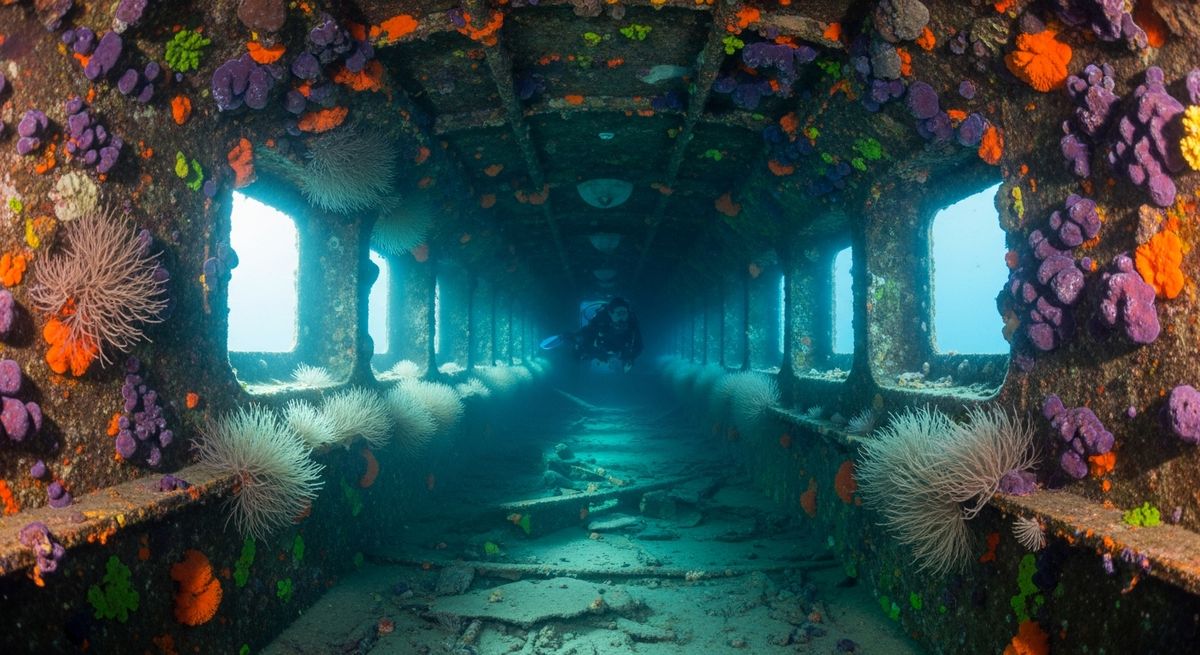
The Apolonia is an old trawler, and for us, it's a solid Balearic Islands wreck dive. It sits upright, pretty much intact, at a manageable 20 meters, which makes it accessible for most certified divers. We love that you can still make out the fishing gear scattered around the deck, a real sense of its working life before it went down. Inside, the wheelhouse is a highlight; it’s open enough to poke your head in and get a feel for the control centre, and we’ve seen some surprisingly large moray eels tucked into the corners there. Around the hull, expect schools of barracuda circling, and the occasional dentex drifting by. It’s not the biggest wreck you'll ever dive, but it's got character, and the way the Mediterranean light filters through the structure is genuinely beautiful. We'd suggest going in the late morning, around 10 or 11 am, for the best light penetration. This site really suits divers who appreciate a wreck with a story, without the need for technical skills.
Typical APOLONIA Dive Profile
Illustrative profile based on site depth and type. Actual dive profiles vary - always follow your dive computer and training.
Safety Notes
Depth of 20m - Advanced Open Water certification recommended.
Wreck site - avoid penetration without wreck diving certification. Watch for sharp metal and entanglement hazards.
Always perform a 3-minute safety stop at 5m before surfacing.
APOLONIA Wreck History
Year Sunk
1982
Vessel Type
cargo ship
Cause
grounding
The Apolonia was a Greek freighter whose final voyage came to an abrupt end in 1982. While navigating the waters of the Balearic Islands near Formentera, the vessel struck the notorious reef of Es Mal Pas. Laden with a heavy cargo of marble, the ship was mortally wounded and quickly sank, settling on the sandy bottom at a depth of around 20 metres. Due to its position, it was classified as a dangerous wreck, a potential hazard to other vessels navigating the same passage.
For divers, this 'danger' translates into a thrilling exploration. The wreck is broken into several large sections, allowing for easy penetration and a fascinating look at the ship's inner workings. The scattered cargo of marble blocks can still be seen around the site, a testament to its final journey. The Apolonia is now thoroughly encrusted with marine life, attracting damselfish, moray eels, and groupers who have made the twisted metal and stone cargo their home. Its moderate depth and the clear Mediterranean waters make it a popular and accessible site for wreck enthusiasts visiting the islands.
Nearest Dive Centres to APOLONIA
Dive shops near APOLONIA
Binibeca Diving Menorca
S'Algar Diving
Blue Dive Menorca
Merak Diving
Diving Menorca
Blue Islands Diving
Reviews for APOLONIA
Conditions
Ocean conditions, forecast and tides for APOLONIA
APOLONIA Ocean Conditions
Monthly averages for APOLONIA, sourced from Open-Meteo marine data + Copernicus Marine (EU) - nearest station: Open-Meteo marine grid (39.52, 2.73) (12km away)
October Averages
Sea Temperature
24°C
75°F · Range: 21.3–25.9°C
Current Speed
26.93 cm/s
Direction: NE (31.3°)
Chlorophyll-a
0.141 mg/m³
Clear water
Salinity
37 PSU
Based on 4 years of monitoring data · Data sources: Open-Meteo marine data + Copernicus Marine (EU)
Plan & book
Ways to dive Balearic Islands, from day trips to liveaboards.
Day trips & courses
via GetYourGuideGuided dives, courses and snorkel trips with instant booking.
Find dive trips in Balearic IslandsPlaces to stay
via Booking.comHotels and dive resorts near Balearic Islands.
Search stays in Balearic IslandsDive insurance
Most travel insurance excludes or limits scuba. Check what you need before you go.
Dive insurance explainedPartner links: we may earn a commission if you book, at no extra cost to you. How we make money
Where to Stay near APOLONIA
Prices from Booking.com. We may earn a commission at no extra cost to you.