CALA D'OR
Protected Area
Illots de Santa Eulària, Rodona i es Canar
Why dive here
With 148+ marine species recorded in the area - including dolphins, octopuses, sea turtles, sperm whales and cuttlefish - CALA D'OR offers some of Balearic Islands's richest wreck diving. Water ranges 15-29°C, warmest July, August, September.
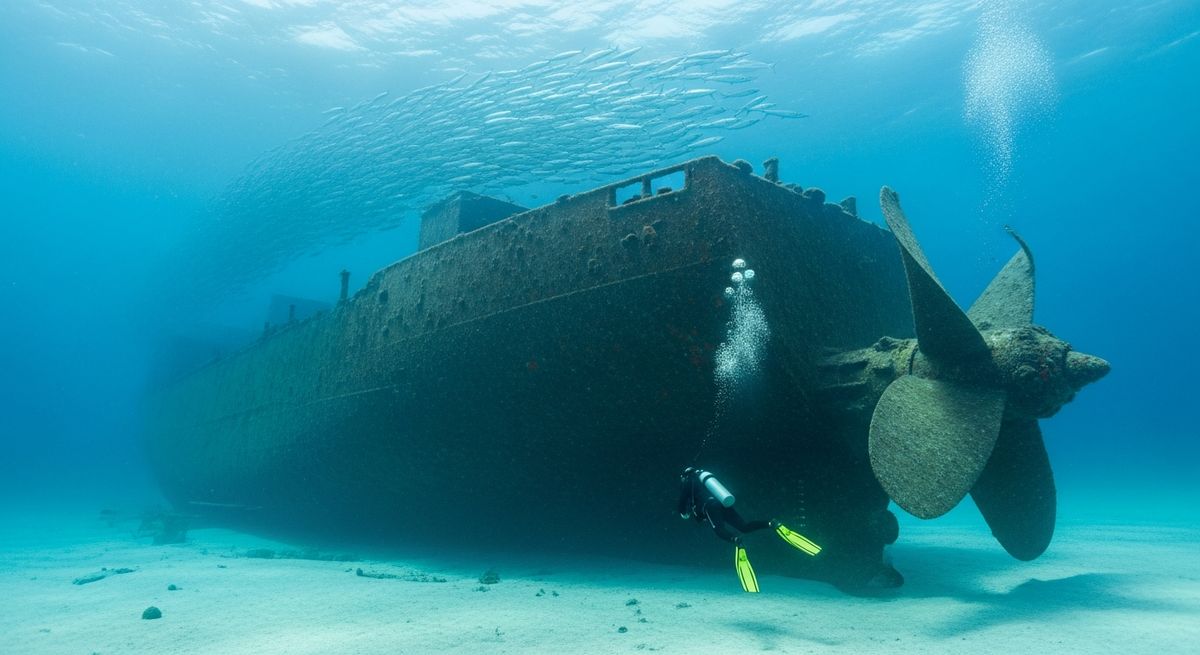
Cala D'Or offers a fascinating dive into history, literally. We’re talking about the wreck of a roll-on/roll-off vessel, sunk back in 1971. It ran aground on a rocky bottom, so while it’s a wreck, it’s also blended with the natural reef over the decades. You’ll find the hull structure draped in sponges, and the shadowy internal spaces are now home to groupers, often lurking in the darker corners. The size, 89 metres long, means there’s plenty to explore; you can swim through the old car decks, imagining the vehicles that once filled them. We particularly love how the light plays through the upper structure, creating these ethereal shafts as you drift past. It’s a comfortable dive for most, not too deep, allowing good bottom time to really soak in the atmosphere. Bring a torch, not just for the darker sections but to really make the colours pop on the encrusting life.
Typical CALA D'OR Dive Profile
Illustrative profile based on site depth and type. Actual dive profiles vary - always follow your dive computer and training.
Safety Notes
Wreck site - avoid penetration without wreck diving certification. Watch for sharp metal and entanglement hazards.
CALA D'OR Wreck History
Year Sunk
1971
Vessel Type
ferry
Cause
grounding
The story of the Cala D'or is a short and tragic one. She was a brand-new roll-on/roll-off vessel, built in 1971 in Palma for the local company Naviera Mallorquina S.A. to serve the busy Balearic island routes. Her career, however, was destined to last only a matter of months. On October 8, 1971, while on a routine passage from Palma to Ibiza, the ferry strayed off course and ran hard aground on a rock.
The impact caused catastrophic damage, and despite attempts to salvage the new vessel, she was declared a total loss and abandoned to the sea. Lying in just one meter of water, the wreck has been relentlessly battered by waves and storms for over half a century. What remains today is a scattered debris field, with the ship's structure flattened and broken across the shallow seabed. For divers and snorkelers, the site offers an incredibly accessible and easy look at a shipwreck, where twisted metal plates and sections of the hull are interspersed with the natural rocky reef, providing a unique habitat for local marine life.
Nearest Dive Centres to CALA D'OR
Dive shops near CALA D'OR
AQUADIVING CENTER IBIZA
Diving Center Cala Pada Ibiza
Scuba Ibiza Diving Center
Anfibios Ibiza
SUBFARICO CB
OrcaSub Ibiza Diving Centre
Reviews for CALA D'OR
Conditions
Ocean conditions, forecast and tides for CALA D'OR
CALA D'OR Ocean Conditions
Monthly averages for CALA D'OR, sourced from Open-Meteo marine data + Copernicus Marine (EU) - nearest station: Open-Meteo marine grid (39.52, 2.73) (12km away)
October Averages
Sea Temperature
24°C
75°F · Range: 21.3–25.9°C
Current Speed
26.93 cm/s
Direction: NE (31.3°)
Chlorophyll-a
0.141 mg/m³
Clear water
Salinity
37 PSU
Based on 4 years of monitoring data · Data sources: Open-Meteo marine data + Copernicus Marine (EU)
Plan & book
Ways to dive Balearic Islands, from day trips to liveaboards.
Day trips & courses
via GetYourGuideGuided dives, courses and snorkel trips with instant booking.
Find dive trips in Balearic IslandsPlaces to stay
via Booking.comHotels and dive resorts near Balearic Islands.
Search stays in Balearic IslandsDive insurance
Most travel insurance excludes or limits scuba. Check what you need before you go.
Dive insurance explainedPartner links: we may earn a commission if you book, at no extra cost to you. How we make money
Where to Stay near CALA D'OR
Prices from Booking.com. We may earn a commission at no extra cost to you.