ANNA PETERS
Why dive here
With 121+ marine species recorded in the area - including dolphins, dwarf minke whales, humpback whales, orcas and seals & sea lions - ANNA PETERS offers some of West Coast (Gothenburg)'s richest wreck diving. Water ranges 3-18°C, warmest July, August, September.
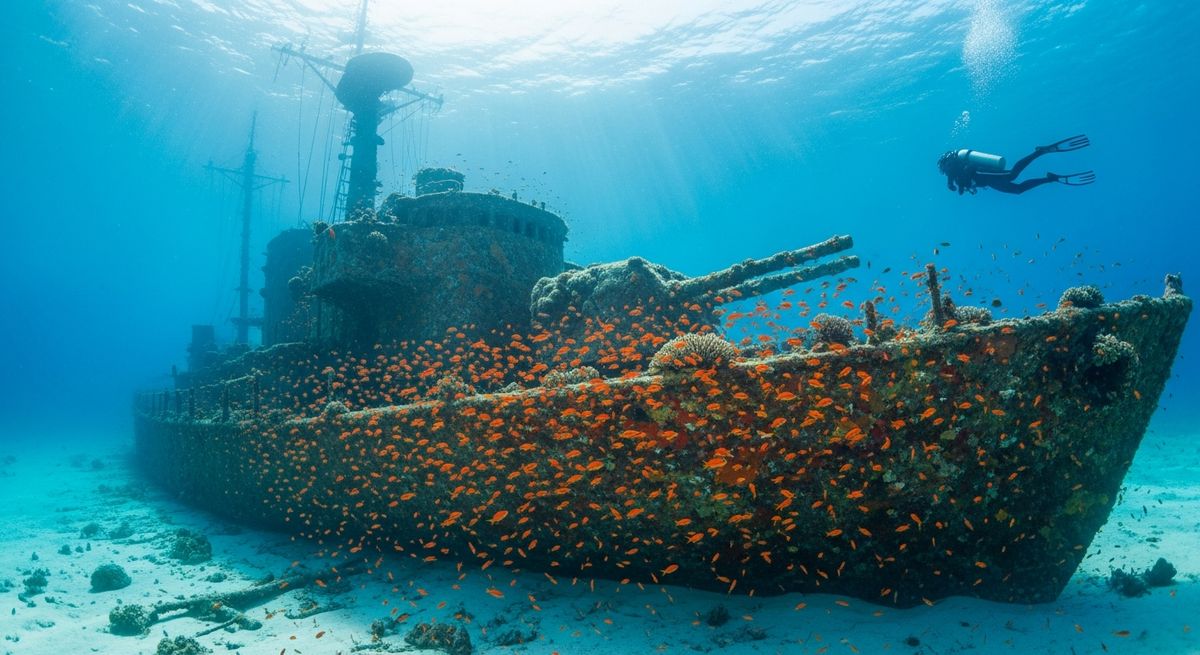
Okay, let's talk about the Anna Peters. When someone says "Swedish diving," your mind probably goes to cold, dark, deep wrecks. And yes, there are plenty. But the Anna Peters? This is something altogether different, and we absolutely love it for that. Picture this: a minelayer, sunk in 1944, lying in just two metres of water. We're talking wading depth here. What you get is an experience closer to snorkelling a wreck than a traditional dive, though a tank helps you properly explore. The light penetration is incredible, painting the wreck in shifting greens and blues, unlike the gloom of deeper sites. Visibility here is usually pretty good, making the details of the hull, the exposed ribs, and scattered debris really pop. Schools of small fish dart in and out of the metalwork, and we often spot crabs scuttling amongst the growth on the deck plates. It's a fantastic spot for photographers looking for something a bit unique, or for newer divers to get a feel for wreck exploration without the usual depth and current concerns. Our top tip? Go on a sunny day. The way the light plays on the wreck is genuinely mesmerising.
Typical ANNA PETERS Dive Profile
Illustrative profile based on site depth and type. Actual dive profiles vary - always follow your dive computer and training.
Safety Notes
Wreck site - avoid penetration without wreck diving certification. Watch for sharp metal and entanglement hazards.
Cold water this month (avg 13°C). Drysuit or thick wetsuit (7mm+) recommended.
ANNA PETERS Wreck History
Year Sunk
1944
Vessel Type
warship
Cause
grounding
The ANNA PETERS was a German minelayer operating during the height of World War II. Like many vessels in the German Kriegsmarine, it was likely a requisitioned civilian ship, pressed into military service to control the strategic waterways of the Skagerrak. Its mission was perilous, involving navigating treacherous, often mined, coastal waters under the constant threat of Allied attack.
On November 11, 1944, during a mission along the west coast of Sweden near Gothenburg, the ANNA PETERS's luck ran out. Whether due to navigational error, bad weather, or mechanical failure, the vessel ran hard aground. The damage was severe, and with the unforgiving sea pounding against its hull, the ship was declared a total loss. Its proximity to the coast meant there was no deep water for it to sink into; its grave would be the very shoreline it failed to navigate.
Resting in a mere 2 meters of water, the ANNA PETERS is less of a scuba dive and more of a site for snorkelers, freedivers, and historical explorers. The wreck has been relentlessly battered by decades of storms and ice, leaving it heavily broken and scattered. What remains are the skeletal fragments of a WWII warship, a tangible and accessible piece of history. Exploring the rusted metal plates and machinery offers a poignant reminder of the conflict that reached even these neutral shores.
Nearest Dive Centres to ANNA PETERS
Dive shops near ANNA PETERS
View all dive centres in West Coast (Gothenburg)Reviews for ANNA PETERS
Conditions
Ocean conditions, forecast and tides for ANNA PETERS
ANNA PETERS Ocean Conditions
Monthly averages for ANNA PETERS, sourced from Open-Meteo marine data - nearest station: Open-Meteo marine grid (57.57, 11.03) (3km away)
October Averages
Sea Temperature
13°C
56°F · Range: 10.6–15.8°C
Air Temperature
10°C
50°F
Wind Speed
6.56 m/s
12.8 knots
Atmospheric Pressure
1010.2 hPa
Based on 4 years of monitoring data · Data sources: Open-Meteo marine data
Plan & book
Ways to dive West Coast (Gothenburg), from day trips to liveaboards.
Day trips & courses
via GetYourGuideGuided dives, courses and snorkel trips with instant booking.
Find dive trips in West Coast (Gothenburg)Places to stay
via Booking.comHotels and dive resorts near West Coast (Gothenburg).
Search stays in West Coast (Gothenburg)Dive insurance
Most travel insurance excludes or limits scuba. Check what you need before you go.
Dive insurance explainedPartner links: we may earn a commission if you book, at no extra cost to you. How we make money
Where to Stay near ANNA PETERS
Prices from Booking.com. We may earn a commission at no extra cost to you.