BELLGROVE
Why dive here
With 121+ marine species recorded in the area - including dolphins, dwarf minke whales, humpback whales, orcas and seals & sea lions - BELLGROVE offers some of West Coast (Gothenburg)'s richest wreck diving. Water ranges 3-18°C, warmest July, August, September.
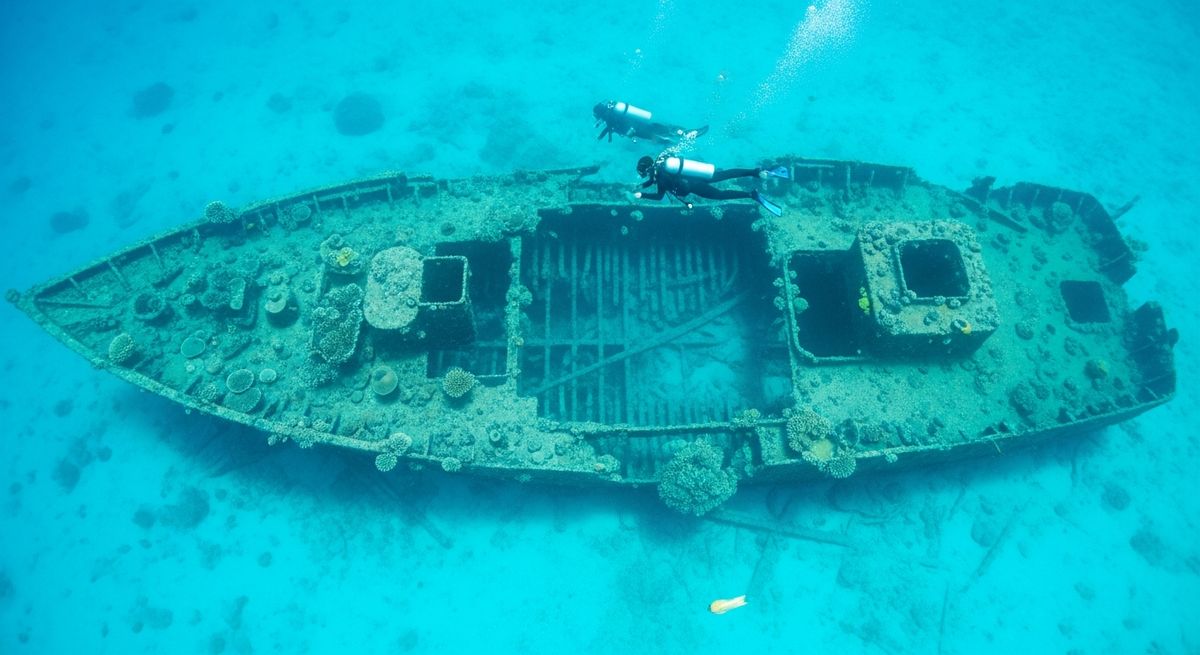
The Bellgrove, a steamer that ran aground in 1917, is one of those wrecks we find ourselves returning to time and again. It’s not just the history, though imagining its final moments in a storm is part of the draw. It’s the way the stern sits upright, a proper ghost ship silhouette rising from the seabed at 20 metres. We love dropping down and seeing the twin boilers, still so prominent, and the steering gear, which often has a decent-sized cod lurking nearby. Exploring the cargo holds feels like stepping back in time; the sheer volume of crockery and bottles scattered within is genuinely surprising. It’s a great site for divers who appreciate the tangible connection to the past, and it’s shallow enough that you get good bottom time for a thorough look around. Look out for the nudibranchs on the encrusted metalwork, and we’ve often seen schools of pollack hanging out around the superstructure. Our favourite part? The bow section, broken away but still impressive, usually has some decent light penetrating, making for some dramatic photographs. Just remember, it can get a bit silty inside the holds, so good buoyancy is key.
Typical BELLGROVE Dive Profile
Illustrative profile based on site depth and type. Actual dive profiles vary - always follow your dive computer and training.
Safety Notes
Depth of 20m - Advanced Open Water certification recommended.
Wreck site - avoid penetration without wreck diving certification. Watch for sharp metal and entanglement hazards.
Cold water this month (avg 13°C). Drysuit or thick wetsuit (7mm+) recommended.
Always perform a 3-minute safety stop at 5m before surfacing.
BELLGROVE Wreck History
Year Sunk
1915
Vessel Type
cargo ship
Cause
collision
Tonnage
2,075 GRT
The SS Bellgrove was a British steamship built in 1891. Her end came on a dark night, December 10, 1915, during the height of World War I. While navigating the waters off the Swedish coast near Gothenburg, she was involved in a head-on collision with another steamer, the SS Blenheim. The impact was catastrophic, and the Bellgrove quickly foundered and sank beneath the waves.
Lying at a manageable depth of 20 metres, the Bellgrove is a popular wreck dive on Sweden's west coast. The wreck is largely intact, sitting upright on the seabed, though time and the sea have taken their toll. Its classification as a 'Dangerous Wreck' often refers to its position in or near shipping lanes, so divers must be cautious of surface traffic. Underwater, the ship's structure offers a fascinating exploration, with open cargo holds and deck features now encrusted with marine life, providing a hauntingly beautiful dive into maritime history.
Reviews for BELLGROVE
Conditions
Ocean conditions, forecast and tides for BELLGROVE
BELLGROVE Ocean Conditions
Monthly averages for BELLGROVE, sourced from Open-Meteo marine data - nearest station: Open-Meteo marine grid (57.57, 11.03) (3km away)
October Averages
Sea Temperature
13°C
56°F · Range: 10.6–15.8°C
Air Temperature
10°C
50°F
Wind Speed
6.56 m/s
12.8 knots
Atmospheric Pressure
1010.2 hPa
Based on 4 years of monitoring data · Data sources: Open-Meteo marine data
Plan & book
Ways to dive West Coast (Gothenburg), from day trips to liveaboards.
Day trips & courses
via GetYourGuideGuided dives, courses and snorkel trips with instant booking.
Find dive trips in West Coast (Gothenburg)Places to stay
via Booking.comHotels and dive resorts near West Coast (Gothenburg).
Search stays in West Coast (Gothenburg)Dive insurance
Most travel insurance excludes or limits scuba. Check what you need before you go.
Dive insurance explainedPartner links: we may earn a commission if you book, at no extra cost to you. How we make money
Where to Stay near BELLGROVE
Prices from Booking.com. We may earn a commission at no extra cost to you.