ACTIVE
Protected Area
Lizard Point
Why dive here
With 176+ marine species recorded in the area - including blue sharks, dolphins, dwarf minke whales, humpback whales and ocean sunfish (mola mola) - ACTIVE offers some of Cornwall & Devon's richest wreck diving. Water ranges 10-18°C, warmest July, August, September.
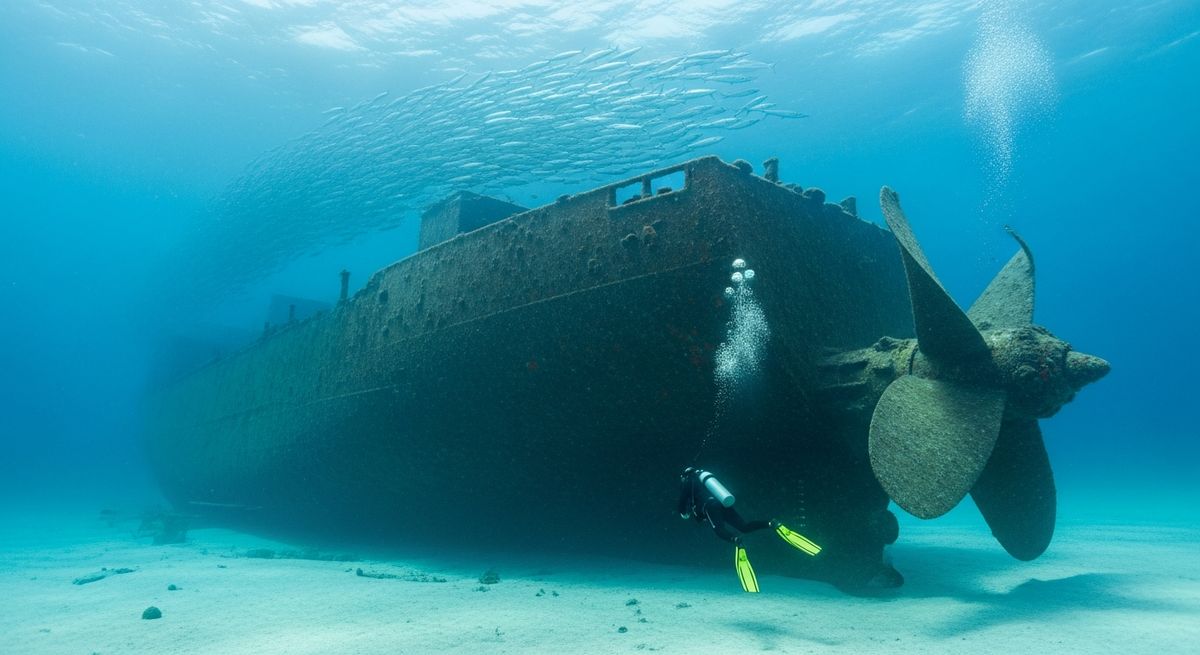
Diving the *Active* is like stepping into a cold water time capsule. This 1874 steamship, resting at 27 metres, is a proper chunk of history off Cornwall. We love how much of her remains, especially the bow section – it’s still very recognisable, and you can really get a sense of her original form. The hull provides plenty of cover for lobster and crab, and we’ve often seen big conger eels tucked into the deeper recesses. She went down in 1881 after hitting Stag Rocks, and the wreck now hosts dense growths of plumose anemones, their white tentacles waving gently in the mild currents. Visibility here can be tricky, often a good 10-15 metres, but when it’s clearer, the scale of the wreck is impressive, spread across a rocky seabed. Our tip: aim for slack water on a neap tide. It makes exploring the interior sections much more comfortable. This is a site for experienced wreck divers who appreciate maritime history and aren’t afraid of a bit of gloom. It's a real slice of the past, wonderfully colonised by local marine life.
Typical ACTIVE Dive Profile
Illustrative profile based on site depth and type. Actual dive profiles vary - always follow your dive computer and training.
Safety Notes
Depth of 27m - Advanced Open Water certification recommended.
Wreck site - avoid penetration without wreck diving certification. Watch for sharp metal and entanglement hazards.
Always perform a 3-minute safety stop at 5m before surfacing.
ACTIVE Wreck History
Year Sunk
1881
Vessel Type
cargo ship
Cause
grounding
The steamship Active, built in 1874 in Newcastle-upon-Tyne, was on a routine voyage from Neath, Wales, to Caen, France, in the winter of 1881. Laden with cargo, she navigated the notoriously treacherous waters off the Cornish coast. On January 4th, her journey came to an abrupt end when she struck the infamous Stag Rocks, a perilous reef well-known and feared by mariners.
Fatally wounded by the impact, the ship managed to pull away from the rocks but soon succumbed to the damage and sank into deeper water. Now lying at a respectable depth of 27 meters, the SS Active is a fantastic dive for Advanced Open Water certified divers. The wreck is well-broken, as is typical for a vessel of its age, with divers able to explore scattered boilers, engine components, and sections of the hull that are now encrusted with a vibrant tapestry of UK marine life.
Nearest Dive Centres to ACTIVE
Dive shops near ACTIVE
Porthkerris Divers
DiveUK
Seaways Diving
Karleyth Diving Ltd.
Wavecrest Scuba
Viewpoint Diving Centre
Reviews for ACTIVE
Conditions
Ocean conditions, forecast and tides for ACTIVE
ACTIVE Ocean Conditions
Monthly averages for ACTIVE, sourced from Open-Meteo marine data - nearest station: Open-Meteo marine grid (50.44, -2.73) (3km away)
October Averages
Sea Temperature
17°C
62°F · Range: 15.1–17.5°C
Air Temperature
13°C
56°F
Wind Speed
8.14 m/s
15.8 knots
Atmospheric Pressure
1011 hPa
Based on 4 years of monitoring data · Data sources: Open-Meteo marine data
Plan & book
Ways to dive Cornwall & Devon, from day trips to liveaboards.
Day trips & courses
via GetYourGuideGuided dives, courses and snorkel trips with instant booking.
Find dive trips in Cornwall & DevonPlaces to stay
via Booking.comHotels and dive resorts near Cornwall & Devon.
Search stays in Cornwall & DevonDive insurance
Most travel insurance excludes or limits scuba. Check what you need before you go.
Dive insurance explainedPartner links: we may earn a commission if you book, at no extra cost to you. How we make money
Where to Stay near ACTIVE
Prices from Booking.com. We may earn a commission at no extra cost to you.