ADUR II
Protected Area
Marsland to Clovelly Coast
Why dive here
With 176+ marine species recorded in the area - including blue sharks, dolphins, dwarf minke whales, humpback whales and ocean sunfish (mola mola) - ADUR II offers some of Cornwall & Devon's richest wreck diving. Water ranges 10-18°C, warmest July, August, September.
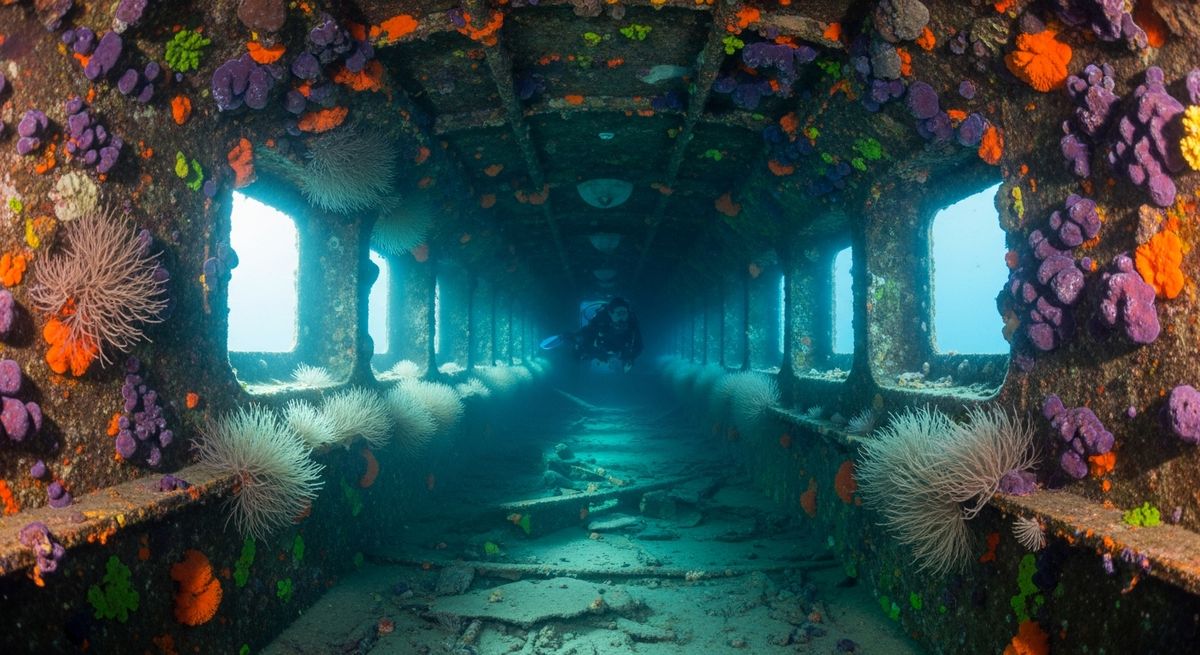
The ADUR II, just off the coast, is one of our favourite shallow wrecks in the area. Sunk in 1946 after getting overwhelmed by rough seas on a journey from London to Liverpool, this old tug lies in a respectable 11 metres. It's a great little explore for those looking to get their wreck fix without deep deco stops. What we love about the ADUR II is how accessible it is. You can spend a good chunk of your bottom time really getting to know the structure, poking around the engine room, and imagining its working life. The bow points north, and the stern is a bit more broken up, but you can still make out the general shape of the vessel. Current isn't usually a problem here, but we always check the tides – slack water is always best for visibility, which can average around 10-15 metres on a good day. Shoals of bib and pouting hang in the shadows, and we’ve often spotted conger eels tucked into crevices. It’s not a big wreck, but it's full of character and a good one to visit more than once.
Typical ADUR II Dive Profile
Illustrative profile based on site depth and type. Actual dive profiles vary - always follow your dive computer and training.
Safety Notes
Wreck site - avoid penetration without wreck diving certification. Watch for sharp metal and entanglement hazards.
Always perform a 3-minute safety stop at 5m before surfacing.
ADUR II Wreck History
Year Sunk
1946
Vessel Type
tugboat
Cause
storm
The ADUR II was a classic workhorse of the sea. Built in 1912 in South Shields, this oil-powered, single-shaft tugboat provided more than three decades of reliable service, guiding larger ships and making coastal passages. Her final voyage was a routine trip from London to Liverpool, a journey she would never complete.
On August 10, 1946, while navigating the often-unforgiving waters off the coast of Cornwall, the ADUR II was caught in rough seas. The small but powerful tug was overwhelmed by the immense force of the waves and foundered, sinking beneath the surface. While the vessel was lost, her crew was fortunately rescued, a small mercy in the face of the sea's power.
Today, the ADUR II rests at an accessible depth of 11 meters. It is a fascinating dive, though its 'Dangerous' classification warrants caution due to sharp metal and potential hazards. The wreck has transformed into a thriving artificial reef, providing a home for conger eels, crabs, lobsters, and schools of fish. Exploring the remains of this hardworking tug offers a poignant glimpse into the UK's rich maritime heritage.
Nearest Dive Centres to ADUR II
Dive shops near ADUR II
View all dive centres in Cornwall & DevonReviews for ADUR II
Conditions
Ocean conditions, forecast and tides for ADUR II
ADUR II Ocean Conditions
Monthly averages for ADUR II, sourced from Open-Meteo marine data - nearest station: Open-Meteo marine grid (50.44, -2.73) (3km away)
October Averages
Sea Temperature
17°C
62°F · Range: 15.1–17.5°C
Air Temperature
13°C
56°F
Wind Speed
8.14 m/s
15.8 knots
Atmospheric Pressure
1011 hPa
Based on 4 years of monitoring data · Data sources: Open-Meteo marine data
Plan & book
Ways to dive Cornwall & Devon, from day trips to liveaboards.
Day trips & courses
via GetYourGuideGuided dives, courses and snorkel trips with instant booking.
Find dive trips in Cornwall & DevonPlaces to stay
via Booking.comHotels and dive resorts near Cornwall & Devon.
Search stays in Cornwall & DevonDive insurance
Most travel insurance excludes or limits scuba. Check what you need before you go.
Dive insurance explainedPartner links: we may earn a commission if you book, at no extra cost to you. How we make money
Where to Stay near ADUR II
Prices from Booking.com. We may earn a commission at no extra cost to you.