ACADIAN
Protected Area
Kelsey Head
Why dive here
With 176+ marine species recorded in the area - including blue sharks, dolphins, dwarf minke whales, humpback whales and ocean sunfish (mola mola) - ACADIAN offers some of Cornwall & Devon's richest wreck diving. Water ranges 10-18°C, warmest July, August, September.
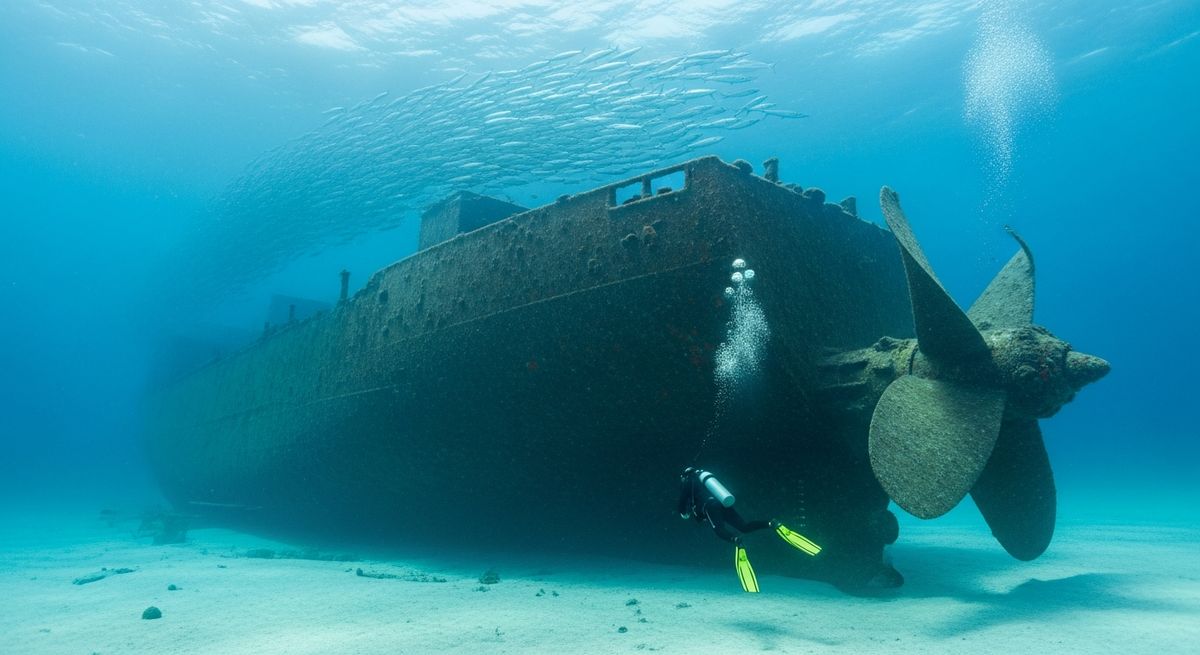
The Acadian is one of those wrecks that just keeps giving, despite being down for over a century. Lying at 38 metres, she’s a deep dive and often comes with a bit of a current, so we'd only recommend it for experienced divers comfortable in those conditions. But the rewards are worth it. We particularly love dropping onto her bow, where the anchor chain still stretches out, leading you down the length of the ship. Her two boilers are a real focal point, huge cylinders encrusted with dead man's fingers and anemones. You’ll often find conger eels peering out from gaps in the plates. The triple expansion engine is also impressive, a jumble of metal now home to lobsters and crabs. Visibility here can swing dramatically, from 20 metres on a good day to a murky five, so picking your weather window is key. Even in poorer vis, the sheer scale of the Acadian makes for an atmospheric dive, her history palpable as you drift over her decks.
Typical ACADIAN Dive Profile
Illustrative profile based on site depth and type. Actual dive profiles vary - always follow your dive computer and training.
Safety Notes
Deep dive (38m) - monitor air consumption closely. Advanced certification recommended.
Wreck site - avoid penetration without wreck diving certification. Watch for sharp metal and entanglement hazards.
Always perform a 3-minute safety stop at 5m before surfacing.
ACADIAN Wreck History
Year Sunk
1918
Vessel Type
cargo ship
Cause
torpedo
The SS Acadian was a Canadian steamship built in 1908 by the Clyde Engineering Company. At 75.7 meters long, this vessel was operated by the Canada Steamship Lines, powered by a triple-expansion engine, and served as a vital link in transatlantic trade. Her career, however, was cut short by the perils of the First World War, which saw merchant vessels become prime targets in the unforgiving waters of the Atlantic.
On September 16, 1918, just weeks before the end of the war, the Acadian was attacked by a German U-boat off the coast of Cornwall. The submarine's torpedo found its mark, sinking the vessel and tragically claiming the lives of 25 crew members. The sinking was a stark reminder of the immense toll the war took on civilian and merchant shipping.
Now lying at a depth of 38 meters, the SS Acadian is a poignant and popular wreck dive for experienced enthusiasts. The wreck serves as a memorial to those who were lost and offers a fascinating glimpse into the past. Divers can explore the ship's two boilers and the remains of its superstructure, which have become an artificial reef, colonized by a variety of marine life typical of the English Channel.
Nearest Dive Centres to ACADIAN
Dive shops near ACADIAN
Dive Newquay
Wavecrest Scuba
Seaways Diving
Karleyth Diving Ltd.
Harlyn Dive School
DiveUK
Reviews for ACADIAN
Conditions
Ocean conditions, forecast and tides for ACADIAN
ACADIAN Ocean Conditions
Monthly averages for ACADIAN, sourced from Open-Meteo marine data - nearest station: Open-Meteo marine grid (50.44, -2.73) (3km away)
October Averages
Sea Temperature
17°C
62°F · Range: 15.1–17.5°C
Air Temperature
13°C
56°F
Wind Speed
8.14 m/s
15.8 knots
Atmospheric Pressure
1011 hPa
Based on 4 years of monitoring data · Data sources: Open-Meteo marine data
Plan & book
Ways to dive Cornwall & Devon, from day trips to liveaboards.
Day trips & courses
via GetYourGuideGuided dives, courses and snorkel trips with instant booking.
Find dive trips in Cornwall & DevonPlaces to stay
via Booking.comHotels and dive resorts near Cornwall & Devon.
Search stays in Cornwall & DevonDive insurance
Most travel insurance excludes or limits scuba. Check what you need before you go.
Dive insurance explainedPartner links: we may earn a commission if you book, at no extra cost to you. How we make money
Where to Stay near ACADIAN
Prices from Booking.com. We may earn a commission at no extra cost to you.