ANNIE MC FADYEN
Protected Area
Kyles of Bute
Why dive here
With 112+ marine species recorded in the area - including blue whales, dolphins, dwarf minke whales, humpback whales and ocean sunfish (mola mola) - ANNIE MC FADYEN offers some of Scottish West Coast's richest wreck diving.
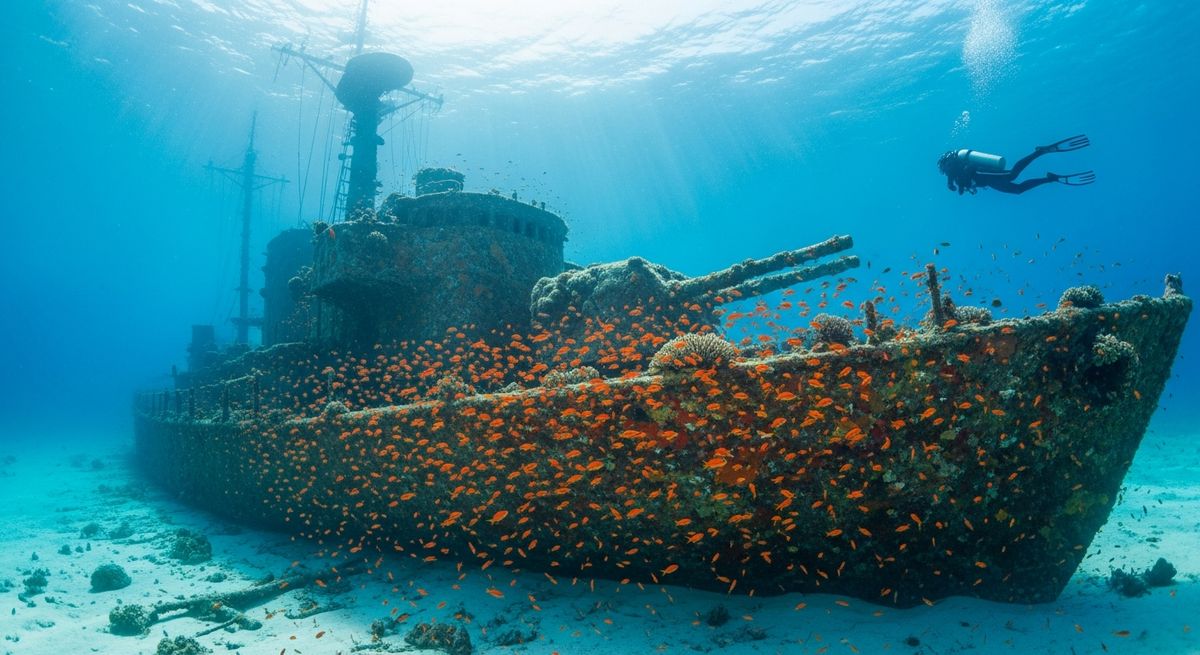
The Annie Mc Fadyen, sitting in a mere seven metres, is a fantastic introduction to wreck diving off the Scottish West Coast. We love it because it’s so accessible, a real shallow-water treat. The fishing trawler went down in 1954, but time and tide have been kind to her, leaving a jumble of twisted metal and wooden decking that’s now home to a surprising amount of life. You’ll find butterfish darting through the broken sections, their iridescent scales catching the light, and we’ve often spotted colourful nudibranchs grazing on the encrusting sponges that soften the wreck's edges. The light penetration here is excellent, casting shifting patterns through the kelp that sways above the hull. It’s a site that suits divers looking for an easy, relaxing dive with plenty to explore, even if it’s not a deep-water behemoth. Our favourite spot is right near the stern, where a small, relatively intact section often shelters a grumpy crab or two. Visibility can be hit or miss, as with many Scottish sites, but on a good day, the Annie Mc Fadyen really shines.
Typical ANNIE MC FADYEN Dive Profile
Illustrative profile based on site depth and type. Actual dive profiles vary - always follow your dive computer and training.
Safety Notes
Wreck site - avoid penetration without wreck diving certification. Watch for sharp metal and entanglement hazards.
ANNIE MC FADYEN Wreck History
Year Sunk
1941
Vessel Type
cargo ship
Cause
grounding
Tonnage
63 GRT
The Annie McFadyen was a classic Scottish "puffer," a small, robust steam-powered cargo boat essential for trade and transport along the rugged west coast. Her working life came to an abrupt end on November 20, 1941, when she struck a rock and foundered near the Rubha nan Gall lighthouse, just off the coast of Tobermory on the Isle of Mull. Lying in just 7 meters of water, her shallow position makes her a navigational hazard, earning her the official classification of a "dangerous wreck." For divers, however, she is a wonderfully accessible piece of local maritime history. The wreck is heavily broken up, but her boiler stands proud of the seabed, providing a focal point for the dive and a home for a variety of marine life. This is a fantastic and relaxed dive for all certification levels, perfect as a second dive of the day or for those new to wreck exploration.
Nearest Dive Centres to ANNIE MC FADYEN
Dive shops near ANNIE MC FADYEN
Field Studies Council Millport
C&C MARINE SERVICES
Fyne Diving
Just Dive In CIC
Reviews for ANNIE MC FADYEN
Conditions
Ocean conditions, forecast and tides for ANNIE MC FADYEN
Plan & book
Ways to dive Scottish West Coast, from day trips to liveaboards.
Day trips & courses
via GetYourGuideGuided dives, courses and snorkel trips with instant booking.
Find dive trips in Scottish West CoastPlaces to stay
via Booking.comHotels and dive resorts near Scottish West Coast.
Search stays in Scottish West CoastDive insurance
Most travel insurance excludes or limits scuba. Check what you need before you go.
Dive insurance explainedPartner links: we may earn a commission if you book, at no extra cost to you. How we make money
Where to Stay near ANNIE MC FADYEN
Prices from Booking.com. We may earn a commission at no extra cost to you.