ANWOTH
Protected Area
Sanda Islands
Why dive here
With 112+ marine species recorded in the area - including blue whales, dolphins, dwarf minke whales, humpback whales and ocean sunfish (mola mola) - ANWOTH offers some of Scottish West Coast's richest wreck diving.
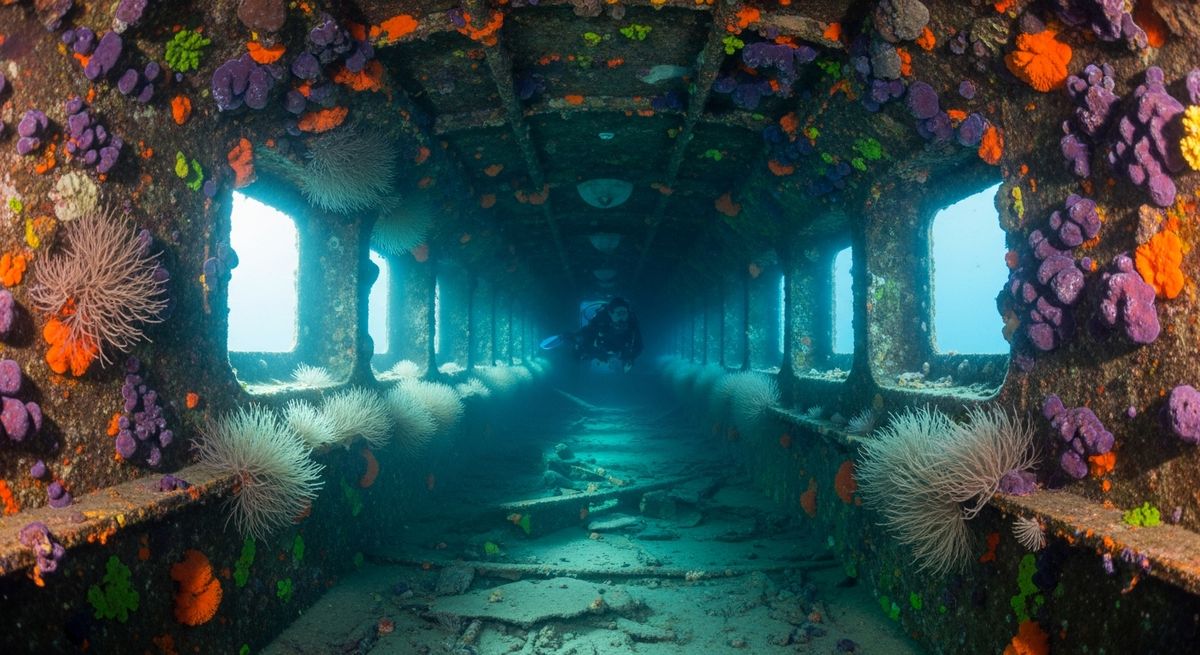
Anwoth isn't just another trawler; she’s a proper piece of history, grounded right off Sanda near Sheep Island. You dive her right where she came to rest, a grand old girl built in 1915, now well and truly settled into the seabed. We love how accessible she is, mostly broken up but with enough structure remaining to give you a real sense of her past. The bow and stern are the most intact sections, offering great swim-throughs if the visibility is playing ball. You'll often find conger eels peering out from gaps, and the metalwork is blanketed in plumose anemones, swaying gently with the surge. Our favourite part is exploring the engine room remains – it’s a tangible link to the crew who once worked her. This site is fantastic for divers who appreciate a wreck with a story, especially those who enjoy close-up inspection of marine life colonising historical remains. Just be mindful of the currents around Sanda; slack water is always your friend here.
Safety Notes
Wreck site - avoid penetration without wreck diving certification. Watch for sharp metal and entanglement hazards.
ANWOTH Wreck History
Year Sunk
1935
Vessel Type
fishing vessel
Cause
grounding
Tonnage
215 GRT
The Anwoth was a steam trawler built in Leith in 1915, spending two decades working the fishing grounds of the North Sea. Her career came to an abrupt end on a stormy day in January 1935. While battling rough seas off the Scottish west coast, the vessel ran hard aground near Sheep Island, Sanda, at the mouth of the Firth of Clyde. A dramatic rescue ensued, and all six crew members were safely brought ashore. The Anwoth, however, was battered by the relentless waves and was soon declared a total loss.
Lying at a depth of 0 metres, the remains of the Anwoth are scattered and broken in the intertidal zone. This is not a dive site in the traditional sense, but rather a piece of local maritime history visible to kayakers, snorkelers, and beachcombers at low tide. The wreckage serves as a stark reminder of the power of the sea and the dangers faced by fishermen in these unforgiving waters.
Reviews for ANWOTH
Conditions
Ocean conditions, forecast and tides for ANWOTH
Plan & book
Ways to dive Scottish West Coast, from day trips to liveaboards.
Day trips & courses
via GetYourGuideGuided dives, courses and snorkel trips with instant booking.
Find dive trips in Scottish West CoastPlaces to stay
via Booking.comHotels and dive resorts near Scottish West Coast.
Search stays in Scottish West CoastDive insurance
Most travel insurance excludes or limits scuba. Check what you need before you go.
Dive insurance explainedPartner links: we may earn a commission if you book, at no extra cost to you. How we make money
Where to Stay near ANWOTH
Prices from Booking.com. We may earn a commission at no extra cost to you.