ANNIE MELLING
Protected Area
Sea of the Hebrides
Why dive here
With 112+ marine species recorded in the area - including blue whales, dolphins, dwarf minke whales, humpback whales and ocean sunfish (mola mola) - ANNIE MELLING offers some of Scottish West Coast's richest wreck diving.
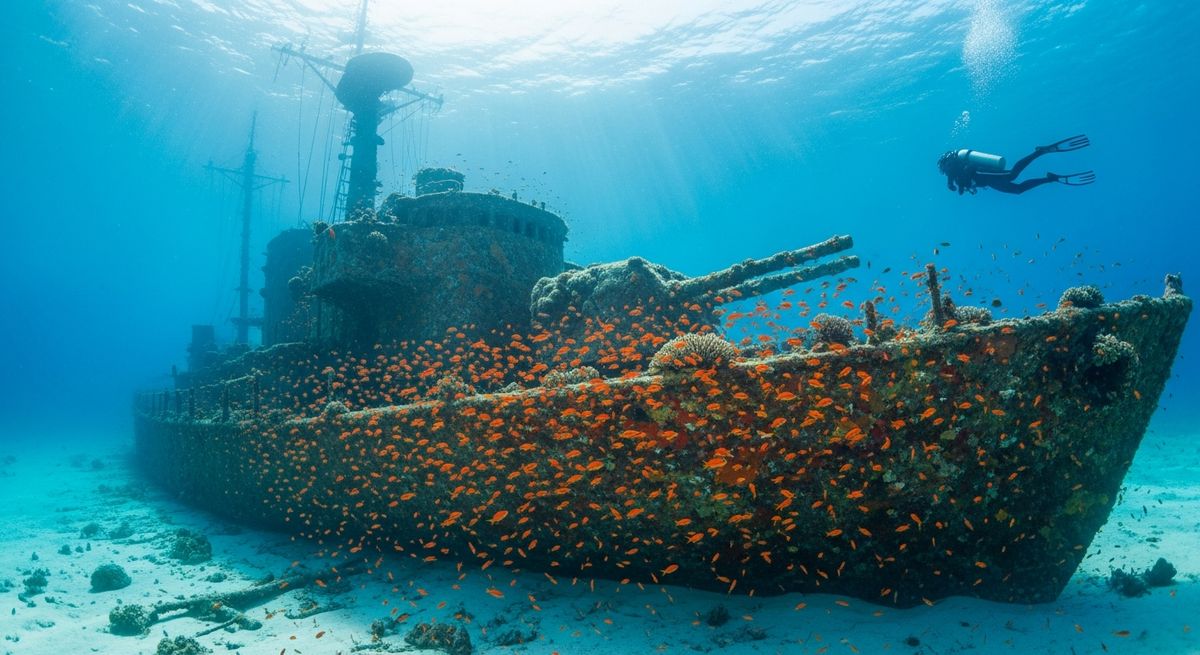
The Annie Melling, a trawler resting at 54m, is a fantastic dive for those who appreciate a proper historical wreck. She’s relatively intact, sitting upright, and her lines are still discernible, a real treat compared to some of the smashed-up heaps we often find. We love nosing around the wheelhouse area, which offers some nice penetration for experienced wreckies, and the bow is particularly photogenic. The site is exposed, so we always check the forecasts; a calm day makes all the difference here. Visibility can be 10m or more on a good day, but when it drops, the wreck still has enough character to keep things interesting. Keep an eye out for the resident conger eels peeking from beneath plates and the colourful jewel anemones that carpet sections of the superstructure. This is a cold water wreck, so drysuits are essential, and the depth means it’s definitely one for technical divers comfortable with deco. Our favourite time to dive her is late summer, when the light penetrates a little further, giving the wreck an almost ethereal glow.
Typical ANNIE MELLING Dive Profile
Illustrative profile based on site depth and type. Actual dive profiles vary - always follow your dive computer and training.
Safety Notes
Maximum depth 54m exceeds recreational limits (40m). Technical diving certification and equipment required.
Wreck site - avoid penetration without wreck diving certification. Watch for sharp metal and entanglement hazards.
Always perform a 3-minute safety stop at 5m before surfacing.
ANNIE MELLING Wreck History
Year Sunk
1922
Vessel Type
fishing vessel
Cause
unknown
Tonnage
203 GRT
Built in 1906, the Annie Melling was a typical steam trawler of her era, a workhorse of the Fleetwood fishing fleet. Originally named the Betty Johnston, she spent her career battling the harsh conditions of the North Atlantic to haul in her catch. Her service came to an end on August 11, 1922, when she foundered and sank in the deep waters of the North Channel, the strait separating Scotland and Northern Ireland.
Resting at a depth of 54 meters, the Annie Melling is a dive reserved for experienced, certified technical divers. The depth and cold, dark water demand careful planning, specialized equipment, and trimix breathing gases. For those qualified to make the descent, the reward is a visit to a well-preserved piece of early 20th-century history. Wrecks at this depth are often protected from the worst storm damage, and divers can expect to find a largely intact vessel. Exploring the deck, the fishing winches, and the prominent triple-expansion engine offers a thrilling glimpse into the world of steam-era trawling.
Reviews for ANNIE MELLING
Conditions
Ocean conditions, forecast and tides for ANNIE MELLING
Plan & book
Ways to dive Scottish West Coast, from day trips to liveaboards.
Day trips & courses
via GetYourGuideGuided dives, courses and snorkel trips with instant booking.
Find dive trips in Scottish West CoastPlaces to stay
via Booking.comHotels and dive resorts near Scottish West Coast.
Search stays in Scottish West CoastDive insurance
Most travel insurance excludes or limits scuba. Check what you need before you go.
Dive insurance explainedPartner links: we may earn a commission if you book, at no extra cost to you. How we make money
Where to Stay near ANNIE MELLING
Prices from Booking.com. We may earn a commission at no extra cost to you.