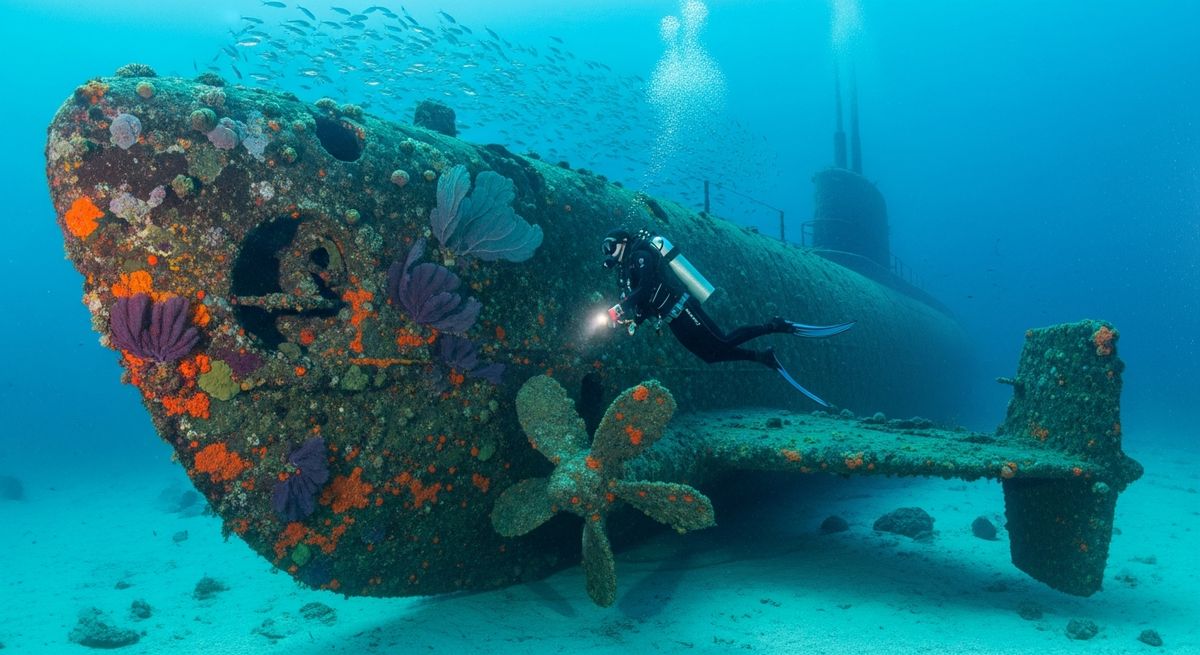
Arctic Trader shipwreck
Why dive here
With 77+ marine species recorded in the area - including blue sharks, dwarf minke whales, humpback whales, ocean sunfish (mola mola) and jellyfish lake - Arctic Trader shipwreck offers some of Nova Scotia's richest wreck diving. Water ranges 1-17°C, warmest August, September, October.
The Arctic Trader is a proper cold-water wreck, perfect if you’re into exploration over pretty colours. We love how much of the vessel is still there to poke around. You can trace the deck, drop into the holds, and even get a peek into the engine room, though things are silting up more each year. It’s got a real story to tell, even if you’re just imagining the crew on deck when she went down. This isn’t a warm-water drift over coral. Expect a chill, sometimes limited visibility, and the kind of rugged beauty only the Atlantic can deliver. We’ve found wolf eels tucked into cargo holds and schools of cod hovering in the superstructure. The best diving here is often on a calm morning, before any wind picks up and stirs the sediment. Our favourite part is navigating the internal spaces, keeping an eye out for those big Atlantic lobsters that call the wreck home. It's a dive that rewards careful buoyancy and a sense of adventure.
Typical Arctic Trader shipwreck Dive Profile
Illustrative profile based on site depth and type. Actual dive profiles vary - always follow your dive computer and training.
Safety Notes
Wreck site - avoid penetration without wreck diving certification. Watch for sharp metal and entanglement hazards.
Cold water this month (avg 15°C). Drysuit or thick wetsuit (7mm+) recommended.
Arctic Trader shipwreck Wreck History
Year Sunk
1996
Vessel Type
fishing vessel
Cause
scuttled
Tonnage
693 GRT
Unlike many wrecks that are born from tragedy, the MV Arctic Trader was given a new purpose through a carefully planned retirement. Originally an Icelandic side-trawler, this 67-meter vessel spent its working life battling the harsh conditions of the North Atlantic. After its service career ended, it was acquired by the Artificial Reef Society of Nova Scotia, which saw its potential as a future underwater haven for marine life and a premier destination for divers.
On June 23, 1996, the Arctic Trader was intentionally and ceremoniously sunk in St. Margarets Bay, near Halifax. The scuttling was a community event, creating a lasting legacy for both the marine ecosystem and the local diving community. The ship was prepared to be environmentally safe and diver-friendly before being sent on its final, controlled descent to the seabed.
The wreck now sits perfectly upright in approximately 30 meters of water, making it an accessible and exciting dive. Its large, open structures are easy to navigate and offer opportunities for safe penetration for trained divers. Over the years, the steel hull has transformed into a vibrant reef, colonized by anemones, sponges, and visited by schools of fish and curious lobsters. The Arctic Trader serves as a fantastic example of a successful artificial reef project and is a must-do dive for anyone visiting Nova Scotia.
Reviews for Arctic Trader shipwreck
Conditions
Ocean conditions, forecast and tides for Arctic Trader shipwreck
Arctic Trader shipwreck Ocean Conditions
Monthly averages for Arctic Trader shipwreck, sourced from Open-Meteo marine data + Copernicus Marine (EU) - nearest station: Open-Meteo marine grid (44.6, -63.5) (0km away)
October Averages
Sea Temperature
15°C
58°F · Range: 8.7–17.2°C
Current Speed
1 cm/s
Direction: N (0°)
Salinity
30.56 PSU
Based on 4 years of monitoring data · Data sources: Open-Meteo marine data + Copernicus Marine (EU)
Plan & book
Ways to dive Nova Scotia, from day trips to liveaboards.
Day trips & courses
via GetYourGuideGuided dives, courses and snorkel trips with instant booking.
Find dive trips in Nova ScotiaPlaces to stay
via Booking.comHotels and dive resorts near Nova Scotia.
Search stays in Nova ScotiaDive insurance
Most travel insurance excludes or limits scuba. Check what you need before you go.
Dive insurance explainedPartner links: we may earn a commission if you book, at no extra cost to you. How we make money
Where to Stay near Arctic Trader shipwreck
Prices from Booking.com. We may earn a commission at no extra cost to you.