BALEINE
Protected Area
Cap La Ronde Nature Reserve
Why dive here
With 77+ marine species recorded in the area - including blue sharks, dwarf minke whales, humpback whales, ocean sunfish (mola mola) and jellyfish lake - BALEINE offers some of Nova Scotia's richest wreck diving. Water ranges 1-17°C, warmest August, September, October.
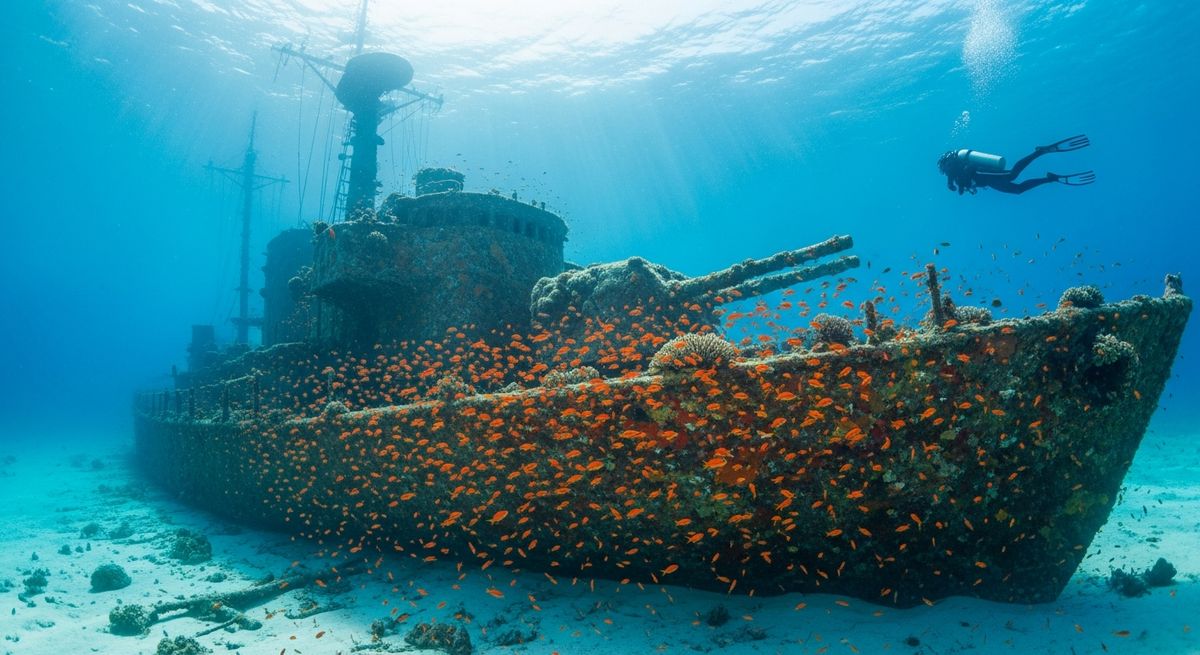
The Baleine wreck, just off Nova Scotia's rugged coast, isn't your typical tropical jaunt, and that's exactly why we love it. This isn't about blinding sun and warm water, but rather the stark beauty of a historical trawler, swallowed by the cold Atlantic. We've spent a fair few hours nosing around her 18-meter depth, often finding ourselves alone with the resident wolfish and their grumpy stares. She’s a dangerous wreck, for sure, but that means a lot of her character remains intact. You'll find yourself gliding past collapsing deck structures, the ghostly shape of the bridge still discernible. The thrill here is in the exploration, in piecing together her past as you navigate around twisted metal and the occasional lost trawl net. Inside, the light filters down, playing tricks on your eyes, and that’s where the larger critters often hide. Look for the lobsters tucked into every available crevice, their antennae waving slowly in the gentle surge. Visibility can swing dramatically, from a murky ten feet to a respectable twenty, so pick a calm, sunny day if you can. It makes a world of difference. This isn’t a site for beginners; some solid cold-water experience and good buoyancy are a must to truly appreciate the Baleine.
Typical BALEINE Dive Profile
Illustrative profile based on site depth and type. Actual dive profiles vary - always follow your dive computer and training.
Safety Notes
Wreck site - avoid penetration without wreck diving certification. Watch for sharp metal and entanglement hazards.
Cold water this month (avg 15°C). Drysuit or thick wetsuit (7mm+) recommended.
Always perform a 3-minute safety stop at 5m before surfacing.
BALEINE Wreck History
Year Sunk
1963
Vessel Type
fishing vessel
Cause
storm
Tonnage
255 GRT
The MV Baleine was a 255-ton steel fishing trawler that met its end in a fierce storm on March 25, 1963. While returning to port, the vessel was battered by hurricane-force winds and heavy seas, eventually succumbing to the elements and sinking near the notoriously rugged coastline of Scatarie Island. The tragic event underscored the unforgiving nature of the North Atlantic, a constant reality for the fishing fleets of Nova Scotia.
Today, the Baleine rests in just 18 meters of water, making it an accessible but challenging dive. Its classification as a 'dangerous wreck' is a testament to the strong currents and potential for entanglement that characterize the site. Divers who brave the conditions will find the scattered remains of the trawler, its metal plates and machinery now colonized by the vibrant marine life of the Atlantic. It serves as a somber memorial and an exciting exploration for experienced local divers.
Reviews for BALEINE
Conditions
Ocean conditions, forecast and tides for BALEINE
BALEINE Ocean Conditions
Monthly averages for BALEINE, sourced from Open-Meteo marine data + Copernicus Marine (EU) - nearest station: Open-Meteo marine grid (44.6, -63.5) (0km away)
October Averages
Sea Temperature
15°C
58°F · Range: 8.7–17.2°C
Current Speed
1 cm/s
Direction: N (0°)
Salinity
30.56 PSU
Based on 4 years of monitoring data · Data sources: Open-Meteo marine data + Copernicus Marine (EU)
Plan & book
Ways to dive Nova Scotia, from day trips to liveaboards.
Day trips & courses
via GetYourGuideGuided dives, courses and snorkel trips with instant booking.
Find dive trips in Nova ScotiaPlaces to stay
via Booking.comHotels and dive resorts near Nova Scotia.
Search stays in Nova ScotiaDive insurance
Most travel insurance excludes or limits scuba. Check what you need before you go.
Dive insurance explainedPartner links: we may earn a commission if you book, at no extra cost to you. How we make money
Where to Stay near BALEINE
Prices from Booking.com. We may earn a commission at no extra cost to you.