GHINDA (POSSIBLY)
Why dive here
With 197+ marine species recorded in the area - including blacktip reef sharks, blue-spotted stingrays, dugongs, hammerhead sharks and sea turtles - GHINDA (POSSIBLY) offers some of Gulf of Tadjoura's richest wreck diving. Water ranges 27-32°C, warmest June, September, October.
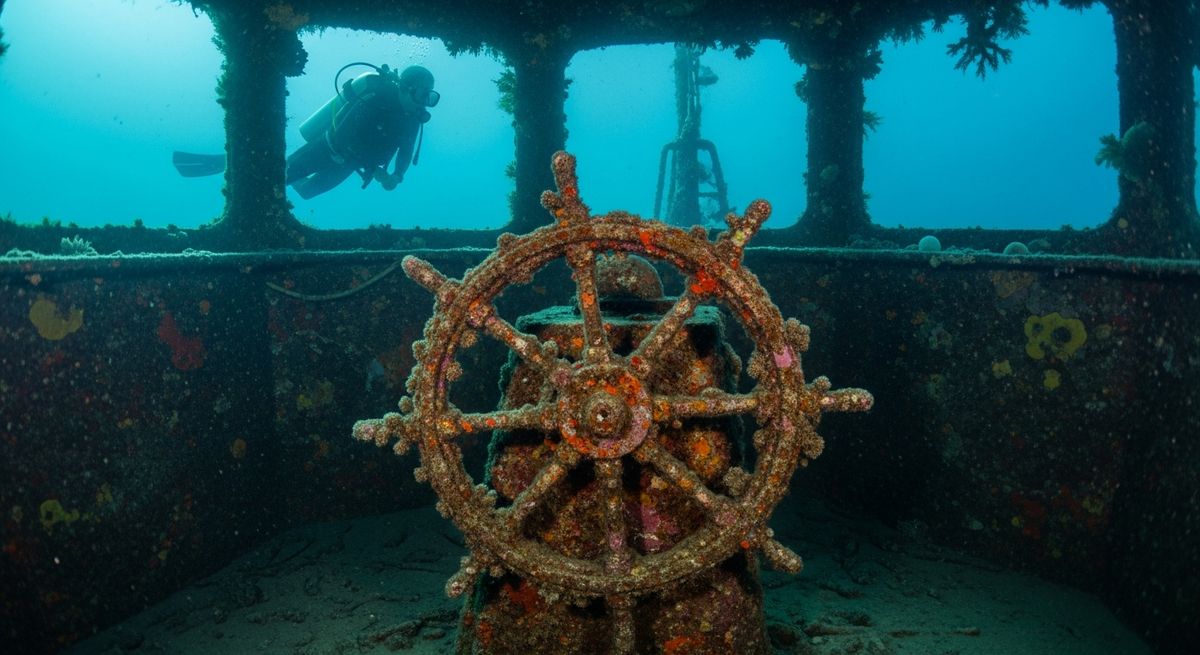
Ghinda, or what we believe is Ghinda anyway, sits about 10km from Mokha, a relic from 1976. This coaster went down carrying matches and drums, and while some cargo was salvaged, the hull remained. It’s a shallow wreck, perhaps too shallow if we're honest, barely breaking the surface. We love it for the historical context, the sense of a lost era. You can practically reach out and touch the past. What you'll mostly see are the skeletal remains of the superstructure, now home to a surprising number of small schooling fish. It's not a deep dive, more of a snorkel, really. Bring a torch if you want to peer into the shadowed sections, but don't expect dramatic swim-throughs. The light filters in, giving the whole scene a rather melancholy feel. It’s a site for those who appreciate history and the slow reclamation by the ocean, rather than for divers chasing big pelagics or vibrant coral. Go at high tide; it gives you a little more room to manoeuvre.
Safety Notes
Wreck site - avoid penetration without wreck diving certification. Watch for sharp metal and entanglement hazards.
Reviews for GHINDA (POSSIBLY)
Conditions
Ocean conditions, forecast and tides for GHINDA (POSSIBLY)
GHINDA (POSSIBLY) Ocean Conditions
Monthly averages for GHINDA (POSSIBLY), sourced from Open-Meteo marine data - nearest station: Open-Meteo marine grid (11.95, 43.3) (19km away)
October Averages
Sea Temperature
32°C
89°F · Range: 29.6–33.4°C
Air Temperature
30°C
86°F
Wind Speed
4.2 m/s
8.2 knots
Atmospheric Pressure
1010.7 hPa
Based on 4 years of monitoring data · Data sources: Open-Meteo marine data
Plan & book
Ways to dive Gulf of Tadjoura, from day trips to liveaboards.
Day trips & courses
via GetYourGuideGuided dives, courses and snorkel trips with instant booking.
Find dive trips in Gulf of TadjouraPlaces to stay
via Booking.comHotels and dive resorts near Gulf of Tadjoura.
Search stays in Gulf of TadjouraDive insurance
Most travel insurance excludes or limits scuba. Check what you need before you go.
Dive insurance explainedPartner links: we may earn a commission if you book, at no extra cost to you. How we make money
Where to Stay near GHINDA (POSSIBLY)
Prices from Booking.com. We may earn a commission at no extra cost to you.