Ghoubet al-Kharab - Gulf of Tadjoura

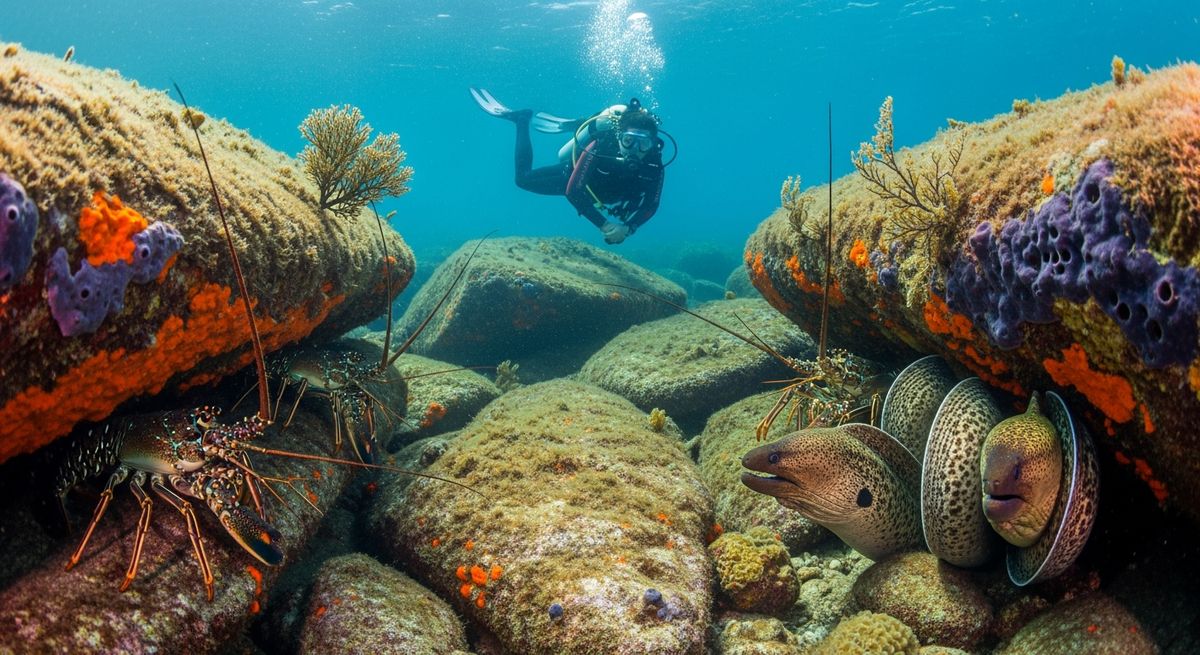
Ghoubet al-Kharab, or ‘The Devil’s Throat,’ is a dramatic spot in the Gulf of Tadjoura. It’s a shallow bay, maxing out around 12 meters, tucked in by some serious cliffs. Between November and January, this place really comes alive when juvenile whale sharks cruise in to feast on the plankton. We’ve had some incredible encounters here, watching these young giants glide past, sometimes joined by manta rays. There’s also "The Crack," a submerged rift worth exploring. It’s a great site for snorkelers too, given the depth, and perfect for newer divers looking for big animal encounters without pushing deep. Just be ready for a bit of a current sometimes, especially when the plankton is blooming.

Location
Gulf of Tadjoura, Djibouti, Red Sea & Middle East
Coordinates
11.550000, 42.450000

Marine Protected Area: Arta Plage

Best Time to Dive in Gulf of Tadjoura

The warmest water temperatures in Gulf of Tadjoura occur in January, averaging 26.9°C. The coolest conditions are in December at 26.9°C.

Monthly Water Temperatures

  • January: 26.9°C (air: 24.8°C)
  • February: 26.9°C (air: 25.3°C)
  • March: 26.9°C (air: 26.9°C)
  • April: 26.9°C (air: 28.9°C)
  • May: 26.9°C (air: 32.5°C)
  • June: 26.9°C (air: 35.7°C)
  • July: 26.9°C (air: 36.4°C)
  • August: 26.9°C (air: 34.9°C)
  • September: 26.9°C (air: 34.5°C)
  • October: 26.9°C (air: 30.2°C)
  • November: 26.9°C (air: 27.2°C)
  • December: 26.9°C (air: 25.5°C)

Nearby Dive Sites in Gulf of Tadjoura

Marine Life in Gulf of Tadjoura

Home to 205 recorded species including 95 hard corals, 75 reef fish, 8 sharks & rays, 6 crabs & lobsters, 5 sea cucumbers, 4 sea snails & nudibranchs.

Notable Species

Recommended Packing List for Ghoubet al-Kharab

Based on average water temperature of 26.9°C.

  • Shorty or Rashguard - warm 27°C water needs minimal exposure protection
  • Mask - essential for every dive
  • Fins
  • BCD - buoyancy compensator
  • Regulator - your most safety-critical piece of gear
  • Dive Computer - tracks depth, time, and NDL
  • Surface Marker Buoy (SMB) - essential for boat pickups
  • Dive Torch - useful for crevices and colour at depth
  • Underwater Camera - capture your diving memories

Frequently Asked Questions

What are the typical diving depths at Ghoubet al-Kharab?
Unfortunately, the typical diving depths for Ghoubet al-Kharab are not specified in our current data. However, the site is described as nestled in a shallow bay, suggesting a range of depths suitable for various diving experiences. We recommend checking with local dive operators for the most up-to-date depth information.
What marine life and underwater features can divers expect to see at Ghoubet al-Kharab?
Divers at Ghoubet al-Kharab can anticipate an incredible underwater ecosystem, characteristic of a vibrant reef environment. The highlight includes sightings of juvenile whale sharks and graceful manta rays, especially during their seasonal gatherings. Additionally, a unique underwater feature to explore is The Crack, a fascinating submerged rift.
How challenging is diving at Ghoubet al-Kharab, and is it suitable for beginner divers?
Diving at Ghoubet al-Kharab is rated as having an intermediate difficulty. While it offers a rewarding experience for divers with some experience, it may not be ideal for absolute beginners due to potential conditions or specific site characteristics. We recommend that beginner divers gain more experience or consult with a local dive center before planning a trip here.
What is the best time of year to go diving in Ghoubet al-Kharab, especially for whale sharks?
The prime time to visit Ghoubet al-Kharab for an exceptional diving experience, particularly for encountering whale sharks, is from November to January. During these months, juvenile whale sharks congregate to feed on the rich seasonal plankton blooms. This period also increases your chances of spotting graceful manta rays alongside them.
What diving certifications are required or recommended for Ghoubet al-Kharab?
Given the intermediate difficulty rating for Ghoubet al-Kharab, divers should ideally hold at least an Open Water Diver certification with some experience. For maximum comfort and to fully enjoy the site's features, an Advanced Open Water certification or equivalent experience is often recommended. Always confirm specific requirements with your chosen dive operator in Djibouti.
What are the typical water conditions, currents, and visibility like when diving in Ghoubet al-Kharab?
Our current data does not provide specific details on typical water conditions, currents, or general visibility at Ghoubet al-Kharab. However, it is noted that seasonal plankton blooms occur from November to January, which are crucial for attracting whale sharks and manta rays. These blooms can sometimes influence visibility, so it's advisable to check local conditions before your dive.