HMS Thistlegorm
Protected Area
شعاب البحر الأحمر
Why dive here
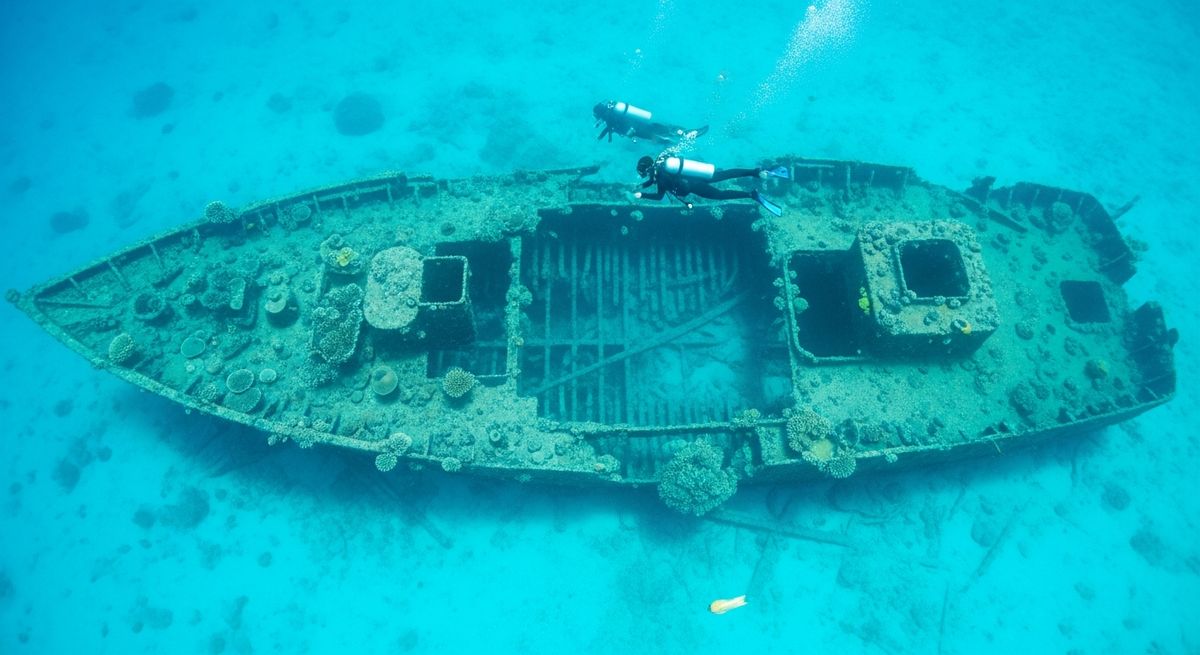
HMS Thistlegorm is a wreck dive where divers can encounter dolphins, spinner dolphins and whale sharks. Water ranges 23-30°C, warmest July, August, September.
Dropping onto the Thistlegorm, you immediately feel the weight of history. This isn't just a wreck; it's a time capsule, a snapshot of WWII cargo frozen in time. Inside the open holds, we've peered at rows of BSA motorcycles, Bedford trucks, and even parts of railway wagons – it’s genuinely eerie. Outside, barracuda often circle the superstructure, and a resident turtle sometimes cruises past the bridge. We’d suggest getting there early, or planning multiple dives, to really take in the scale and detail of this incredible site. Strong currents can be a factor, so good buoyancy control is key.
Safety Notes
Wreck site - avoid penetration without wreck diving certification. Watch for sharp metal and entanglement hazards.
Nearest Dive Centres to HMS Thistlegorm
Dive shops near HMS Thistlegorm
Black Pearl - Red Sea
BLUEFORCE 2
Story Divers
Sunshine Divers Mary & Klaus
New Waves
Ocean College, Ras Um Sid
Reviews for HMS Thistlegorm
Conditions
Ocean conditions, forecast and tides for HMS Thistlegorm
HMS Thistlegorm Ocean Conditions
Monthly averages for HMS Thistlegorm, sourced from Open-Meteo marine data + Copernicus Marine (EU) - nearest station: Open-Meteo marine grid (27.85, 34.27) (8km away)
October Averages
Sea Temperature
28°C
82°F · Range: 26.1–29°C
Current Speed
15.26 cm/s
Direction: SW (211.6°)
Chlorophyll-a
0.073 mg/m³
Very clear (oligotrophic)
Salinity
38.63 PSU
Based on 4 years of monitoring data · Data sources: Open-Meteo marine data + Copernicus Marine (EU)
Plan & book
Ways to dive Sharm el-Sheikh, from day trips to liveaboards.
Day trips & courses
via GetYourGuideGuided dives, courses and snorkel trips with instant booking.
Find dive trips in Sharm el-SheikhPlaces to stay
via Booking.comHotels and dive resorts near Sharm el-Sheikh.
Search stays in Sharm el-SheikhDive insurance
Most travel insurance excludes or limits scuba. Check what you need before you go.
Dive insurance explainedPartner links: we may earn a commission if you book, at no extra cost to you. How we make money
Where to Stay near HMS Thistlegorm
Prices from Booking.com. We may earn a commission at no extra cost to you.