Kingston Wreck
Protected Area
محمية رأس محمد
Why dive here
Kingston Wreck is a wreck dive where divers can encounter dolphins, spinner dolphins and whale sharks. Water ranges 23-30°C, warmest July, August, September.
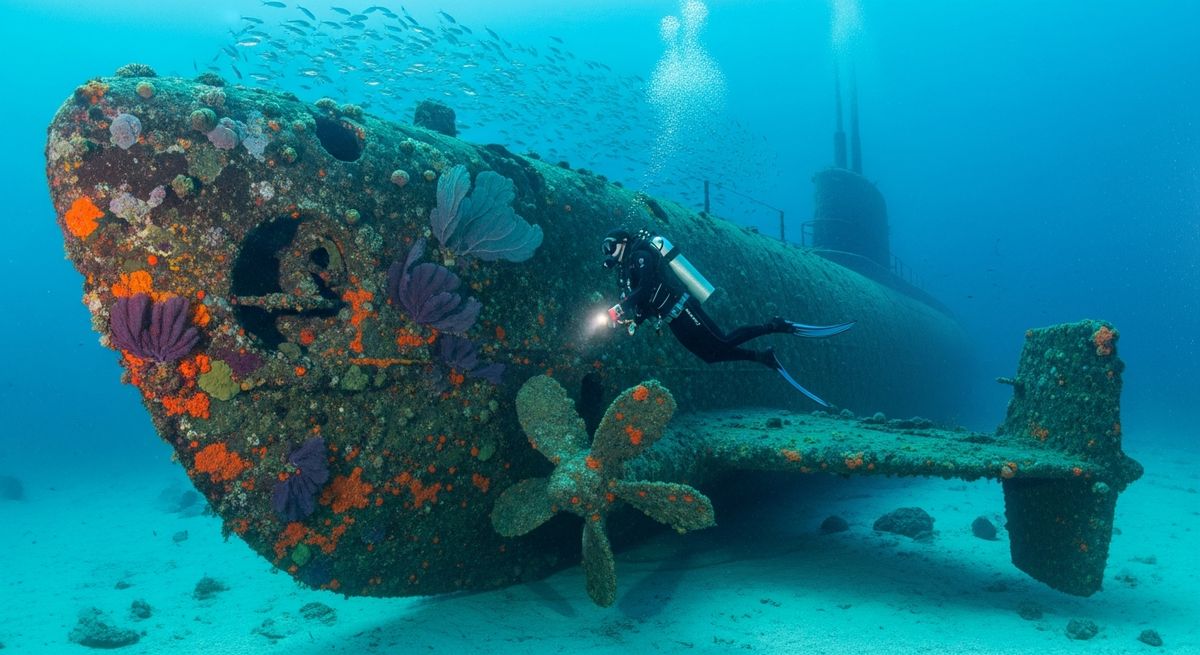
The Kingston Wreck sits on the northern slopes of Shag Rock, a short boat ride from the Thistlegorm. This isn't a massive, intact behemoth, but rather the skeletal remains of a 78m twin-mast steamship that met its end in 1881. What you’ll find are scattered sections, a stern, and bow that have merged with the reef over time, creating interesting swim-throughs and overhangs. Keep an eye out for moray eels tucked into the metalwork and schools of goatfish sifting through the sandy bottom. It's a relaxed, interesting dive, good for divers who appreciate history and the way the Red Sea reclaims its wrecks.
Safety Notes
Wreck site - avoid penetration without wreck diving certification. Watch for sharp metal and entanglement hazards.
Nearest Dive Centres to Kingston Wreck
Dive shops near Kingston Wreck
Black Pearl - Red Sea
BLUEFORCE 2
Story Divers
Sunshine Divers Mary & Klaus
Reef Oasis Dive Club - Reef Beach
New Waves
Reviews for Kingston Wreck
Conditions
Ocean conditions, forecast and tides for Kingston Wreck
Kingston Wreck Ocean Conditions
Monthly averages for Kingston Wreck, sourced from Open-Meteo marine data + Copernicus Marine (EU) - nearest station: Open-Meteo marine grid (27.85, 34.27) (8km away)
October Averages
Sea Temperature
28°C
82°F · Range: 26.1–29°C
Current Speed
15.26 cm/s
Direction: SW (211.6°)
Chlorophyll-a
0.073 mg/m³
Very clear (oligotrophic)
Salinity
38.63 PSU
Based on 4 years of monitoring data · Data sources: Open-Meteo marine data + Copernicus Marine (EU)
Plan & book
Ways to dive Sharm el-Sheikh, from day trips to liveaboards.
Day trips & courses
via GetYourGuideGuided dives, courses and snorkel trips with instant booking.
Find dive trips in Sharm el-SheikhPlaces to stay
via Booking.comHotels and dive resorts near Sharm el-Sheikh.
Search stays in Sharm el-SheikhDive insurance
Most travel insurance excludes or limits scuba. Check what you need before you go.
Dive insurance explainedPartner links: we may earn a commission if you book, at no extra cost to you. How we make money
Where to Stay near Kingston Wreck
Prices from Booking.com. We may earn a commission at no extra cost to you.