LOULLIA
Protected Area
محمية رأس محمد
Why dive here
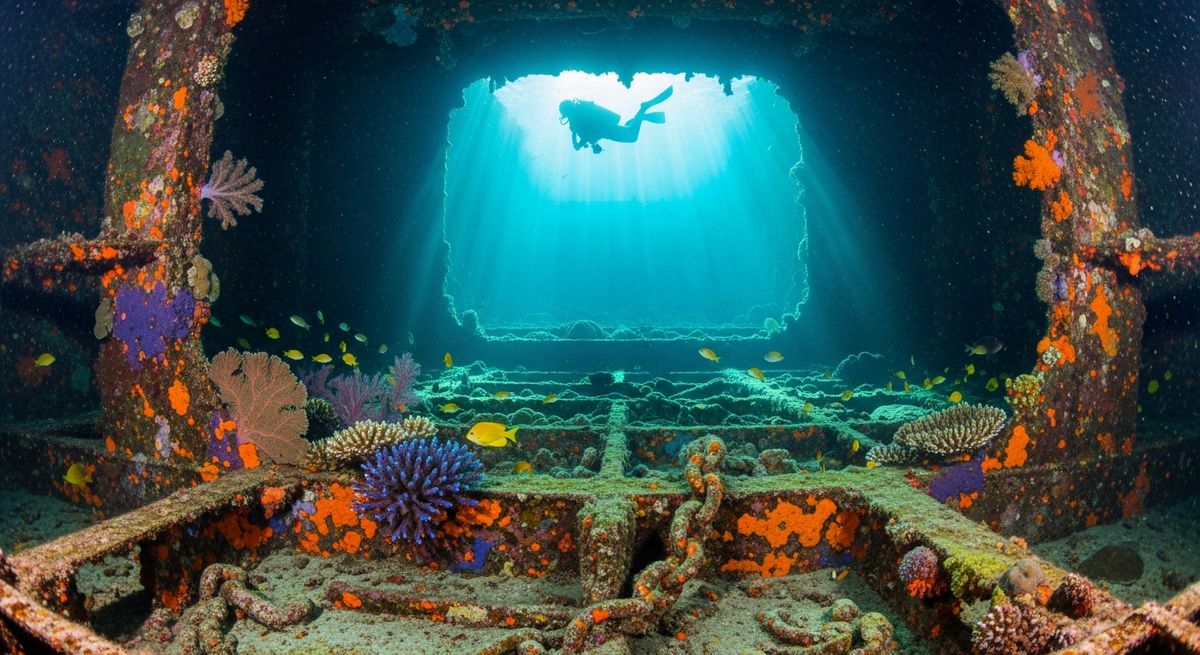
LOULLIA is a wreck dive where divers can encounter dolphins, spinner dolphins and whale sharks. Water ranges 23-30°C, warmest July, August, September.
The Loullia, perched rather precariously on Gordon Reef, is a wreck dive with real personality. She’s a carrier vessel, settled on her side since 1981, and honestly, we love her for her accessibility and the way she’s become part of the reef. Her bow section is what you'll typically explore, sitting in around 10-15 metres, often quite lit by the sun. You’ll find yourself finning through schools of fusiliers, darting around the superstructure, which is now heavily encrusted with hard and soft corals. Keep an eye out for resident lionfish tucked into shadowy nooks; they’re often there. The Loullia’s an excellent spot for divers who enjoy poking around a wreck without deep penetration, offering plenty of swim-throughs where the original cargo holds once were. For us, the best time to visit is early morning, before the day boats crowd the area, letting you really appreciate the quiet colonisation of metal by marine life.
Safety Notes
Wreck site - avoid penetration without wreck diving certification. Watch for sharp metal and entanglement hazards.
Nearest Dive Centres to LOULLIA
Dive shops near LOULLIA
Aquarius Diving Club - Sharm
Diving Center
PADI Diving center
Extra Divers Ras Nasrani
Pyramids Diving Center
Blue Sea Dive Club
Reviews for LOULLIA
Conditions
Ocean conditions, forecast and tides for LOULLIA
LOULLIA Ocean Conditions
Monthly averages for LOULLIA, sourced from Open-Meteo marine data + Copernicus Marine (EU) - nearest station: Open-Meteo marine grid (27.85, 34.27) (8km away)
October Averages
Sea Temperature
28°C
82°F · Range: 26.1–29°C
Current Speed
15.26 cm/s
Direction: SW (211.6°)
Chlorophyll-a
0.073 mg/m³
Very clear (oligotrophic)
Salinity
38.63 PSU
Based on 4 years of monitoring data · Data sources: Open-Meteo marine data + Copernicus Marine (EU)
Plan & book
Ways to dive Sharm el-Sheikh, from day trips to liveaboards.
Day trips & courses
via GetYourGuideGuided dives, courses and snorkel trips with instant booking.
Find dive trips in Sharm el-SheikhPlaces to stay
via Booking.comHotels and dive resorts near Sharm el-Sheikh.
Search stays in Sharm el-SheikhDive insurance
Most travel insurance excludes or limits scuba. Check what you need before you go.
Dive insurance explainedPartner links: we may earn a commission if you book, at no extra cost to you. How we make money
Where to Stay near LOULLIA
Prices from Booking.com. We may earn a commission at no extra cost to you.