ZINGARA
Protected Area
محمية رأس محمد
Why dive here
ZINGARA is a wreck dive where divers can encounter dolphins, spinner dolphins and whale sharks. Water ranges 23-30°C, warmest July, August, September.
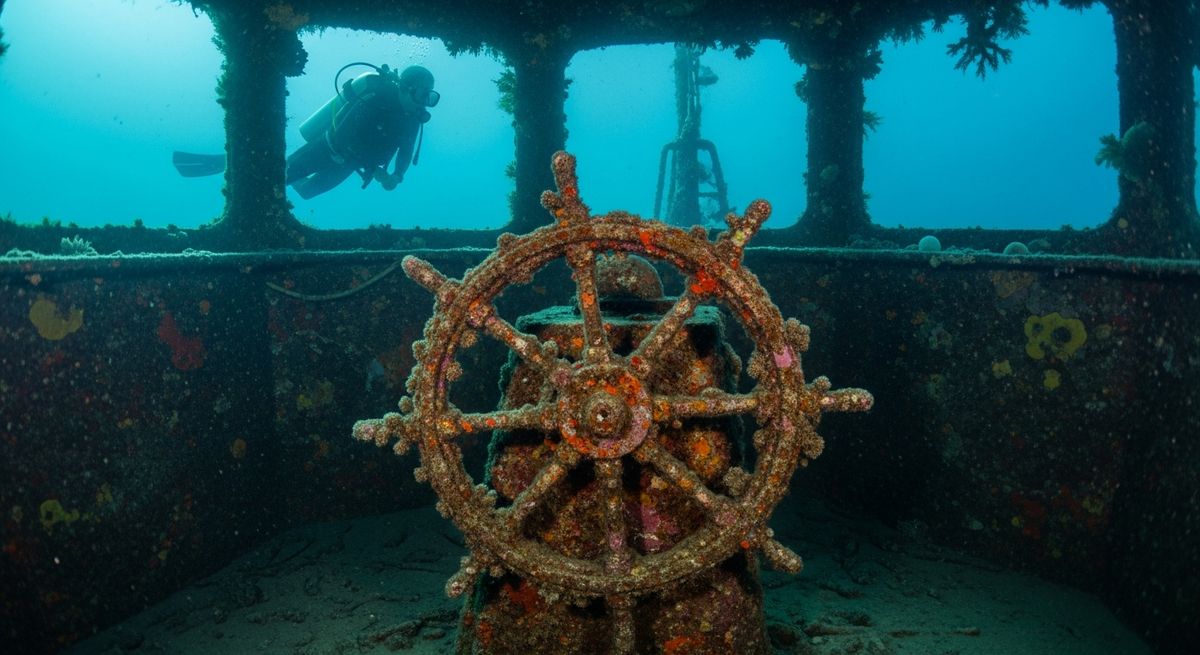
We’re always drawn to a good wreck, and the Zingara often gets overlooked for her flashier neighbours. But honestly, this is one of our favourite dives in Sharm. She’s a proper ship, an 82-meter cargo vessel that went down in '84, now resting on her side at about 25 meters. The current here can be a bit frisky, especially around the bow, but it’s usually manageable and keeps the visibility clean. What we love is the sheer scale of her. You can fin along the entire length, peering into the holds where schools of glassfish shimmer like liquid silver. The engine room is accessible for experienced wreck divers, a dark, cathedral-like space that gives you a real sense of her working life. Out on the deck, we often find blue-spotted rays tucked into the sand, and the superstructure is draped in soft corals, a canvas for parrotfish and angelfish. This is a dive for those who appreciate the quiet dignity of a well-aged wreck, not just the coral gardens around it. Our top tip? Get there early to avoid the crowds, especially if you want to poke around inside without bumping into other fins.
Safety Notes
Wreck site - avoid penetration without wreck diving certification. Watch for sharp metal and entanglement hazards.
Nearest Dive Centres to ZINGARA
Dive shops near ZINGARA
Diving Center
Pyramids Diving Center
Pyramids Diving Center - Rixos Sea Gate
Aquarius Diving Club - Sharm
PADI Diving center
Extra Divers Ras Nasrani
Reviews for ZINGARA
Conditions
Ocean conditions, forecast and tides for ZINGARA
ZINGARA Ocean Conditions
Monthly averages for ZINGARA, sourced from Open-Meteo marine data + Copernicus Marine (EU) - nearest station: Open-Meteo marine grid (27.85, 34.27) (8km away)
October Averages
Sea Temperature
28°C
82°F · Range: 26.1–29°C
Current Speed
15.26 cm/s
Direction: SW (211.6°)
Chlorophyll-a
0.073 mg/m³
Very clear (oligotrophic)
Salinity
38.63 PSU
Based on 4 years of monitoring data · Data sources: Open-Meteo marine data + Copernicus Marine (EU)
Plan & book
Ways to dive Sharm el-Sheikh, from day trips to liveaboards.
Day trips & courses
via GetYourGuideGuided dives, courses and snorkel trips with instant booking.
Find dive trips in Sharm el-SheikhPlaces to stay
via Booking.comHotels and dive resorts near Sharm el-Sheikh.
Search stays in Sharm el-SheikhDive insurance
Most travel insurance excludes or limits scuba. Check what you need before you go.
Dive insurance explainedPartner links: we may earn a commission if you book, at no extra cost to you. How we make money
Where to Stay near ZINGARA
Prices from Booking.com. We may earn a commission at no extra cost to you.