CHAMPOLLION
Why dive here
CHAMPOLLION is a wreck dive in Tyre, Lebanon.
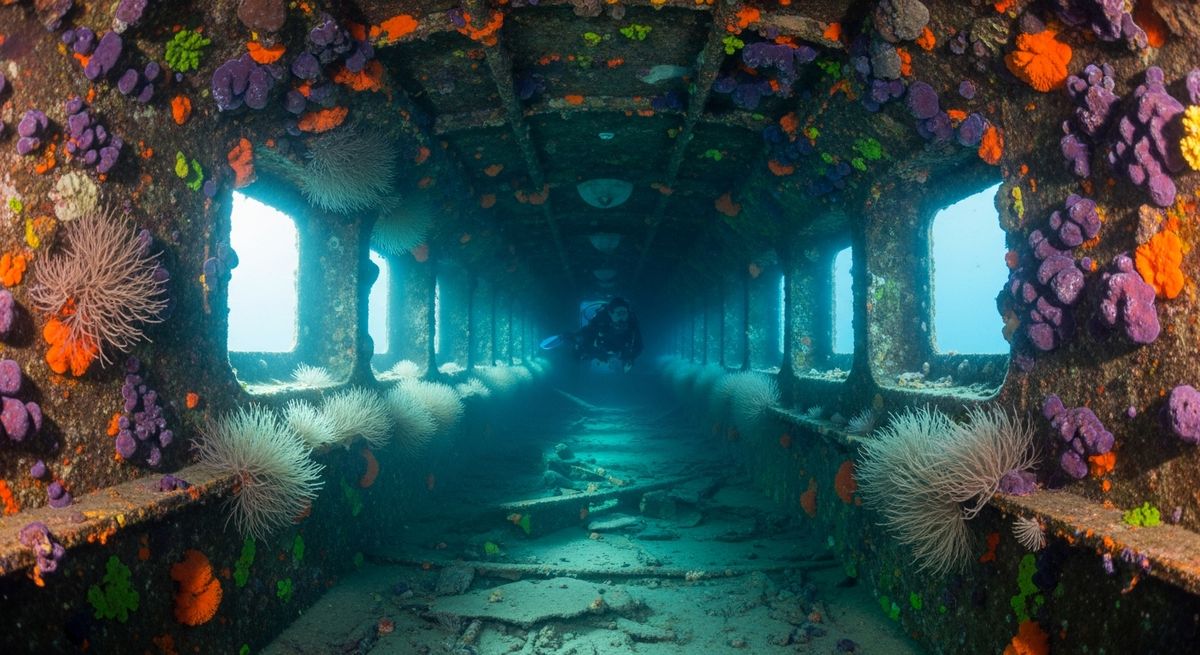
The Champollion wreck in Tyre is a standout for us, a real piece of history you can actually touch. This massive liner, over 160 metres long, went down in 1952 carrying 358 souls, and it’s still very much a ship, even after all these years. What we love about it is how accessible it is; with a maximum depth of just two metres, it’s practically a snorkel site, though we’d suggest a full dive setup to properly appreciate the scale. You’ll spend your time here finning over the superstructure, which breaks the surface on calm days, tracing the outline of her decks. Our favourite thing is the way the light filters through the shallows, illuminating parts of the hull and superstructure, giving it an eerie, almost ghostly glow. Look for schools of juvenile fish darting amongst the twisted metal, and the occasional octopus tucked into crevices. It’s not about big pelagics here, it’s about the intimacy of exploring a grand old ship that's become a home for the smaller stuff. This is a must for history buffs and anyone who appreciates a unique, shallow wreck dive.
Typical CHAMPOLLION Dive Profile
Illustrative profile based on site depth and type. Actual dive profiles vary - always follow your dive computer and training.
Safety Notes
Wreck site - avoid penetration without wreck diving certification. Watch for sharp metal and entanglement hazards.
Nearest Dive Centres to CHAMPOLLION
Dive shops near CHAMPOLLION
Stingray Divers
Scuba Diving Lovers Lebanon
كيرياكوس
Diving In Lebanon
Abyss - Lebanese Divers College
XDC - Xtreme Dive Center
Reviews for CHAMPOLLION
Conditions
Ocean conditions, forecast and tides for CHAMPOLLION
Plan & book
Ways to dive Tyre, from day trips to liveaboards.
Day trips & courses
via GetYourGuideGuided dives, courses and snorkel trips with instant booking.
Find dive trips in TyrePlaces to stay
via Booking.comHotels and dive resorts near Tyre.
Search stays in TyreDive insurance
Most travel insurance excludes or limits scuba. Check what you need before you go.
Dive insurance explainedPartner links: we may earn a commission if you book, at no extra cost to you. How we make money
Where to Stay near CHAMPOLLION
Prices from Booking.com. We may earn a commission at no extra cost to you.