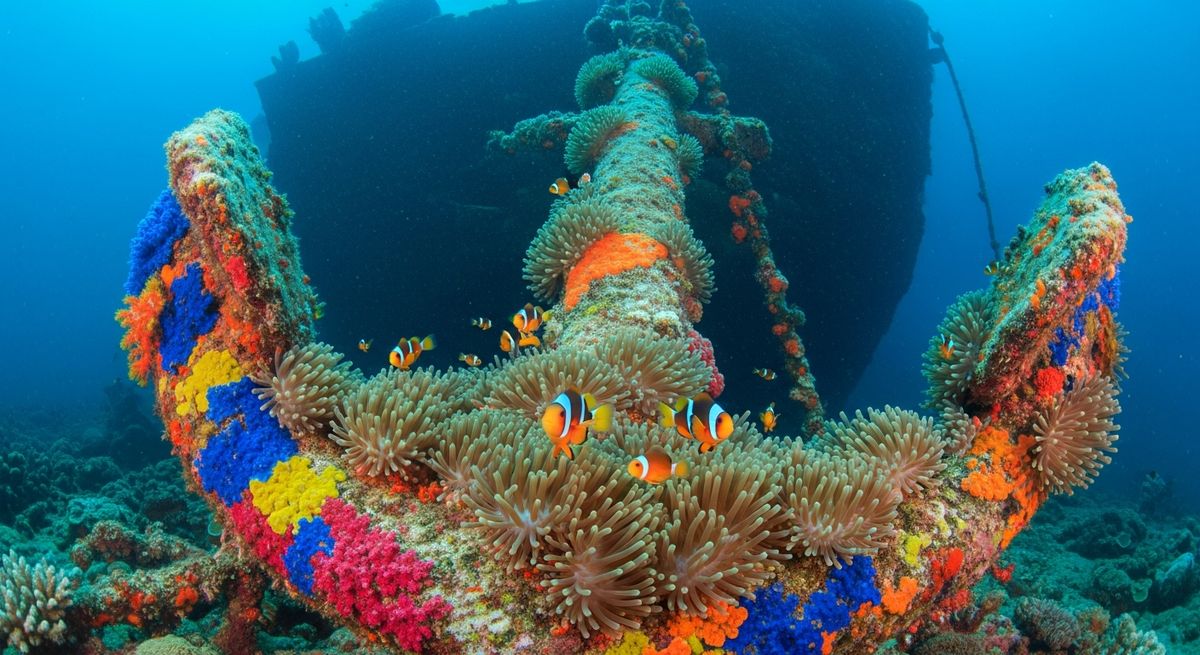
The Umbria Wreck
Protected Area
Sanganeb Atoll
Why dive here
With 55+ marine species recorded in the area - including pufferfish - The Umbria Wreck offers some of Port Sudan & Sanganeb's richest wreck diving. Water ranges 25-32°C, warmest July, August, September.
The Umbria, resting on her port side at Wingate Reef, is a genuinely special dive. You're not just looking at a wreck here, you’re swimming through history. We love picking out the details – the Fiat cars still strapped down, the crates of bombs, the wine bottles, all remarkably preserved. It feels less like a shipwreck and more like a time capsule. Despite its age, a surprising amount of soft coral has found a home on the decks, and we often spot whitetip reef sharks patrolling the deeper sections. It’s a comfortable dive for most wreck enthusiasts, with plenty to see both inside and out.
Safety Notes
Wreck site - avoid penetration without wreck diving certification. Watch for sharp metal and entanglement hazards.
Reviews for The Umbria Wreck
Conditions
Ocean conditions, forecast and tides for The Umbria Wreck
The Umbria Wreck Ocean Conditions
Monthly averages for The Umbria Wreck, sourced from Open-Meteo marine data + Copernicus Marine (EU) - nearest station: Open-Meteo marine grid (19.94, 37.4) (17km away)
October Averages
Sea Temperature
31°C
88°F · Range: 29.9–32.3°C
Current Speed
7.07 cm/s
Direction: S (171.9°)
Chlorophyll-a
0.088 mg/m³
Very clear (oligotrophic)
Salinity
37.37 PSU
Based on 4 years of monitoring data · Data sources: Open-Meteo marine data + Copernicus Marine (EU)
Plan & book
Ways to dive Port Sudan & Sanganeb, from day trips to liveaboards.
Day trips & courses
via GetYourGuideGuided dives, courses and snorkel trips with instant booking.
Find dive trips in Port Sudan & SanganebPlaces to stay
via Booking.comHotels and dive resorts near Port Sudan & Sanganeb.
Search stays in Port Sudan & SanganebDive insurance
Most travel insurance excludes or limits scuba. Check what you need before you go.
Dive insurance explainedPartner links: we may earn a commission if you book, at no extra cost to you. How we make money
Where to Stay near The Umbria Wreck
Prices from Booking.com. We may earn a commission at no extra cost to you.