Manto de Ela
Protected Area
Los Corales del Rosario y de San Bernardo
Why dive here
With 517+ marine species recorded in the area - including barracuda, blue sharks, dolphins, eagle rays and hammerhead sharks - Manto de Ela offers some of Santa Marta & Tayrona's richest reef diving. Water ranges 28-30°C, warmest June, July, September.
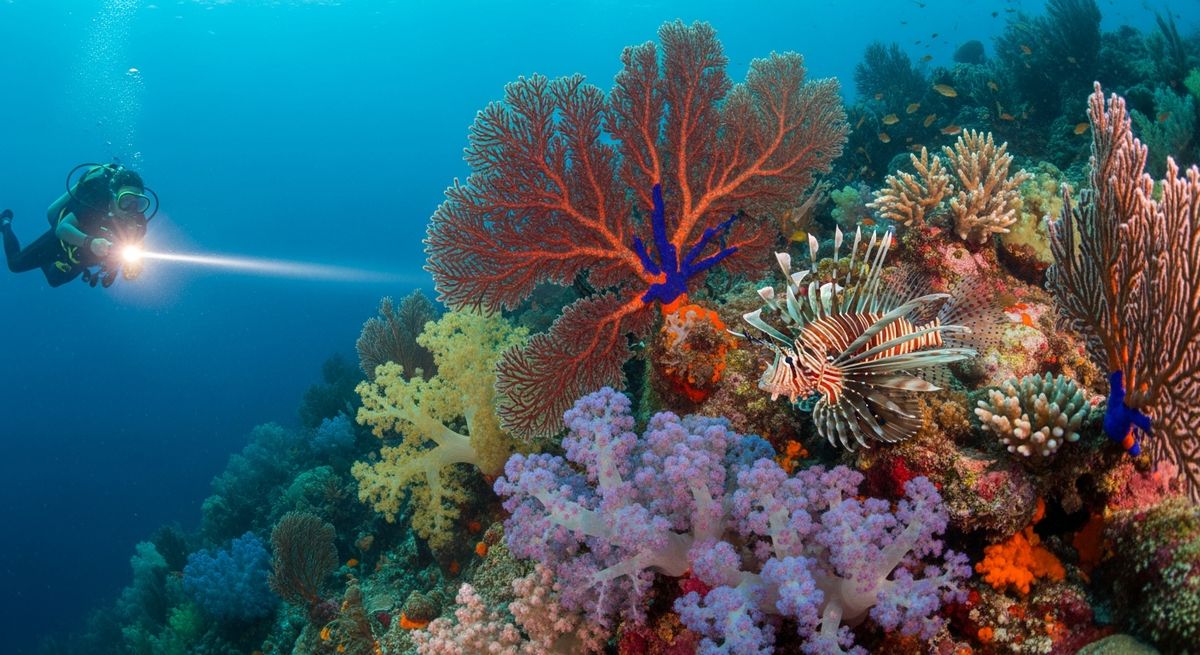
Manto de Ela is one of those sites we always recommend for a relaxed, visually striking dive when you’re in Santa Marta. It’s not about huge pelagics here, so manage your expectations – you won’t see whale sharks. Instead, the beauty lies in the formations themselves. We love the contrast as the reef rises from a sandy bottom, peaking at around 18 metres. You’ll find walls dropping deeper, though we tend to stick to the shallower parts where the light plays best. The real show is the coral landscape. We’ve spent whole dives just drifting along, admiring the brain corals and delicate finger corals, like sculptures. Look closely in the crevices and sandy patches for gobies and blennies. You’ll spot the usual suspects, like parrotfish grazing and damselfish darting amongst the coral, and we often see slipperies and painted wrasse cruising by. Visibility averages a comfortable 15 metres, often better, making it easy to appreciate the scenery. It’s a perfect spot for photographers or anyone who prefers a calmer dive focused on the reef’s intricate beauty.
Nearest Dive Centres to Manto de Ela
Dive shops near Manto de Ela
View all dive centres in Santa Marta & TayronaReviews for Manto de Ela
Conditions
Ocean conditions, forecast and tides for Manto de Ela
Manto de Ela Ocean Conditions
Monthly averages for Manto de Ela, sourced from Open-Meteo marine data - nearest station: Open-Meteo marine grid (10.13, -75.71) (11km away)
October Averages
Sea Temperature
30°C
86°F · Range: 29.3–31.1°C
Air Temperature
28°C
82°F
Wind Speed
4.83 m/s
9.4 knots
Atmospheric Pressure
1009.9 hPa
Based on 4 years of monitoring data · Data sources: Open-Meteo marine data
Plan & book
Ways to dive Santa Marta & Tayrona, from day trips to liveaboards.
Day trips & courses
via GetYourGuideGuided dives, courses and snorkel trips with instant booking.
Find dive trips in Santa Marta & TayronaPlaces to stay
via Booking.comHotels and dive resorts near Santa Marta & Tayrona.
Search stays in Santa Marta & TayronaDive insurance
Most travel insurance excludes or limits scuba. Check what you need before you go.
Dive insurance explainedPartner links: we may earn a commission if you book, at no extra cost to you. How we make money
Where to Stay near Manto de Ela
Prices from Booking.com. We may earn a commission at no extra cost to you.