Gordon's Rock
Why dive here
With 131+ marine species recorded in the area - including dolphins, humpback whales, seals & sea lions, sea turtles and sperm whales - Gordon's Rock offers some of Galápagos Islands's richest diving. Water ranges 23-28°C, warmest February, March, April.
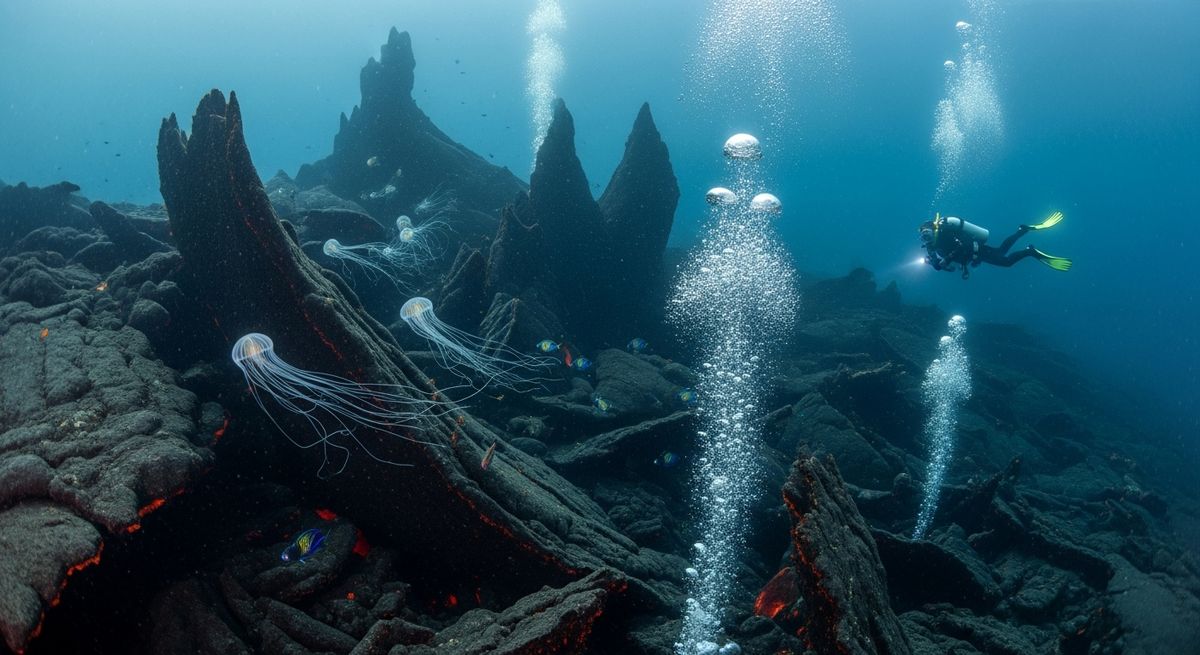
Gordon’s Rock, often on liveaboard itineraries, isn't for the faint of heart. This collapsed crater, about 100 meters across, can dish out some serious current and surge. We're talking proper Galápagos conditions, a good reminder this isn't a spot for your first few dives. But if you're comfortable drifting, you'll often find schooling hammerheads cruising the deeper ledges and whitetips tucked into the crevices. Look closely for a resident Galápagos shark or two making a pass. It’s a site that rewards experience with a real taste of what the central islands offer.
Safety Notes
Strong currents typical this month (avg 36 cm/s). Good buoyancy control essential.
Nearest Dive Centres to Gordon's Rock
Dive shops near Gordon's Rock
M/V Tiburon Explorer
GALAPAGOS AGGRESSOR III
Dive Center Silberstein
Galapagos People
Macarron Scuba Divers
Galápagos Deep
Reviews for Gordon's Rock
Conditions
Ocean conditions, forecast and tides for Gordon's Rock
Gordon's Rock Ocean Conditions
Monthly averages for Gordon's Rock, sourced from Open-Meteo marine data + Copernicus Marine (EU) - nearest station: Open-Meteo marine grid (-0.32, -90.55) (15km away)
October Averages
Sea Temperature
23°C
74°F · Range: 20.2–26°C
Current Speed
36.24 cm/s
Direction: SW (230.6°)
Chlorophyll-a
0.886 mg/m³
Moderate productivity
Salinity
33.88 PSU
Based on 4 years of monitoring data · Data sources: Open-Meteo marine data + Copernicus Marine (EU)
Plan & book
Ways to dive Galápagos Islands, from day trips to liveaboards.
Day trips & courses
via GetYourGuideGuided dives, courses and snorkel trips with instant booking.
Find dive trips in Galápagos IslandsPlaces to stay
via Booking.comHotels and dive resorts near Galápagos Islands.
Search stays in Galápagos IslandsDive insurance
Most travel insurance excludes or limits scuba. Check what you need before you go.
Dive insurance explainedPartner links: we may earn a commission if you book, at no extra cost to you. How we make money
Where to Stay near Gordon's Rock
Prices from Booking.com. We may earn a commission at no extra cost to you.