Kicker Rock / Léon Dormido, San Cristobal, Galapagos
Why dive here
With 131+ marine species recorded in the area - including dolphins, humpback whales, seals & sea lions, sea turtles and sperm whales - Kicker Rock / Léon Dormido, San Cristobal, Galapagos offers some of Galápagos Islands's richest reef diving. Water ranges 23-28°C, warmest February, March, April.
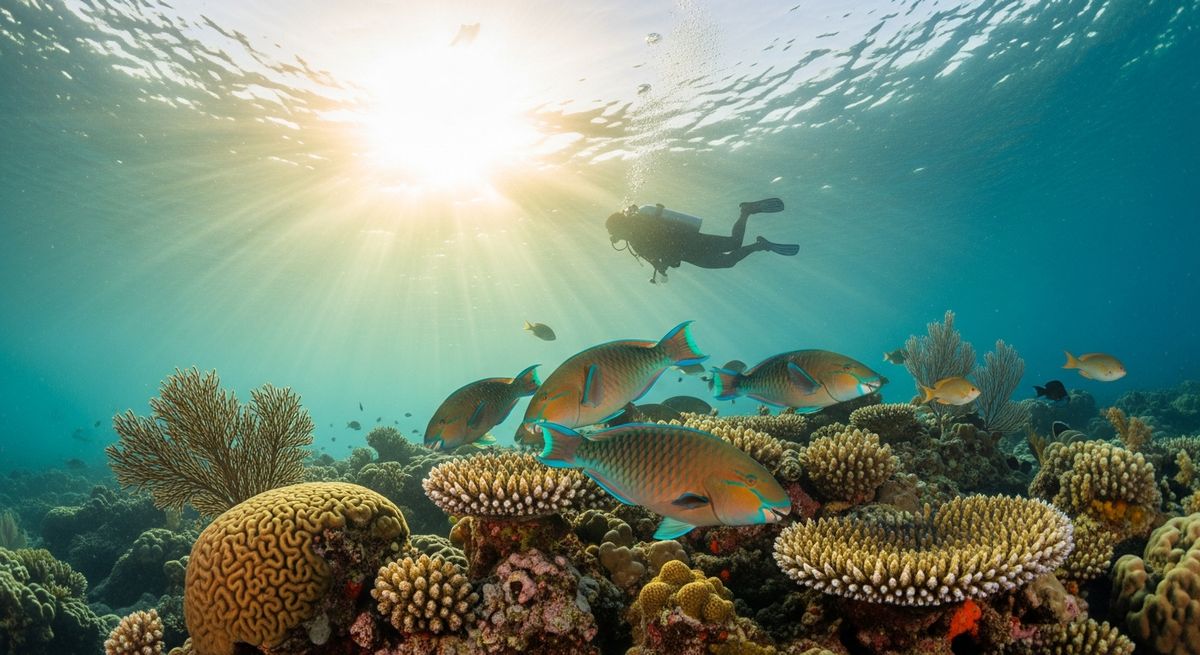
Kicker Rock, or León Dormido, is one of those sites that just grabs you, even from the surface. Those two huge volcanic fins jutting out of the Pacific, looking like a sleeping lion. We’ve been a few times now, and it’s always a rush, a proper drift dive through the channel. Dropping in, the immediate sensation is the current tugging you along. You feel it, a steady push that carries you past walls adorned with black coral. Visibility can be a bit variable, sometimes a glorious 20 metres, other times a more modest 10 metres, but it rarely matters. The sheer volume of life compensates. We often spot whitetip reef sharks resting on the bottom or cruising through the channel, and the schools of darkfin amberjack and jacks can be immense, swirling walls of silver. Keep an eye out for olive grouper lurking in the crevices and the vibrant Fire Tentacle Anemones clinging to the rock face. This place truly shines for its pelagics and its dramatic topography, making it ideal for divers who appreciate a lively drift and big animal encounters. We'd suggest going in the morning, before the tour boats really start to stack up.
Safety Notes
Strong currents typical this month (avg 36 cm/s). Good buoyancy control essential.
Nearest Dive Centres to Kicker Rock / Léon Dormido, San Cristobal, Galapagos
Dive shops near Kicker Rock / Léon Dormido, San Cristobal, Galapagos
Darwin
Alpha
Galápagos Fun Dive
Blue Evolution
Galaxy Expeditions Corp
Reviews for Kicker Rock / Léon Dormido, San Cristobal, Galapagos
Conditions
Ocean conditions, forecast and tides for Kicker Rock / Léon Dormido, San Cristobal, Galapagos
Kicker Rock / Léon Dormido, San Cristobal, Galapagos Ocean Conditions
Monthly averages for Kicker Rock / Léon Dormido, San Cristobal, Galapagos, sourced from Open-Meteo marine data + Copernicus Marine (EU) - nearest station: Open-Meteo marine grid (-0.32, -90.55) (15km away)
October Averages
Sea Temperature
23°C
74°F · Range: 20.2–26°C
Current Speed
36.24 cm/s
Direction: SW (230.6°)
Chlorophyll-a
0.886 mg/m³
Moderate productivity
Salinity
33.88 PSU
Based on 4 years of monitoring data · Data sources: Open-Meteo marine data + Copernicus Marine (EU)
Plan & book
Ways to dive Galápagos Islands, from day trips to liveaboards.
Day trips & courses
via GetYourGuideGuided dives, courses and snorkel trips with instant booking.
Find dive trips in Galápagos IslandsPlaces to stay
via Booking.comHotels and dive resorts near Galápagos Islands.
Search stays in Galápagos IslandsDive insurance
Most travel insurance excludes or limits scuba. Check what you need before you go.
Dive insurance explainedPartner links: we may earn a commission if you book, at no extra cost to you. How we make money
Where to Stay near Kicker Rock / Léon Dormido, San Cristobal, Galapagos
Prices from Booking.com. We may earn a commission at no extra cost to you.