Grano de Oro
Protected Area
Sistema de Islas, Islotes y Puntas Guaneras
Why dive here
With 40+ marine species recorded in the area - including blue whales, hammerhead sharks, humpback whales, sea turtles and sperm whales - Grano de Oro offers some of Lima & Palomino Islands's richest reef diving. Water ranges 17-21°C, warmest February, March, April.
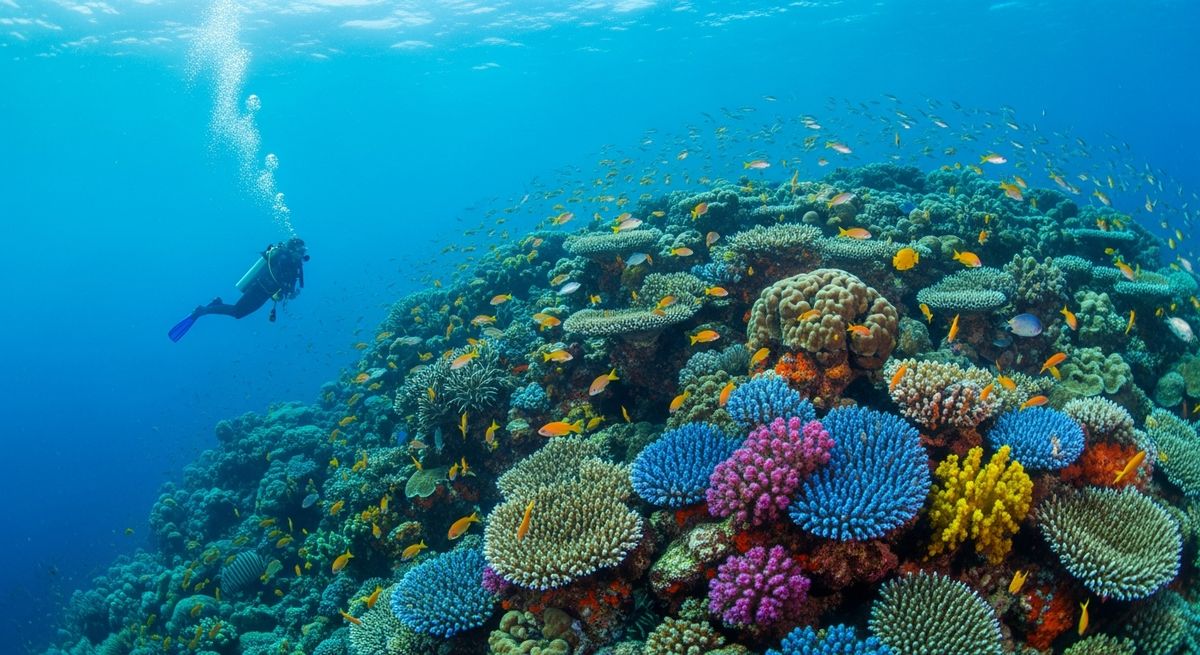
Grano de Oro is where we head when we’re looking for something a bit different near Lima. Forget the tropical reefs you see on postcards, this is a cool, calm kelp forest, and it’s surprisingly captivating. Dropping in, you're immediately enveloped in swaying golden-green fronds that reach for the surface from the 13-metre seabed. It feels like swimming through an ancient, submerged forest, the light filtering down in dappled patterns. Visibility here averages around five metres, which some might call low, but we think it adds to the atmosphere, giving everything a mysterious, intimate feel. It forces you to slow down, to really look. We’ve spotted Pacific cornetfish drifting almost invisibly among the kelp, and the little barred pipefish are masters of disguise here, perfectly camouflaged. Keep an eye out for the Pacific speckled crabs scuttling over the rocks at the base of the kelp. Because it’s a protected bay, conditions are usually pretty mellow, making it a great spot for newer divers to experience a temperate water environment without strong currents. It’s a wonderful contrast to other South American sites.
Nearest Dive Centres to Grano de Oro
Dive shops near Grano de Oro
Naylamp Diving
SB Divers
Pacific Divers
KangaruPeru
Reviews for Grano de Oro
Conditions
Ocean conditions, forecast and tides for Grano de Oro
Grano de Oro Ocean Conditions
Monthly averages for Grano de Oro, sourced from Open-Meteo marine data - nearest station: Open-Meteo marine grid (-12.05, -77.16) (20km away)
October Averages
Sea Temperature
17°C
63°F · Range: 15.5–19°C
Air Temperature
16°C
60°F
Wind Speed
6.32 m/s
12.3 knots
Atmospheric Pressure
1014.5 hPa
Based on 4 years of monitoring data · Data sources: Open-Meteo marine data
Plan & book
Ways to dive Lima & Palomino Islands, from day trips to liveaboards.
Day trips & courses
via GetYourGuideGuided dives, courses and snorkel trips with instant booking.
Find dive trips in Lima & Palomino IslandsPlaces to stay
via Booking.comHotels and dive resorts near Lima & Palomino Islands.
Search stays in Lima & Palomino IslandsDive insurance
Most travel insurance excludes or limits scuba. Check what you need before you go.
Dive insurance explainedPartner links: we may earn a commission if you book, at no extra cost to you. How we make money
Where to Stay near Grano de Oro
Prices from Booking.com. We may earn a commission at no extra cost to you.