Proco House Reef
Protected Area
KKP3K Pulau Sali, Gane Barat Utara
Why dive here
With 131+ marine species recorded in the area - including sea turtles, sperm whales and pufferfish - Proco House Reef offers some of Halmahera's richest reef diving. Water ranges 29-30°C, warmest April, May, December.
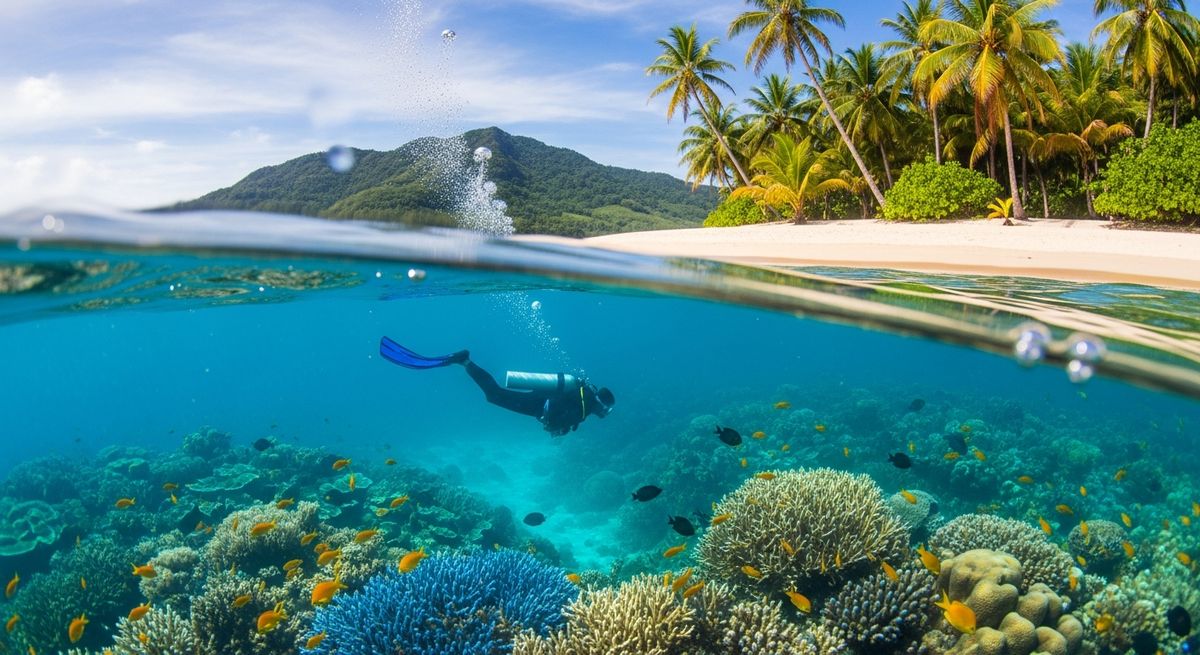
Proco House Reef in Halmahera is a surprisingly rich spot, right off the resort jetty. We've often found ourselves dropping in here for a relaxed afternoon dive, especially good for shaking off travel fatigue. It's not a deep dive, maxing out around 22 meters, with visibility typically hitting a clear 24 meters. The reef itself is heavily overgrown, creating plenty of nooks and crannies to explore. You’ll weave through schools of fusiliers, their silver bodies flashing, and we’ve spotted everything from little Blackbelly Pygmygobies to a couple of those elusive Largemouth Triplefins if you have a keen eye. The safety stop under the jetty is a nice touch, offering a final look at the critters clinging to the pilings before surfacing. It’s a solid pick for a low-key dive where you still want to see some action, a good site for building confidence or just unwinding.
Nearest Dive Centres to Proco House Reef
Dive shops near Proco House Reef
View all dive centres in HalmaheraReviews for Proco House Reef
Conditions
Ocean conditions, forecast and tides for Proco House Reef
Proco House Reef Ocean Conditions
Monthly averages for Proco House Reef, sourced from Open-Meteo marine data + Copernicus Marine (EU) - nearest station: Open-Meteo marine grid (-0.4, 127.72) (46km away)
October Averages
Sea Temperature
30°C
85°F · Range: 28.8–30.6°C
Current Speed
6.71 cm/s
Direction: NE (26.6°)
Chlorophyll-a
0.14 mg/m³
Clear water
Salinity
33.73 PSU
Based on 4 years of monitoring data · Data sources: Open-Meteo marine data + Copernicus Marine (EU)
Plan & book
Ways to dive Halmahera, from day trips to liveaboards.
Day trips & courses
via GetYourGuideGuided dives, courses and snorkel trips with instant booking.
Find dive trips in HalmaheraPlaces to stay
via Booking.comHotels and dive resorts near Halmahera.
Search stays in HalmaheraDive insurance
Most travel insurance excludes or limits scuba. Check what you need before you go.
Dive insurance explainedPartner links: we may earn a commission if you book, at no extra cost to you. How we make money
Where to Stay near Proco House Reef
Prices from Booking.com. We may earn a commission at no extra cost to you.