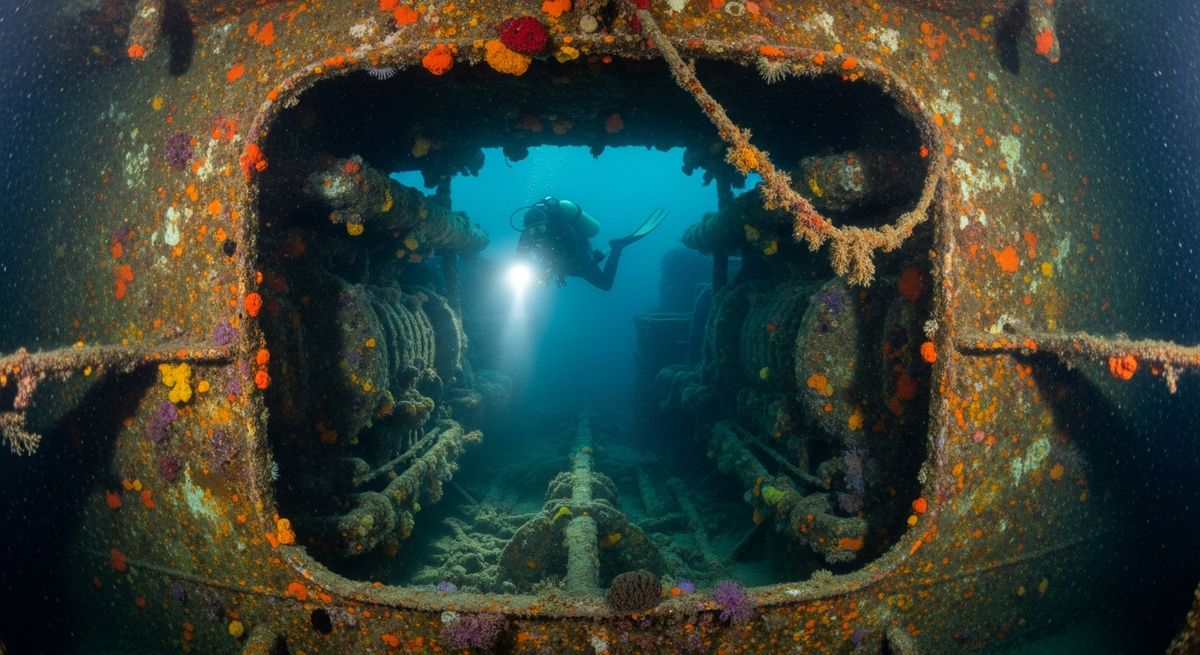
Sali Bay East Freestyle
Protected Area
KKP3K Pulau Sali, Gane Barat Utara
Why dive here
With 131+ marine species recorded in the area - including sea turtles, sperm whales and pufferfish - Sali Bay East Freestyle offers some of Halmahera's richest wreck diving. Water ranges 29-30°C, warmest April, May, December.
Sali Bay East Freestyle offers a drift dive with a bit of a kick. We’re talking about a headland here, so expect that current to push you along, sometimes with a surprising vertical tug. It’s certainly not a site for stopping to photograph every nudibranch, but rather for gliding past the wall, keeping an eye out for Blacktip Reef Sharks patrolling the deeper sections. Visibility averages around 16 metres, which is decent for the pace. If you enjoy a good drift and don’t mind a bit of a workout, it’s a fun ride to see the usual suspects, plus a chance to spot species like the Blackbelly Pygmygoby if you can slow down enough.
Safety Notes
Wreck site - avoid penetration without wreck diving certification. Watch for sharp metal and entanglement hazards.
Nearest Dive Centres to Sali Bay East Freestyle
Dive shops near Sali Bay East Freestyle
View all dive centres in HalmaheraReviews for Sali Bay East Freestyle
Conditions
Ocean conditions, forecast and tides for Sali Bay East Freestyle
Sali Bay East Freestyle Ocean Conditions
Monthly averages for Sali Bay East Freestyle, sourced from Open-Meteo marine data + Copernicus Marine (EU) - nearest station: Open-Meteo marine grid (-0.4, 127.72) (46km away)
October Averages
Sea Temperature
30°C
85°F · Range: 28.8–30.6°C
Current Speed
6.71 cm/s
Direction: NE (26.6°)
Chlorophyll-a
0.14 mg/m³
Clear water
Salinity
33.73 PSU
Based on 4 years of monitoring data · Data sources: Open-Meteo marine data + Copernicus Marine (EU)
Plan & book
Ways to dive Halmahera, from day trips to liveaboards.
Day trips & courses
via GetYourGuideGuided dives, courses and snorkel trips with instant booking.
Find dive trips in HalmaheraPlaces to stay
via Booking.comHotels and dive resorts near Halmahera.
Search stays in HalmaheraDive insurance
Most travel insurance excludes or limits scuba. Check what you need before you go.
Dive insurance explainedPartner links: we may earn a commission if you book, at no extra cost to you. How we make money
Where to Stay near Sali Bay East Freestyle
Prices from Booking.com. We may earn a commission at no extra cost to you.