Seromadopo
Protected Area
KKP3K Pulau Sali, Gane Barat Utara
Why dive here
With 131+ marine species recorded in the area - including sea turtles, sperm whales and pufferfish - Seromadopo offers some of Halmahera's richest drift diving. Water ranges 29-30°C, warmest April, May, December.
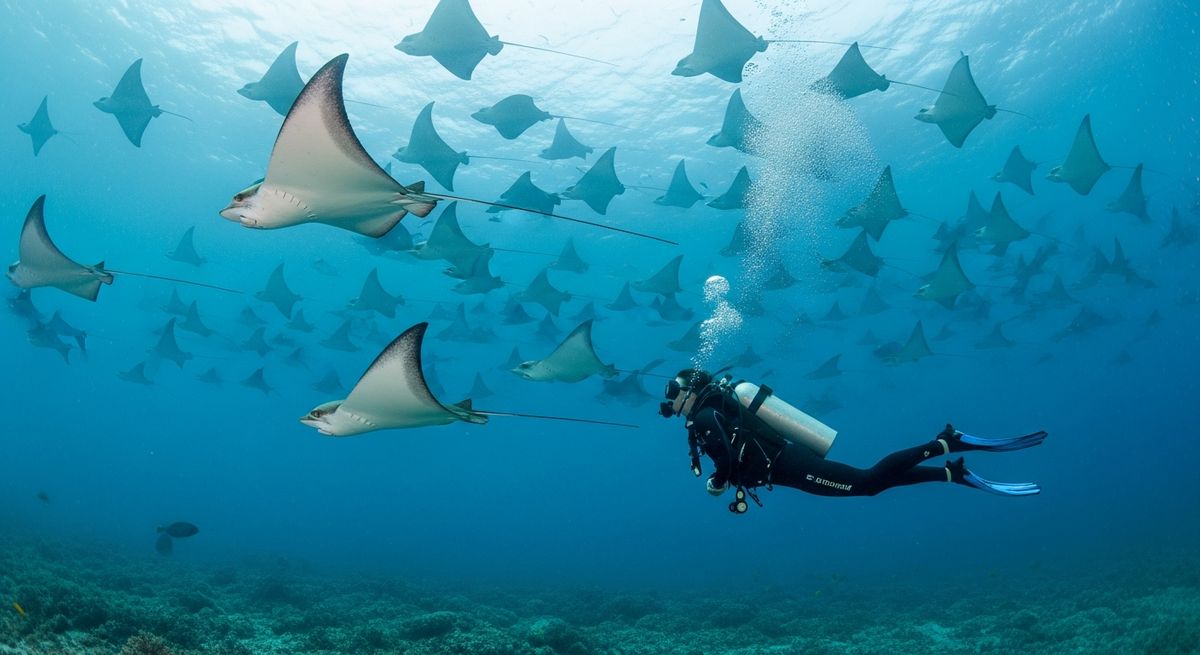
Seromadopo sits in a sheltered bay, just a quick boat ride from Kusu Island. We’ve found it’s a reliable spot, a sloping reef with big boulders draped in healthy coral. Visibility usually holds around 21 metres, letting you really appreciate the coverage here. Keep an eye out for the resident blacktip reef sharks gliding past, and schools of fusiliers sometimes swirl so thick they dim the light. On the macro side, we’ve consistently spotted Blackbelly Pygmygobies and even a few Candy Crabs tucked into the Staghorn. You can get some current here, especially around tide changes, so it’s a good one for intermediate divers who don’t mind a bit of a drift. It’s a solid dive for anyone looking for that classic Indo reef vibe without being overly challenging.
Safety Notes
Drift dive - carry a surface marker buoy (SMB) and stay with your group. Brief the current direction before entry.
Nearest Dive Centres to Seromadopo
Dive shops near Seromadopo
View all dive centres in HalmaheraReviews for Seromadopo
Conditions
Ocean conditions, forecast and tides for Seromadopo
Seromadopo Ocean Conditions
Monthly averages for Seromadopo, sourced from Open-Meteo marine data + Copernicus Marine (EU) - nearest station: Open-Meteo marine grid (-0.4, 127.72) (46km away)
October Averages
Sea Temperature
30°C
85°F · Range: 28.8–30.6°C
Current Speed
6.71 cm/s
Direction: NE (26.6°)
Chlorophyll-a
0.14 mg/m³
Clear water
Salinity
33.73 PSU
Based on 4 years of monitoring data · Data sources: Open-Meteo marine data + Copernicus Marine (EU)
Plan & book
Ways to dive Halmahera, from day trips to liveaboards.
Day trips & courses
via GetYourGuideGuided dives, courses and snorkel trips with instant booking.
Find dive trips in HalmaheraPlaces to stay
via Booking.comHotels and dive resorts near Halmahera.
Search stays in HalmaheraDive insurance
Most travel insurance excludes or limits scuba. Check what you need before you go.
Dive insurance explainedPartner links: we may earn a commission if you book, at no extra cost to you. How we make money
Where to Stay near Seromadopo
Prices from Booking.com. We may earn a commission at no extra cost to you.