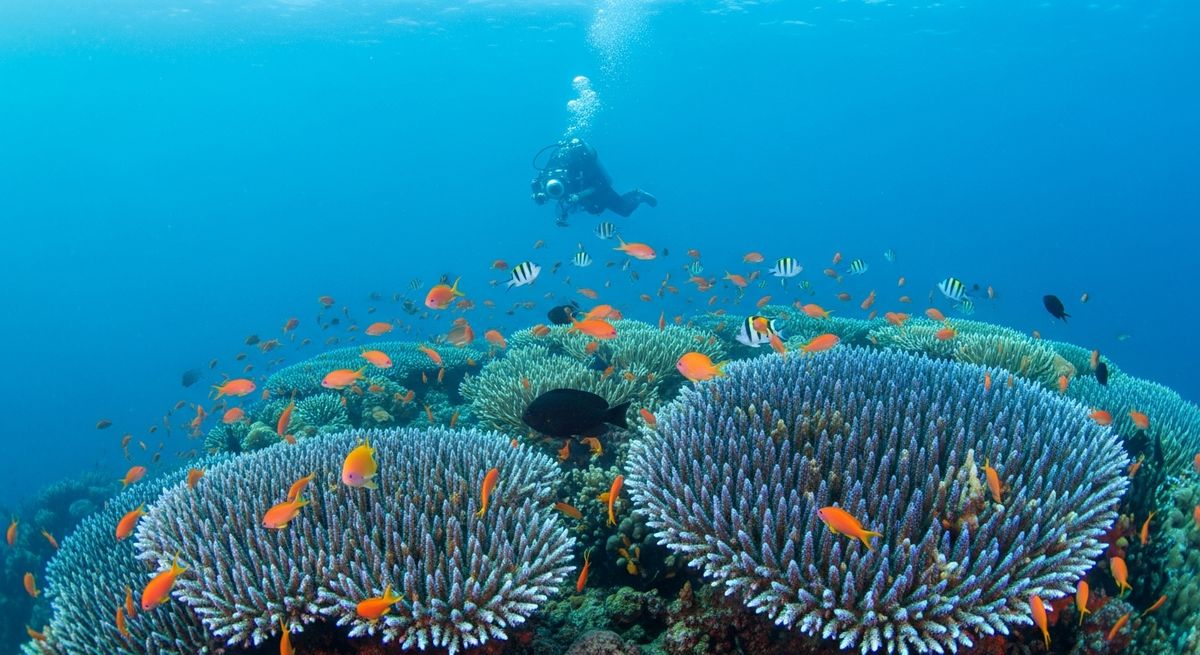
Tanjung Neraka - Halmahera

Wattabomi is a favourite for us on Pemba, a site that consistently delivers. It’s got these fantastic coral pinnacles that start shallow, around 5 metres, and then drop off to about 18 metres where the sand begins. That shallow depth means you get beautiful light, and we often find ourselves just floating, watching the schools of fusiliers swirl around the bommies. The real magic for us, though, is the sheer density of morays here. We’ve seen five different species on a single dive, including the gorgeous dragon moray, tucked into crevices. Keep an eye out for stonefish, too, masters of camouflage on the coral heads. It’s an easy, relaxing dive, perfect for photographers or anyone who just wants to soak in a healthy reef without strong currents pulling them around. We’d suggest an early morning dive if you can swing it, before the wind picks up and for the best light.

Location
Halmahera, Indonesia, Southeast Asia
Coordinates
-0.455200, 127.692800
Type
reef

Marine Protected Area: KKP3K Pulau Sali, Gane Barat Utara

Best Time to Dive in Halmahera

The warmest water temperatures in Halmahera occur in November, averaging 30.1°C. The coolest conditions are in August at 28.5°C.

Monthly Water Temperatures

  • January: 29.0°C
  • February: 28.8°C
  • March: 29.1°C
  • April: 29.5°C
  • May: 29.9°C
  • June: 29.6°C
  • July: 29.0°C
  • August: 28.5°C
  • September: 28.6°C
  • October: 29.4°C
  • November: 30.1°C
  • December: 29.8°C

Nearby Dive Sites in Halmahera

Nearest Dive Centres to Tanjung Neraka

Marine Life in Halmahera

Home to 141 recorded species including 69 reef fish, 48 hard corals, 7 seagrass & algae, 4 clams & mussels, 3 crabs & lobsters, 2 sea cucumbers.

Notable Species

Recommended Packing List for Tanjung Neraka

Based on average water temperature of 29.3°C, currents 7 cm/s.

  • Shorty or Rashguard - warm 29°C water needs minimal exposure protection
  • Mask - essential for every dive
  • Fins
  • BCD - buoyancy compensator
  • Regulator - your most safety-critical piece of gear
  • Dive Computer - tracks depth, time, and NDL
  • Surface Marker Buoy (SMB) - essential for boat pickups
  • Dive Torch - useful for crevices and colour at depth
  • Underwater Camera - capture your diving memories

Frequently Asked Questions

What is the typical diving depth at Tanjung Neraka?
The maximum diving depth at Tanjung Neraka is 22 meters. This site features a slope with good coral coverage, making it suitable for divers comfortable with intermediate depths. Divers can explore the vibrant reef within this range.
What kind of marine life and coral formations can divers expect to see at Tanjung Neraka?
Divers at Tanjung Neraka can expect to see a slope with good coral coverage, providing a rich habitat for various species. Marine life includes black & white tip reef sharks, Bumphead Parrot fish, snapper, and sweet lip. Additionally, you might spot unique critters like Bargibanti, Denise & Pontohi seahorse, along with Nambrotha & Flabellina nudibranchs; for more details, visit our wildlife database.
How challenging are the diving conditions at Tanjung Neraka, especially regarding currents?
The diving conditions at Tanjung Neraka are rated as intermediate difficulty. This is primarily due to the potential for strong currents. Divers should be prepared for varying current strengths, which can influence the dive plan.
What is the best time of year to dive at Tanjung Neraka for optimal conditions?
Information regarding the best time of year to dive at Tanjung Neraka for optimal conditions is not available in the provided data. General guidance on dive seasons can often be found on our When to Dive page, but specific seasonal recommendations for this site are not detailed here.
What scuba diving certifications are recommended or required for diving at Tanjung Neraka?
Given that Tanjung Neraka is classified as an intermediate difficulty dive site, a certification beyond Open Water Diver, such as Advanced Open Water or equivalent, would be highly recommended. While no specific certification is explicitly required in the data, experience with currents would be beneficial.
What are the typical current conditions at Tanjung Neraka, and how do they affect dives?
Tanjung Neraka can experience strong currents, which are a significant factor in dive planning. Depending on the current direction and strength, there are actually two distinct dive sites - one to the north and one to the south. Dive operators will choose the appropriate site based on prevailing conditions to ensure a safe and enjoyable experience.