FU SAN
Protected Area
Sabang Marine Protected Area
Why dive here
With 57+ marine species recorded in the area - including blacktip reef sharks - FU SAN offers some of Subic Bay's richest wreck diving. Water ranges 27-32°C, warmest May, June, July.
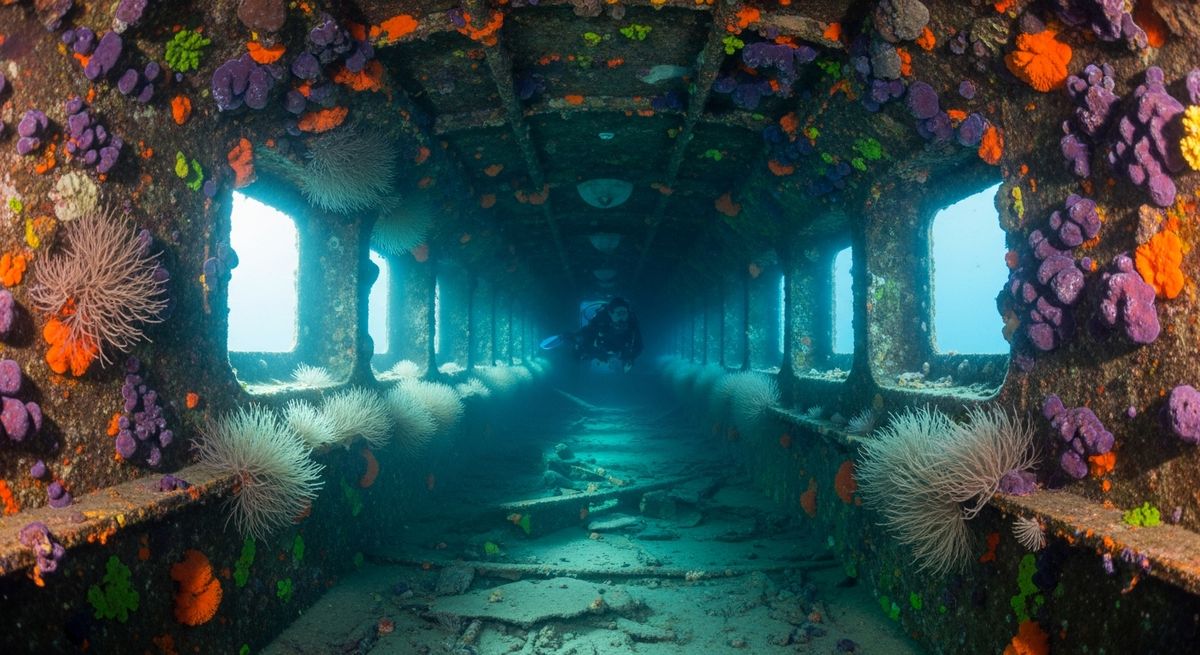
The FU SAN is a surprisingly fun dive, especially when you’re looking for something shallow and relaxed in Subic. We love it for its sheer accessibility; sitting upright at a max depth of 5 metres, it’s practically a snorkel. This isn't some dramatic, deep wreck, but its size, 117 metres long, means you still get that proper wreck feeling. The FU SAN ran aground in a typhoon back in '74, and you can really see how the bay has claimed it over the decades. Glide over the deck, which is now a bustling flat for small reef fish. You'll spot schools of juvenile snapper flitting in and out of the rusted holds. We've often found ourselves just hovering, watching the nudibranchs inching their way across the barnacle-covered metal. It’s an ideal site for new divers getting their first taste of a big wreck, or photographers wanting to play with ambient light and wide-angle shots without worrying about deco. If you time it right, a calm morning offers the best visibility, letting you appreciate the scale of the wreck from bow to stern.
Typical FU SAN Dive Profile
Illustrative profile based on site depth and type. Actual dive profiles vary - always follow your dive computer and training.
Safety Notes
Wreck site - avoid penetration without wreck diving certification. Watch for sharp metal and entanglement hazards.
Nearest Dive Centres to FU SAN
Dive shops near FU SAN
View all dive centres in Subic BayReviews for FU SAN
Conditions
Ocean conditions, forecast and tides for FU SAN
FU SAN Ocean Conditions
Monthly averages for FU SAN, sourced from Open-Meteo marine data + Copernicus Marine (EU) - nearest station: Open-Meteo marine grid (14.67, 120.67) (22km away)
October Averages
Sea Temperature
30°C
86°F · Range: 28.8–31.5°C
Current Speed
2.24 cm/s
Direction: NW (296.6°)
Chlorophyll-a
0.071 mg/m³
Very clear (oligotrophic)
Salinity
31.3 PSU
Based on 4 years of monitoring data · Data sources: Open-Meteo marine data + Copernicus Marine (EU)
Plan & book
Ways to dive Subic Bay, from day trips to liveaboards.
Day trips & courses
via GetYourGuideGuided dives, courses and snorkel trips with instant booking.
Find dive trips in Subic BayPlaces to stay
via Booking.comHotels and dive resorts near Subic Bay.
Search stays in Subic BayDive insurance
Most travel insurance excludes or limits scuba. Check what you need before you go.
Dive insurance explainedPartner links: we may earn a commission if you book, at no extra cost to you. How we make money
Where to Stay near FU SAN
Prices from Booking.com. We may earn a commission at no extra cost to you.