Diving in Subic Bay
Why dive here
Subic Bay offers some of Philippines's richest diving, with 57+ marine species recorded in the area - including blacktip reef sharks. Water ranges 28-31°C, warmest May, June, July.
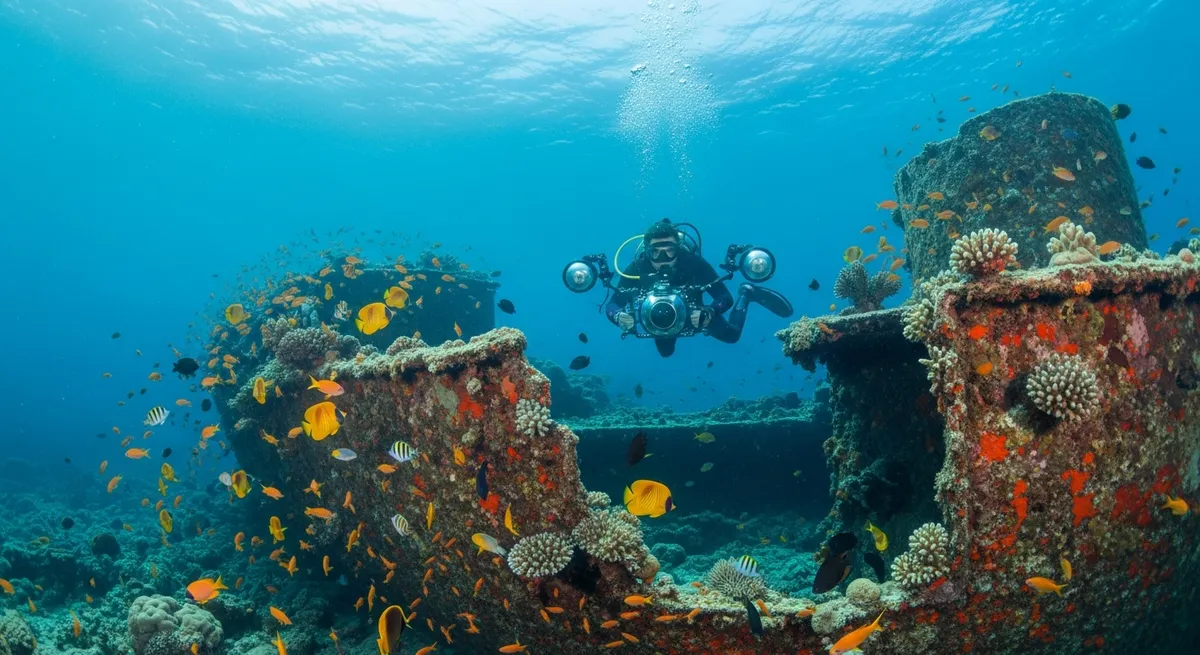
Subic Bay isn't about drift diving over sprawling coral gardens. Here, it’s all about the history submerged. We love the USS New York, a proper battleship on its side, nearly 200 metres long and surprisingly intact. Dropping down onto that deck, feeling the cool current pull you slightly past massive gun turrets, it's a very different kind of dive. The viz can be a bit variable, especially after a good rain, but when it’s good, exploring the hold where light shafts pierce through the gloom is incredible. We’d suggest going early in the morning to beat the boat traffic if you can, and look out for the schools of silverfish that often shimmer around the superstructure. It’s a genuinely moody, atmospheric place to dive, far removed from the usual tropical brights. Beyond the big wrecks, there are smaller vessels and even a few planes, creating artificial reefs that attract everything from curious Hoeven's wrasse to the occasional yellow largescale flounder tucked into the sand.
Subic Bay Dive Site Map
Dive sites and dive centres in Subic Bay
Subic Bay Dive Sites
44 dive sites in Subic Bay
BALDER CHUANCHOW
The Balder Chuanchow isn’t a deep dive, sitting at just 4m, which honestly makes it one of our favourite easy afternoon trips when we’re in Subic. This carrier vessel ran aground back in '87, and while "dangerous wreck" sounds a bit dramatic, it just means it's been left alone, giving marine life plenty of time to move in. You can still see the sheer scale of the ship, even with much of it broken up. We love finning over the huge, flattened sections of hull, feeling the surge gentle push and pull us. Look for schools of juvenile barracuda shimmering just beneath the surface, almost invisible until you’re right on them. The growth on the metal is impressive; think dense carpets of small anemones and colourful soft corals, especially where the light catches it just right. It’s perfect for new divers or anyone looking for a relaxed, long bottom time to practice their photography. Try to hit it on a calm morning; visibility usually holds best before the afternoon breeze picks up.
BCL
The BCL is a shallow barge wreck in Subic Bay, sitting at a consistent 6 meters. It’s a pretty easy dive, mainly for newer divers or those looking for a long, relaxed safety stop. What makes it interesting is how much the fish life has taken over; we often see schools of juvenile batfish and snapper sheltering around the hull. You can’t penetrate the wreck, but it’s a good spot to practice buoyancy and observe how a relatively small structure becomes its own ecosystem.
CAPTAIN UFUK
The Captain Ufuk sits in just 8 metres of water, making it a brilliant spot for newer divers or anyone wanting a long, relaxed bottom time. It's a small motor vessel, classified as a 'dangerous wreck' by the local authorities, which always makes us chuckle a bit – it's more quirky than menacing. We love drifting over the main deck, observing how the soft corals have started to creep across the hull, like colourful moss on a forgotten statue. Entry is straightforward, usually just a short boat ride from one of the Subic Bay dive centres. You can spend ages exploring the shallow holds, where schools of tiny glassfish dart and swirl, creating shimmering clouds when you approach. Keep an eye out for resident lionfish, often tucked into shadowed corners, their venomous spines fanning out dramatically. It's not a deep, penetrable wreck, but its accessibility and the way marine life has embraced it make it one of our favourite easy dives in the bay. We often spot a turtle or two grazing nearby, too.
CEBU CITY
The Cebu City wreck in Subic Bay is a personal favourite, a real standout in a bay full of them. This old passenger ferry, sunk back in '94 after a collision, sits upright at 27 metres, pretty much intact. We love how accessible it is for exploring, with massive cargo holds you can easily penetrate. Just remember your lights; it gets properly dark inside. Schools of fusiliers swirl around the superstructure, so thick they almost block out the light sometimes, and we always spot lionfish perched on railings, patient as statues. It’s got that slightly eerie, frozen-in-time feel that only wrecks can deliver, especially when you push a bit deeper into the passenger decks. We'd suggest going early in the morning, before the boat traffic picks up, to really appreciate the quiet grandeur of it all. This site is fantastic for advanced open water divers keen on wreck penetration without too much risk, but still offering plenty to see from the outside for less experienced wreck divers.
CLYDESDALE IV
Subic Bay has a reputation for its wrecks, but the Clydesdale IV offers something a little different. This isn't your typical deep, dark exploration; instead, you get a sun-drenched, shallow wreck, perfect for extending bottom time. We love drifting over the remains of this tanker, swept ashore by a typhoon in '92. It's a jumble of twisted metal and collapsed superstructure, but it’s the light that makes it special, piercing through the gaps and illuminating the resident fish. The entire wreck sits at just 5 metres, making it an ideal second dive or even a really long first one if you’re into macro photography. Visibility here is often better than some of the deeper sites, especially on an incoming tide. We’ve spent ages just hovering over the engine room, now a skeletal frame, watching schools of juvenile snapper flit between the exposed pipes. Look closely, and you’ll spot nudibranchs, crabs, and even the occasional small moray eel tucked into crevices. It’s a gentle dive, suited to newer divers or anyone who just wants to soak up the atmosphere of a wreck slowly being reclaimed by the ocean.
Coral Garden
Subic Bay’s Coral Garden really delivers on its name. It’s a shallow dive, mostly under 10 meters, making it a great spot for longer bottom times and really soaking in the details. We love the way the sunlight shafts through the water here, illuminating the staghorn corals and making the fusiliers sparkle. It’s not a site for big pelagics, though we have seen a blacktip reef shark cruise through on occasion, but the macro life and resident reef fish are the real draw. You’ll find black-headed leatherjackets darting between the coral heads, and we always keep an eye out for the oriental flying gurnard, slowly "walking" across the sand. Look closely for filamentous blennies peeking out of their holes, and undulated morays tucked deep in crevices. It's a fantastic site for photographers, especially if you enjoy hunting for the smaller, less obvious critters. We'd suggest going in the morning before the boat traffic picks up for the calmest conditions.
DA'KUDOS Beach Resort
Da'Kudos Beach Resort in Subic Bay? We love it for an easy second or third dive of the day, especially if you’re staying nearby. It’s a shore entry, so you kit up on the beach, wade in, and descend into a surprisingly varied patch of reef. The initial sandy slope leads to scattered coral bommies and a mix of soft and hard corals – you'll spot plenty of fluorescence grass coral and thin birdsnest. We’ve had some cracking encounters here. Look closely among the whip corals and you might just catch a glimpse of a flat-faced seahorse, our favourite find at this site. There’s a good number of small giant clams scattered about, and we often see common lionfish patrolling the ledges. Keep an eye out for yellowmargin triggerfish too; they’re pretty bold here. It’s not the most dramatic dive in Subic, but it's consistent, calm, and a relaxed way to explore some of the bay's smaller critters. Perfect for photographers taking their time or newer divers building confidence.
DONA CORAZON II
The Dona Corazon II isn't just another Subic Bay wreck, she's a sprawling playground, especially for those of us who appreciate a good story with our dives. This bulk carrier, driven aground by Typhoon Ruby in '88, now lies almost entirely exposed at low tide, making for a truly unique dive. We love that you can start shallow, exploring the twisted metal above the waterline before dropping down. Below, the sheer size of her is impressive, the hull plates now a patchwork of soft corals, anemones, and bristling with crinoids. You'll find schools of fusiliers and snapper darting through the cargo holds, and we've often spotted scorpionfish camouflaged on the deck plates. Our favourite part? Exploring the various openings – big enough for comfortable penetration without feeling claustrophobic, just enough light filtering through to keep things interesting. Keep an eye out for nudibranchs on the encrusted railings. It's a fantastic site for photographers and wreck enthusiasts alike, offering plenty of nooks and crannies to investigate without ever feeling repetitive.
Douglas Skyraider (Wreck)
Dropping onto the Douglas Skyraider, the first thing you notice is the sheer scale. It’s a beast of a plane, a relic from the Vietnam War era, resting upright on the seabed at 31 metres. We love how intact it still is, especially the cockpit area. Peering inside, you can almost imagine the pilot still there, though these days the seat is occupied by a grumpy stonefish or a curious lionfish. The propellor blades are bent back, a testament to its impact, and the wings stretch out, providing plenty of nooks and crannies for exploration. Look closely and you’ll find nudibranchs crawling along the corroded metal, and schools of silver fish darting through the open fuselage. It’s an intermediate dive, the depth making it unsuitable for absolute beginners, but if you’ve got a few dives under your belt and a love for history, this is our pick in Subic. We always try to time our dive for mid-morning when the light penetrates best, giving the whole site a wonderfully eerie glow. Keep an eye out for the resident moray eel that sometimes pokes its head out near the tail section.
EILEEN RACHEL
The Eileen Rachel is an anomaly, and we love it for that. This isn't your deep, dark wreck; she’s right on the surface, practically sunbathing. Sunk during Typhoon Ruby in '88, she broke loose and grounded hard. Now, most of her is above water, but what’s submerged is a fantastic little playground. We’re talking about a maximum depth of one metre here, making it perfect for snorkelers, freedivers, or even just a very casual SCUBA splash. What we really enjoy is how accessible she is. You can literally walk up to parts of the wreck, then just dip your head under and see schools of small jacks darting through the twisted metal. It’s like a living art installation. The shallowness means the light penetration is incredible, painting the coral growth in bright colours you rarely see on deeper wrecks. You'll spot colourful nudibranchs, tiny crabs tucked into crevices, and juvenile fish hiding in the shadows of the engine room – which is surprisingly intact, considering its a surface wreck. It’s our pick for a leisurely afternoon, especially if you want to combine a bit of exploring above and below the waterline.
El Capitan (USS Majaba)
El Capitan, the USS Majaba, is a wreck we always look forward to diving in Subic. Sitting upright at a flat 20 metres, it's a perfect intermediate dive; deep enough to feel like a proper wreck, shallow enough to let you linger. We love dropping down onto the huge cargo holds, often finding a pair of resident lionfish tucked into a corner, just waiting for a photo op. The sheer size of the Majaba is what gets us every time. This isn’t some small boat. You can spend your entire bottom time exploring just one section, pushing through the superstructure or peering into the massive open holds that once stored military hardware. Schools of batfish often hang motionless above the deck, occasionally swirling as you approach. Look closely at the hull and you’ll spot nudibranchs, usually a few different varieties, slowly making their way across the barnacle-encrusted metal. Our favourite section has to be the stern, where the prop shaft housing offers a natural overhang for all sorts of critters. Dive this one in the morning if you can, before the bay gets too busy, and you might just have the old girl all to yourself.
FEOSO SUN
The FEOSO SUN is one of those Subic Bay wrecks that gets under your skin. We wouldn’t call it pretty in the conventional sense. This tanker didn't just sink; she exploded at anchor in 1978, taking 30 lives with her, and the wreckage tells that story. Dropping down, you’re met with a sprawling debris field, a jumble of twisted metal and torn plating. It feels raw, almost violent, a powerful reminder of her end. Our favourite parts are exploring the crumpled bow and stern sections, where the hull is ripped open like a tin can. You can spend a whole dive just picking through the mangled structure, imagining the force that created such a scene. Despite the destruction, life thrives here. Schools of batfish glide through the open sections, their reflective scales flashing in the ambient light. We often spot lionfish tucked into crevices and occasionally a massive grouper lurking in the deeper holds. It’s a site for divers who appreciate history and the sheer power of the ocean, more about atmosphere and exploration than pristine corals. Bring a good torch and take your time; there’s a lot to see in the chaos.
Show all 44 dive sites in Subic Bay
- FERNANDO J-1
- FU SAN
- GENERAL SANTOS CITY
- HIJMS Kumano
- IRAN EHSAN
- JAVELLNA IV
- JONATHAN
- Kanduli
- KOLAMBUGAN
- Kyo Maru Wreck
- L2D “Tabby“ (Japaness DC-3)
- LB 1015
- LIMAHONG
- LST
- MAYA
- North of Sampolac Point
- O.K. UNO
- Oryoku Maru
- PIONEER LEYTE
- REYNA FILIPINA (PROBABLY)
- Savage A2 AJ2 Bomber Wreck
- Seiun Maru
- STAR ACE
- SY 781 (PROBABLY)
- TIMONEL
- TITAN 8
- UNITED FELLOW
- Upside Down Landing Craft Utility (LCU2)
- USS New York
- USS New York (Wreck)
- VEFIL
- VIRGEN DE LA PAZ (PROBABLY)
Subic Bay Dive Centres
9 dive shops and operators in Subic Bay
Arizona Dive Shop
Blueworld Dive Center
Camayan Divers
Dive Buddies Philippines
Divers Point
Ocean Deep - Diver Training Center (PADI)
OceanZoneExplorers
Scuba Academy Manila
Show all 9 dive centres in Subic Bay
Ocean Wildlife in Subic Bay
57 species recorded in Subic Bay
Subic Bay Daylight & Sunrise/Sunset
Sunrise and sunset times for Subic Bay, calculated from coordinates
Today - Sunday 11 October
Sunrise
05:49
Sunset
17:42
Daylight
11h 52m
Golden Hour
17:13
First light (dawn) at 05:28 · Last light (dusk) at 18:03
Monthly Averages
| Month | Sunrise | Sunset | Daylight |
|---|---|---|---|
| Jan | 06:27 | 17:48 | 11h 20m |
| Feb | 06:23 | 18:03 | 11h 39m |
| Mar | 06:07 | 18:09 | 12h 2m |
| Apr | 05:45 | 18:12 | 12h 28m |
| May | 05:31 | 18:19 | 12h 49m |
| JunLongest | 05:29 | 18:29 | 13h 0m |
| Jul | 05:37 | 18:32 | 12h 56m |
| Aug | 05:44 | 18:22 | 12h 38m |
| Sep | 05:47 | 18:01 | 12h 14m |
| OctNow | 05:50 | 17:39 | 11h 49m |
| Nov | 06:00 | 17:27 | 11h 27m |
| DecShortest | 06:16 | 17:31 | 11h 15m |
Times are approximate local times based on longitude. Actual times may vary slightly depending on the exact timezone observed in Subic Bay.
Where to Stay near Subic Bay
Prices from Booking.com. We may earn a commission at no extra cost to you.
Marine Protected Areas near Subic Bay
20 protected areas near Subic Bay - please respect local regulations when diving
Zambales Marine Protected Area Network
BBBIDA Pangasinan
Agoo-Damortis National Park
Masinloc and Oyon Bay Protected Landscape and Seascape
Bani Marine Protected Area
SCPW
Hundred Island National Park
Puntian-Diguisit
Las Piñas-Parañaque Critical Habitat and Ecotourism Area (LPPCHEA)/Las Piñas-Parañaque
Paltic Fish Sanctuary
Rabaw Ti Bato
Marine Reserve No.1
Showing 12 largest of 20
Getting to Subic Bay
Olongapo
Mabalacat
Manila (Pasay)
Plan & book
Ways to dive Subic Bay, from day trips to liveaboards.
Day trips & courses
via GetYourGuideGuided dives, courses and snorkel trips with instant booking.
Find dive trips in Subic BayPlaces to stay
via Booking.comHotels and dive resorts near Subic Bay.
Search stays in Subic BayDive insurance
Most travel insurance excludes or limits scuba. Check what you need before you go.
Dive insurance explainedPartner links: we may earn a commission if you book, at no extra cost to you. How we make money