Nine Pins
Protected Area
Armers Beach
Why dive here
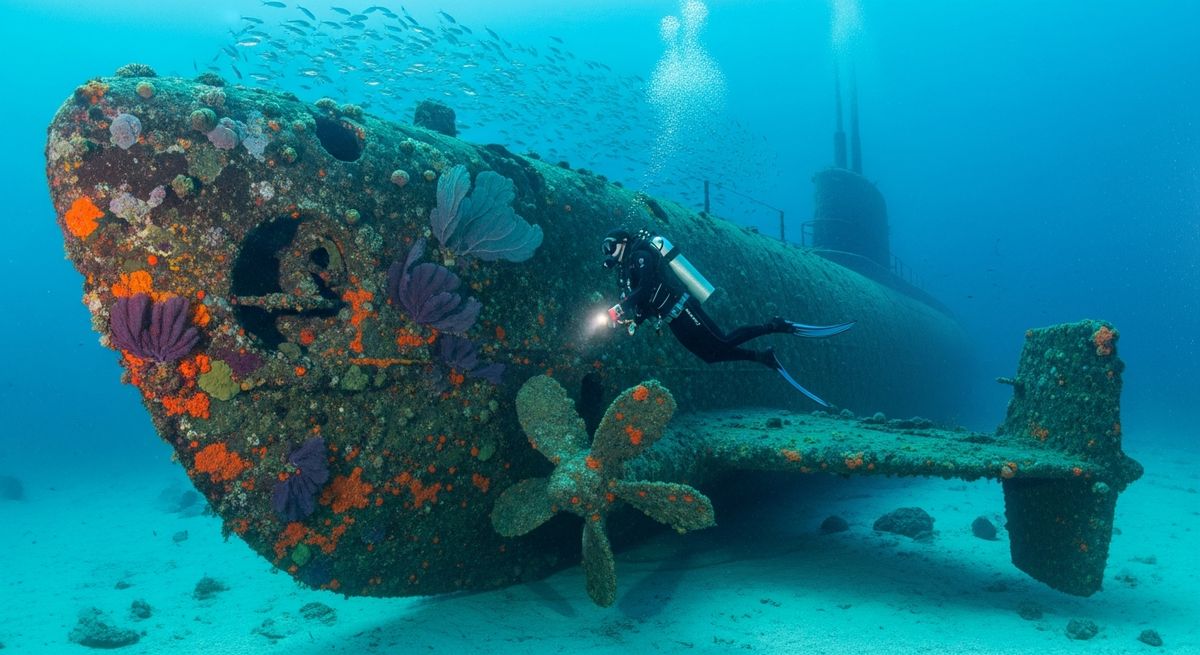
With 35+ marine species recorded in the area - including humpback whales, seahorses and sperm whales - Nine Pins offers some of Kaikōura's richest wreck diving. Water ranges 10-17°C, warmest January, February, March.
The Nine Pins, just off the old Pier Hotel in Kaikōura, is one of those spots we always return to. You’ll find it by the cluster of rocks poking out from the surface, marking the northern edge of the Rahui. Yes, the average visibility is only around 4m, and at just 11m deep, it’s not for those chasing big walls or crystal-clear lagoons. But if you’re into the genuine, rugged beauty of New Zealand’s temperate reefs, this place delivers. Drop in and you’re immediately enveloped by the towering fronds of New Zealand bull kelp. It sways with the surge, creating a perpetually shifting, shadowed landscape. We love gliding through these kelp forests, looking for the flash of a Girdled wrasse or a well-camouflaged Scorpionfish tucked into the rock. Keep an eye out for the blackfoot pāua clinging to the rocks, their iridescent shells catching the limited light. It’s a busy place down there. You’ll spot schools of Pacific sardines darting through the water, pursued by Yellow-eye Mullet. The rock crevices are home to robust Triplefins and the occasional Crayfish. The real magic, though, is how alive it feels, despite the low visibility. You can often hear the clicks and chirps of Dusky Dolphins passing overhead, a reminder of the wilder ocean just beyond. It’s a fantastic site for newer divers looking to experience temperate diving or anyone who appreciates the quieter, colder beauty of a healthy kelp forest. Just remember to time your launch from the ramp outside the Pier Hotel; high tide is key.
Typical Nine Pins Dive Profile
Illustrative profile based on site depth and type. Actual dive profiles vary - always follow your dive computer and training.
Safety Notes
Wreck site - avoid penetration without wreck diving certification. Watch for sharp metal and entanglement hazards.
Cold water this month (avg 12°C). Drysuit or thick wetsuit (7mm+) recommended.
Nearest Dive Centres to Nine Pins
Dive shops near Nine Pins
View all dive centres in KaikōuraReviews for Nine Pins
Conditions
Ocean conditions, forecast and tides for Nine Pins
Nine Pins Ocean Conditions
Monthly averages for Nine Pins, sourced from Open-Meteo marine data + Copernicus Marine (EU) - nearest station: Open-Meteo marine grid (-42.41, 173.71) (50km away)
October Averages
Sea Temperature
12°C
54°F · Range: 10.8–14.6°C
Current Speed
14.42 cm/s
Direction: SW (213.7°)
Chlorophyll-a
0.413 mg/m³
Moderate productivity
Salinity
35.08 PSU
Based on 4 years of monitoring data · Data sources: Open-Meteo marine data + Copernicus Marine (EU)
Plan & book
Ways to dive Kaikōura, from day trips to liveaboards.
Day trips & courses
via GetYourGuideGuided dives, courses and snorkel trips with instant booking.
Find dive trips in KaikōuraPlaces to stay
via Booking.comHotels and dive resorts near Kaikōura.
Search stays in KaikōuraDive insurance
Most travel insurance excludes or limits scuba. Check what you need before you go.
Dive insurance explainedPartner links: we may earn a commission if you book, at no extra cost to you. How we make money
Where to Stay near Nine Pins
Prices from Booking.com. We may earn a commission at no extra cost to you.