Diving in Kaikōura
Why dive here
Kaikōura offers some of New Zealand's richest diving, with 35+ marine species recorded in the area - including humpback whales, seahorses and sperm whales. Water ranges 13-18°C, warmest January, February, March.
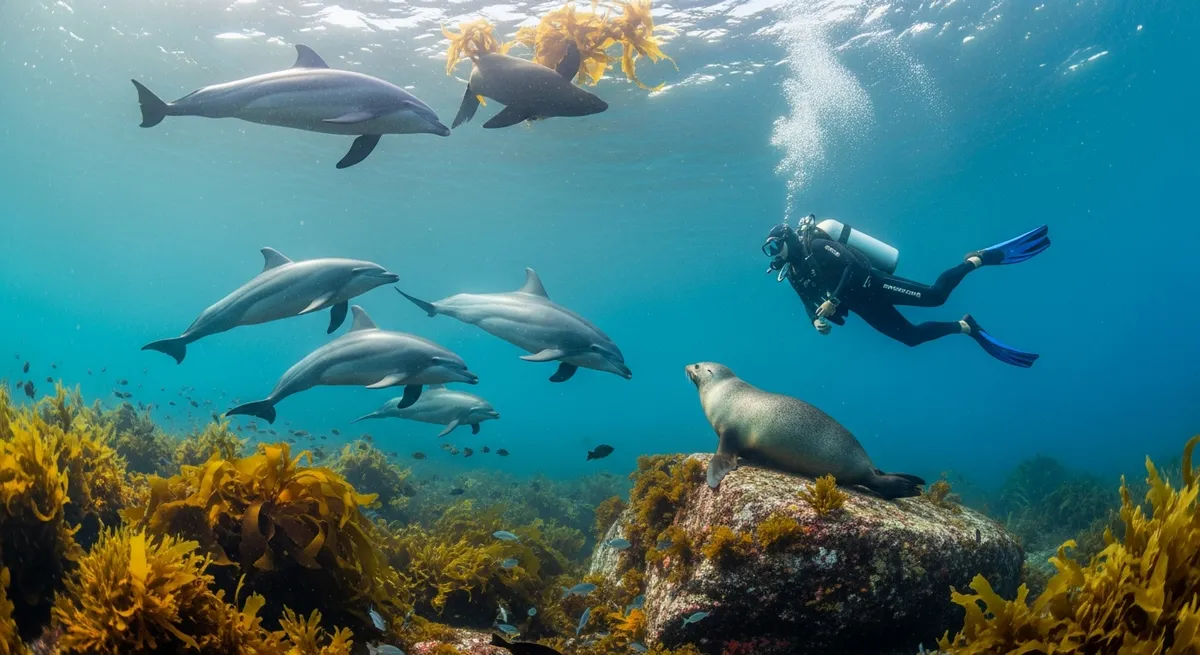
Kaikōura. We often forget about it when planning New Zealand trips, but that's a mistake. This isn't your warm water, reef-bashing kind of dive destination. It’s rugged, raw, and absolutely exhilarating. Think chilly South Pacific water, yes, but also dramatic underwater landscapes that feel truly wild. The deep canyons hug the coast here, pulling up nutrient-rich water. That’s why you get those incredible topside encounters: fur seals barking as they zip past, dusky dolphins playing in the bow waves, and even sperm whales breaching on the horizon. Underwater, it’s a different, equally compelling story. We love the caves and walls, especially when the light-bulb sea squirts are glowing. Keep an eye out for the wandering anemones, they're surprisingly mesmerising to watch. Conditions can be bracing, so decent exposure protection is a must. We’d suggest a drysuit if you’re comfortable, or at least a thick 7mm wetsuit with a hood and gloves. Visibility averages 10-20 metres, but it's the sheer density of life, particularly the smaller stuff and those charismatic megafauna passing through, that keeps us coming back. Our favourite time to dive here is late spring when the water starts to clear but the upwellings are still strong.
Kaikōura Dive Site Map
Dive sites and dive centres in Kaikōura
Kaikōura Dive Sites
39 dive sites in Kaikōura
Allports Island
Allports Island might only hit 19 metres, but don’t let that fool you into thinking it's just a shallow splash. We love it for its sheer accessibility, especially when the weather decides to play nice. Drop in, and you're immediately greeted by the kelp forest swaying in the gentle surge, shafts of sunlight dappling through the fronds. Look closely among the holdfasts for red rock lobsters peeking out, their antennae twitching. What really makes Allports tick, though, are those deeper tubeworm structures, almost like alien sculptures rising from the silty bottom. They create fascinating little hideaways for critters. We’ve spotted ghost sharks gliding past them, and often a curious snapper will come to check you out. Visibility averages 8 metres, which is decent for Kaikōura, but it can drop after heavy rain. Our tip: go on a calm day, ideally after a few days of settled weather, for the best light and clearest water. It’s a great spot for newer divers to gain confidence in a slightly deeper environment without strong currents, and for experienced divers, it's a relaxing dive with some genuinely interesting macro potential if you take your time.
Allports Island
Allports Island might only hit 19 metres, but don’t let that fool you into thinking it's just a shallow splash. We love it for its sheer accessibility, especially when the weather decides to play nice. Drop in, and you're immediately greeted by the kelp forest swaying in the gentle surge, shafts of sunlight dappling through the fronds. Look closely among the holdfasts for red rock lobsters peeking out, their antennae twitching. What really makes Allports tick, though, are those deeper tubeworm structures, almost like alien sculptures rising from the silty bottom. They create fascinating little hideaways for critters. We’ve spotted ghost sharks gliding past them, and often a curious snapper will come to check you out. Visibility averages 8 metres, which is decent for Kaikōura, but it can drop after heavy rain. Our tip: go on a calm day, ideally after a few days of settled weather, for the best light and clearest water. It’s a great spot for newer divers to gain confidence in a slightly deeper environment without strong currents, and for experienced divers, it's a relaxing dive with some genuinely interesting macro potential if you take your time.
Barney’s Rock
Barney’s Rock feels like diving into a cold water aquarium, and we mean that in the best possible way. The maximum depth is only 16 metres, but it’s packed. Think dense forests of New Zealand bull kelp, swaying gently in the current, creating these incredible, shadowed channels. We’ve finned through here with visibility around 6 metres, which might sound low, but it actually adds to the intimate feel. It’s not about seeing miles, it’s about what’s right in front of you. You’ll spot pāua spider crabs clinging to the rock, and if you’re patient, girdled wrasse darting between the kelp fronds. Our favourite encounters here are often the seals. They rest on the rock above, then often drop in for a quick, curious look underwater. It’s always a thrill to have them glide past, eyes wide. Keep an eye out for dusky dolphins cruising by too, especially further out from the rock. This site is brilliant for macro photography and for anyone who loves exploring the nooks and crannies of a kelp forest. It’s also an easy dive, good for brushing up skills or just enjoying a relaxed float.
Barney’s Rock
Barney’s Rock feels like diving into a cold water aquarium, and we mean that in the best possible way. The maximum depth is only 16 metres, but it’s packed. Think dense forests of New Zealand bull kelp, swaying gently in the current, creating these incredible, shadowed channels. We’ve finned through here with visibility around 6 metres, which might sound low, but it actually adds to the intimate feel. It’s not about seeing miles, it’s about what’s right in front of you. You’ll spot pāua spider crabs clinging to the rock, and if you’re patient, girdled wrasse darting between the kelp fronds. Our favourite encounters here are often the seals. They rest on the rock above, then often drop in for a quick, curious look underwater. It’s always a thrill to have them glide past, eyes wide. Keep an eye out for dusky dolphins cruising by too, especially further out from the rock. This site is brilliant for macro photography and for anyone who loves exploring the nooks and crannies of a kelp forest. It’s also an easy dive, good for brushing up skills or just enjoying a relaxed float.
Barneys Rock
Barney’s Rock is a reliable Kaikōura site, best known for its resident population of dusky dolphins. The site itself is a rocky reef structure, often with bull kelp swaying in the surge. You’ll frequently spot crayfish tucked into crevices, alongside butterfish and moki. It’s a good option for divers looking for a straightforward dive with a high chance of marine mammal encounters.
Barrett Reef
Barrett Reef, down in Kaikōura, is one of those places that reminds you how dynamic New Zealand’s temperate diving can be. Forget tropical colours, this is about raw, rugged energy and incredible animal encounters. We love the drift here, especially when the current picks up. You’ll feel that push and pull of the Tasman, gliding past kelp forests that sway like giant underwater trees. It’s an easy boat ride out and once you’re in, the surge feels exhilarating, but manageable. Our favourite time to dive Barrett Reef is in late autumn; the water is cooler, yes, but the visibility often sharpens up dramatically. Keep your eyes peeled for the resident leopard seals. We’ve had a few incredible encounters here, where they’ll cruise past, just checking you out before disappearing back into the gloom. The schooling jack mackerel are thick in the water column sometimes, a shimmering, silver curtain that just opens up as you swim through. You’ll also spot plenty of banded morwong poking their heads out from the kelp, watching you with curious eyes. It’s a site that suits divers who appreciate a bit of movement and aren’t afraid of cooler conditions, really. It’s less about tiny nudibranchs and more about the bigger picture, the drama of the open ocean. Divers here experience a dynamic, current-swept reef alive with the buzz of schooling fish and the occasional visit from larger pelagics. You’ll see impressive kelp forests, schools of shimmering mackerel, and if you’re lucky, a leopard seal cruising by. This site is perfect for those who enjoy temperate diving with a bit of a thrill and aren't solely chasing vibrant corals.
Baxter’s Reef
Baxter’s Reef is a site we keep coming back to in Kaikōura, especially when we’re looking for a relaxed shore dive. It’s pretty shallow, topping out at around 10m, which makes it an ideal spot for stretching out a long bottom time or getting comfortable with your gear again after a break. We’ve found the best diving is often on the outer edge, where you get a bit more movement and, consequently, more to see. Now, don’t come here expecting tropical colours. This is Kaikōura. What you *will* find are dense forests of kelp, specifically bull kelp, swaying like underwater trees. We love drifting through these kelp gardens, keeping an eye out for the small stuff: the Cat’s Eye Snails clinging on, or the New Zealand sentinel crabs scuttling past. Butterfly perch often school up here, a flash of orange against the greens and browns. Visibility averages 5m, so it’s not a wide-open vista, but it forces you to slow down and really observe the micro-habitats. It’s a great training ground for newer divers, but even experienced eyes will find peace in its quiet rhythms.
Baxter’s Reef
Baxter’s Reef is a site we keep coming back to in Kaikōura, especially when we’re looking for a relaxed shore dive. It’s pretty shallow, topping out at around 10m, which makes it an ideal spot for stretching out a long bottom time or getting comfortable with your gear again after a break. We’ve found the best diving is often on the outer edge, where you get a bit more movement and, consequently, more to see. Now, don’t come here expecting tropical colours. This is Kaikōura. What you *will* find are dense forests of kelp, specifically bull kelp, swaying like underwater trees. We love drifting through these kelp gardens, keeping an eye out for the small stuff: the Cat’s Eye Snails clinging on, or the New Zealand sentinel crabs scuttling past. Butterfly perch often school up here, a flash of orange against the greens and browns. Visibility averages 5m, so it’s not a wide-open vista, but it forces you to slow down and really observe the micro-habitats. It’s a great training ground for newer divers, but even experienced eyes will find peace in its quiet rhythms.
Blue Cod Point
Blue Cod Point, tucked away in a sheltered cove, feels like Kaikōura's best-kept secret for a shallow second dive. We love that it’s usually calm, even when the wind picks up elsewhere. Drop in, and you’re instantly greeted by a rocky wall that just keeps on going, winding along at about 8-10 metres. It’s a gentle drift, perfect for really soaking in the details. The visibility averages about five metres, which isn't epic, but it forces you to slow down and look closely. And when you do, you start spotting things: the vibrant tube worms waving from crevices, brittle stars tangled amongst the mussels. We've seen fat banded morwong poking their heads out, and if you’re patient, you might even catch a glimpse of a snoozing Blue Penguin tucked into a rocky overhang. It’s a macro photographer's quiet delight, and a peaceful spot for divers who appreciate the small wonders.
Blue Cod Point
Blue Cod Point, tucked away in a sheltered cove, feels like Kaikōura's best-kept secret for a shallow second dive. We love that it’s usually calm, even when the wind picks up elsewhere. Drop in, and you’re instantly greeted by a rocky wall that just keeps on going, winding along at about 8-10 metres. It’s a gentle drift, perfect for really soaking in the details. The visibility averages about five metres, which isn't epic, but it forces you to slow down and look closely. And when you do, you start spotting things: the vibrant tube worms waving from crevices, brittle stars tangled amongst the mussels. We've seen fat banded morwong poking their heads out, and if you’re patient, you might even catch a glimpse of a snoozing Blue Penguin tucked into a rocky overhang. It’s a macro photographer's quiet delight, and a peaceful spot for divers who appreciate the small wonders.
Bushett Shoals
Bushett Shoals offers a different kind of dive in Kaikōura, a bit more exposed than the typical reef sites. We've found the rock formations here interesting, often with kelp forests swaying in the current. You’ll usually spot butterfish, blue cod, and sometimes playful seals, especially if you’re patient. It’s a good spot for divers looking for a slightly more rugged experience and a change of scenery from the inshore dives.
Double Cove Marine Reserve
Double Cove is one of those places you remember, even if you’re not tracking hundreds of dives. We love it for how approachable it is, perfect for getting back in the water after a break or introducing someone new to diving. The maximum depth sits around 14m, and while the average visibility of 6m might not sound like much, it often feels better in the sheltered water, especially on a sunny day when light penetrates the kelp forest. What makes it special are the incredibly bold blue cod. They’ll swim right up to your mask, inspecting you with an almost comical curiosity. You'll glide over rocks covered in purple worms and find eleven-armed seastars clinging to the kelp. Look closely for tiny common triplefins flitting around the holdfasts. Access is easy, either by boat or a small jetty, which means less fuss and more time looking for cowfish amongst the swaying Neptune's necklace. It’s a great spot for an easy, relaxing dive where the local residents are genuinely happy to see you.
Show all 39 dive sites in Kaikōura
- F69
- Flea Bay
- Go Dive Pacific
- Haylee’s hideout
- Island Bay
- Kapiti Island
- Koi Wreck
- Lochmara
- Lynch s Reef
- Melville Cove
- Motunau - plateau
- MV Mikhail Lermontov, wreck
- Nine Pins
- Old Wharf
- Paia Point
- Peter’s Rock (Cone Rock)
- Rhino Horn
- Saint Kilda’s Rocks
- Seal Colony
- Sharks Tooth Kaikoura
- South Bay Kaikoura
- Taranaki Street Wharf Diving Platform
- Te Ruahine Point
- The Sisters
- Whalers Bay Kaikoura
- Wiakawa Swim Spot
- Wreck of Wahine
Kaikōura Dive Centres
13 dive shops and operators in Kaikōura
Abyss Dive
Big Blue Dive & Fish
Blenheim Dive Centre
Daves’ Diving Kaikoura
Dive HQ Wellington
Dive Kaikoura
Dive Wellington (padi)
GO DIVE PACIFIC
Show all 13 dive centres in Kaikōura
Ocean Wildlife in Kaikōura
35 species recorded in Kaikōura
Kaikōura Daylight & Sunrise/Sunset
Sunrise and sunset times for Kaikōura, calculated from coordinates
Today - Sunday 11 October
Sunrise
05:43
Sunset
18:41
Daylight
12h 58m
Golden Hour
18:04
First light (dawn) at 05:14 · Last light (dusk) at 19:09
Monthly Averages
| Month | Sunrise | Sunset | Daylight |
|---|---|---|---|
| Jan | 05:07 | 20:01 | 14h 54m |
| Feb | 05:47 | 19:32 | 13h 45m |
| Mar | 06:21 | 18:47 | 12h 26m |
| Apr | 06:55 | 17:55 | 11h 0m |
| May | 07:28 | 17:16 | 9h 48m |
| JunShortest | 07:51 | 17:00 | 9h 8m |
| Jul | 07:49 | 17:12 | 9h 23m |
| Aug | 07:18 | 17:42 | 10h 24m |
| Sep | 06:28 | 18:13 | 11h 45m |
| OctNow | 05:36 | 18:46 | 13h 9m |
| Nov | 04:55 | 19:24 | 14h 29m |
| DecLongest | 04:44 | 19:56 | 15h 12m |
Times are approximate local times based on longitude. Actual times may vary slightly depending on the exact timezone observed in Kaikōura.
Where to Stay near Kaikōura
Prices from Booking.com. We may earn a commission at no extra cost to you.
Marine Protected Areas near Kaikōura
47 protected areas near Kaikōura - please respect local regulations when diving
Hikurangi
Farewell Spit
Farewell Spit
Kahurangi
Kapiti
Tonga Island
Westhaven (Whanganui Inlet)
Horoirangi
Taputeranga
Long Island - Kokomohua
Abel Tasman
Westhaven (Te Tai Tapu)
Showing 12 largest of 47
Getting to Kaikōura
Blenheim
Wellington
Christchurch
Plan & book
Ways to dive Kaikōura, from day trips to liveaboards.
Day trips & courses
via GetYourGuideGuided dives, courses and snorkel trips with instant booking.
Find dive trips in KaikōuraPlaces to stay
via Booking.comHotels and dive resorts near Kaikōura.
Search stays in KaikōuraDive insurance
Most travel insurance excludes or limits scuba. Check what you need before you go.
Dive insurance explainedPartner links: we may earn a commission if you book, at no extra cost to you. How we make money