Wiakawa Swim Spot
Protected Area
Te Mahia
Why dive here
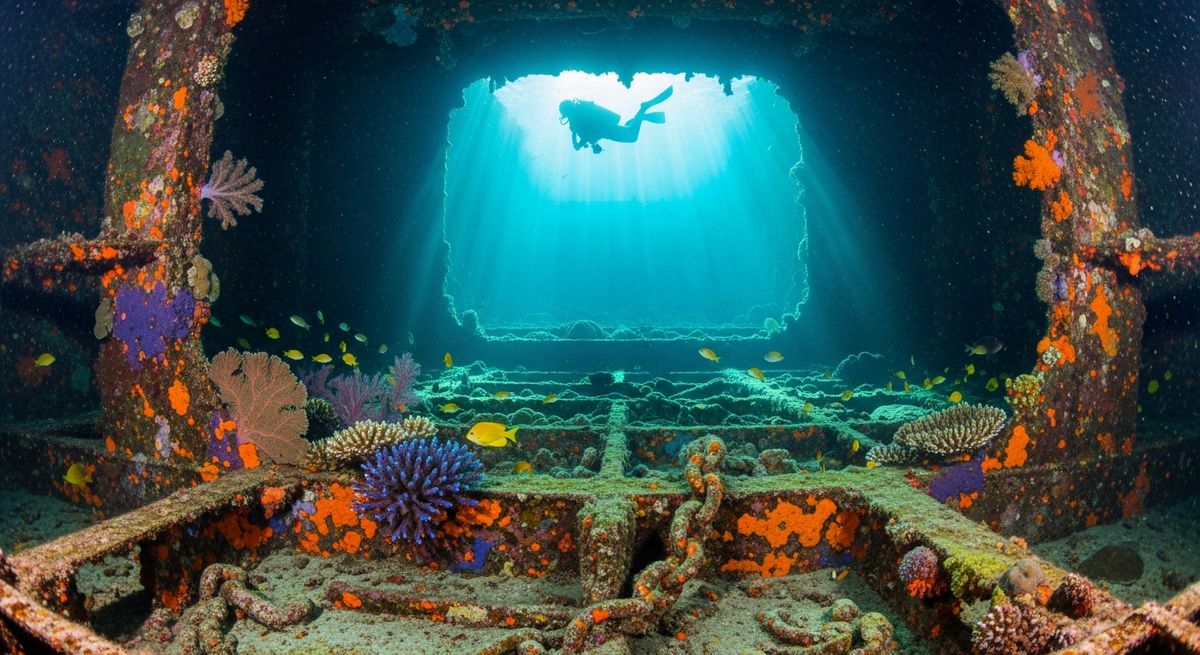
With 35+ marine species recorded in the area - including humpback whales, seahorses and sperm whales - Wiakawa Swim Spot offers some of Kaikōura's richest wreck diving. Water ranges 10-17°C, warmest January, February, March.
Okay, let’s be honest. Wiakawa Swim Spot isn't going to blow your mind with dramatic canyons or whale sharks. Our team usually finds ourselves here when the Kaikōura weather turns truly foul and we’re desperate for a fin kick. But you know what? It’s surprisingly charming. This sheltered little bay, marked by those orange boating buoys, is basically a nursery. We’ve spent many a rainy afternoon here, poking around the rocks beneath the swim platform. You’ll spot an army of tiny blennies darting into crevices and a surprising variety of starfish clinging to the undersides of boulders. We’ve even seen the odd cowfish moseying about, which is always a treat. Visibility averages about four metres, so it’s an intimate experience – think macro lens, not wide-angle. It’s a genuinely safe, easy dive, perfect for testing new gear, practicing skills, or just getting wet when everything else is called off.
Safety Notes
Wreck site - avoid penetration without wreck diving certification. Watch for sharp metal and entanglement hazards.
Cold water this month (avg 12°C). Drysuit or thick wetsuit (7mm+) recommended.
Wiakawa Swim Spot Wreck History
Year Sunk
1865
Vessel Type
cargo ship
Cause
storm
Tonnage
272 tons
The Araby Maid was a 125-foot, three-masted schooner that carried cargo along the eastern seaboard of the United States. In October 1865, shortly after the end of the Civil War, she was sailing from Pensacola, Florida, with a full load of lumber. As she navigated the Florida Straits, she was caught in a violent hurricane that drove her relentlessly towards the shallow reefs of the Florida Keys. The powerful storm proved too much for the vessel, and she was smashed apart upon Crocker Reef, just off the coast of modern-day Islamorada.
The remains of the Araby Maid are now a popular shallow dive and snorkel site. Resting in just 15 to 25 feet of clear, warm water, the wreck is accessible to all experience levels. While the wooden structure of the schooner has long since been claimed by the sea, the most prominent feature is the large pile of granite ballast stones that once kept the ship stable. These stones now form the foundation of a vibrant mini-reef, encrusted with coral and teeming with life. Divers can explore the ballast pile and surrounding seagrass beds, spotting moray eels, lobsters, and countless species of colorful reef fish that have made the historic wreck their home.
Nearest Dive Centres to Wiakawa Swim Spot
Dive shops near Wiakawa Swim Spot
Waikawa Dive Centre
Blenheim Dive Centre
GO DIVE PACIFIC
Reviews for Wiakawa Swim Spot
Conditions
Ocean conditions, forecast and tides for Wiakawa Swim Spot
Wiakawa Swim Spot Ocean Conditions
Monthly averages for Wiakawa Swim Spot, sourced from Open-Meteo marine data + Copernicus Marine (EU) - nearest station: Open-Meteo marine grid (-42.41, 173.71) (50km away)
October Averages
Sea Temperature
12°C
54°F · Range: 10.8–14.6°C
Current Speed
14.42 cm/s
Direction: SW (213.7°)
Chlorophyll-a
0.413 mg/m³
Moderate productivity
Salinity
35.08 PSU
Based on 4 years of monitoring data · Data sources: Open-Meteo marine data + Copernicus Marine (EU)
Plan & book
Ways to dive Kaikōura, from day trips to liveaboards.
Day trips & courses
via GetYourGuideGuided dives, courses and snorkel trips with instant booking.
Find dive trips in KaikōuraPlaces to stay
via Booking.comHotels and dive resorts near Kaikōura.
Search stays in KaikōuraDive insurance
Most travel insurance excludes or limits scuba. Check what you need before you go.
Dive insurance explainedPartner links: we may earn a commission if you book, at no extra cost to you. How we make money
Where to Stay near Wiakawa Swim Spot
Prices from Booking.com. We may earn a commission at no extra cost to you.