Cistern Point - Salt Island & Cooper Island

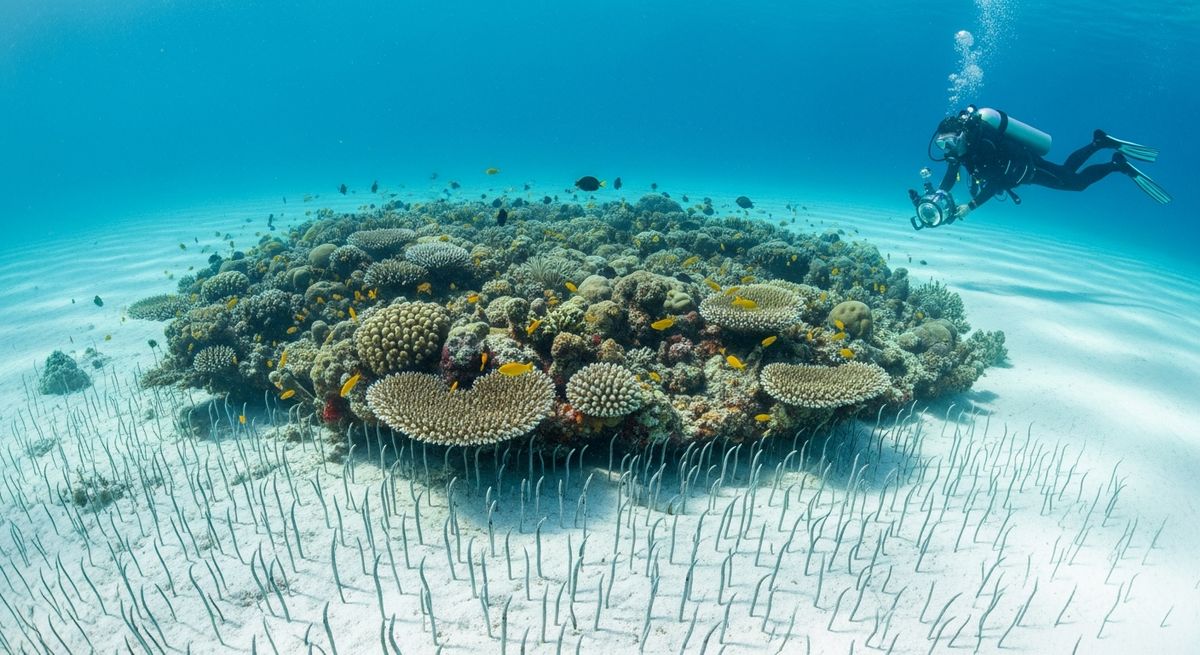
Alright, let's talk about the Great Barrier Reef's outer edges, the spots people often overlook when they're rushing to the big name sites. We're focusing on some of the less-charted patches directly off Cairns, places where the max depth is a gentle 14m. These aren't the dramatic wall dives, but rather intricate patch reefs, and we love them for their quiet charm. Drop down and you're immediately amongst some seriously impressive coral plates. Not just your average table coral, but enormous structures that look like they've been there for centuries, providing perfect ambush spots. We’ve seen hefty Banded-tail Coral-cod tucked right in, waiting for an unsuspecting meal to swim by. The visibility generally holds around 14m, giving you a clear view of the details, and honestly, that's where the magic is here. Look closely; you’ll spot Eyebrow Gobies darting between crevices and maybe a Slender grouper cruising the edges of the coral. These sites are ideal if you’re into slow, deliberate diving, really taking your time to appreciate the smaller ecosystems rather than chasing pelagics.

Location
Salt Island & Cooper Island, British Virgin Islands, Caribbean
Coordinates
18.379700, -64.517000
Type
reef

Marine Protected Area: Cooper Island

Best Time to Dive in Salt Island & Cooper Island

The warmest water temperatures in Salt Island & Cooper Island occur in January, averaging 27.1°C. The coolest conditions are in December at 27.1°C.

Monthly Water Temperatures

  • January: 27.1°C (air: 25.5°C)
  • February: 27.1°C (air: 25.1°C)
  • March: 27.1°C (air: 25.2°C)
  • April: 27.1°C (air: 25.7°C)
  • May: 27.1°C (air: 26.8°C)
  • June: 27.1°C (air: 27.6°C)
  • July: 27.1°C (air: 27.8°C)
  • August: 27.1°C (air: 28.1°C)
  • September: 27.1°C (air: 28.3°C)
  • October: 27.1°C (air: 28.0°C)
  • November: 27.1°C (air: 27.1°C)
  • December: 27.1°C (air: 26.3°C)

Nearby Dive Sites in Salt Island & Cooper Island

Nearest Dive Centres to Cistern Point

Marine Life in Salt Island & Cooper Island

Home to 504 recorded species including 410 reef fish, 39 hard corals, 13 sharks & rays, 9 other, 7 whales & dolphins, 6 seagrass & algae.

Notable Species

Recommended Packing List for Cistern Point

Based on average water temperature of 27.1°C.

  • Shorty or Rashguard - warm 27°C water needs minimal exposure protection
  • Mask - essential for every dive
  • Fins
  • BCD - buoyancy compensator
  • Regulator - your most safety-critical piece of gear
  • Dive Computer - tracks depth, time, and NDL
  • Surface Marker Buoy (SMB) - essential for boat pickups
  • Dive Torch - useful for crevices and colour at depth
  • Underwater Camera - capture your diving memories

Frequently Asked Questions

What is the typical depth range for diving at Cistern Point?
The maximum depth for diving at Cistern Point is 13m. This relatively shallow depth makes it an excellent choice for a second dive on morning trips, allowing for longer bottom times. Divers can enjoy plenty of light penetration, which enhances the vibrant reef environment.
What kind of marine life and underwater features can divers expect to see at Cistern Point?
At Cistern Point, divers can explore a fascinating reef characterized by large, cistern-like holes. This site is a great place to spot diverse marine life, including eels, nurse sharks, and tarpon. Additionally, divers should keep an eye out into the blue for potential sightings of passing rays and various sharks, enhancing the underwater experience. For more information on marine species, visit our wildlife database.
Is Cistern Point a good dive site for beginner divers, or is it considered more challenging?
Cistern Point is classified as an intermediate difficulty dive site. While its maximum depth of 13m is relatively shallow, the intermediate rating suggests it is best suited for divers who have some experience beyond their initial certification. It offers interesting perspectives for underwater photographers and a rewarding experience for those comfortable with reef diving.
What is the best time of year or day to dive at Cistern Point for optimal conditions and marine life sightings?
While specific seasonal recommendations are not provided, Cistern Point is noted as an excellent choice for a second dive on morning trips. This suggests that mornings offer optimal conditions, including plenty of light for underwater photographers and active marine life. For general guidance on the best times to dive in the region, please refer to our When to Dive resource.
What scuba diving certifications are typically required to dive at Cistern Point?
As an intermediate difficulty dive site, divers typically need at least an Open Water Diver certification to explore Cistern Point. However, due to its classification, it is highly recommended that divers have some experience beyond their entry-level certification to fully appreciate the site's features and marine life. Always consult with your dive operator for any specific local requirements or additional recommendations.
What are the usual current and visibility conditions like at Cistern Point?
Cistern Point generally offers excellent visibility, averaging around 16m, which provides clear views of the reef and its inhabitants. While specific current conditions are not detailed, the good visibility ensures a pleasant and expansive underwater experience. This makes it easier to spot the diverse marine life, from eels to passing rays.