Carval Rock
Protected Area
Ginger Island
Why dive here
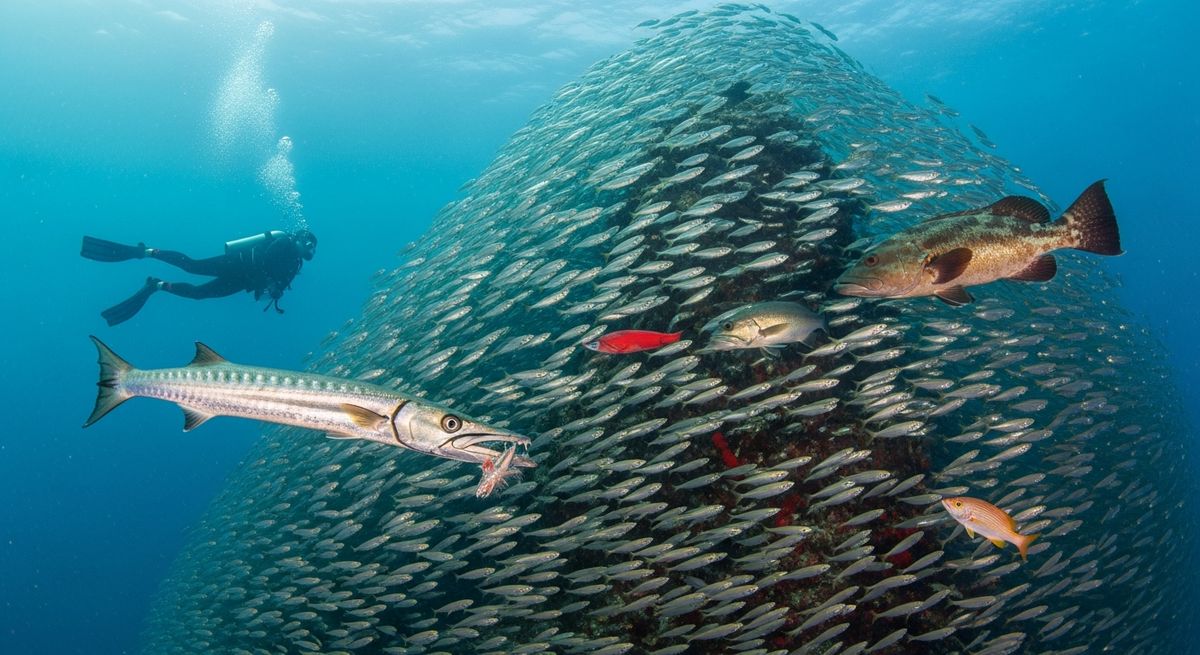
With 491+ marine species recorded in the area - including barracuda, blacktip reef sharks, dolphins, dwarf minke whales and eagle rays - Carval Rock offers some of Salt Island & Cooper Island's richest pinnacle diving. Water ranges 27-30°C, warmest August, September, October.
Carval Rock sticks right out into the open ocean, catching whatever current decides to roll through that day. That’s why we love it. You’ll drop down onto a slope of boulders and coral that feels wilder than most BVI sites. We’ve often found ourselves eye-to-eye with a Caribbean reef shark cruising the perimeter, and the schooling sennet here can be thick, a shimmering wall of silver. The real show, though, is tucked into the rock crevices. We’re always on the hunt for the little guys – the Orange-spotted and Blackfin Blennies peeking out, or a Shortchin Stargazer buried in the sand, just its eyes visible. It’s a site that rewards patience and a keen eye, not just big animal sightings. We’d suggest hitting it on a calm day, if possible, but honestly, even with a bit of chop, the action below is usually worth the ride. It’s a great pick for divers who appreciate both the pelagic and the macro, happy to drift along with the current and then slow down to scrutinise a tiny blenny.
Typical Carval Rock Dive Profile
Illustrative profile based on site depth and type. Actual dive profiles vary - always follow your dive computer and training.
Nearest Dive Centres to Carval Rock
Dive shops near Carval Rock
Sail Caribbean Divers
Turquoise Turtle Charters
Crabby's
Reviews for Carval Rock
Conditions
Ocean conditions, forecast and tides for Carval Rock
Carval Rock Ocean Conditions
Monthly averages for Carval Rock, sourced from Open-Meteo marine data - nearest station: Open-Meteo marine grid (18.37, -64.56) (2km away)
October Averages
Sea Temperature
30°C
86°F · Range: 28.9–31°C
Air Temperature
28°C
82°F
Wind Speed
7.7 m/s
15.0 knots
Atmospheric Pressure
1013.1 hPa
Based on 4 years of monitoring data · Data sources: Open-Meteo marine data
Plan & book
Ways to dive Salt Island & Cooper Island, from day trips to liveaboards.
Day trips & courses
via GetYourGuideGuided dives, courses and snorkel trips with instant booking.
Find dive trips in Salt Island & Cooper IslandPlaces to stay
via Booking.comHotels and dive resorts near Salt Island & Cooper Island.
Search stays in Salt Island & Cooper IslandDive insurance
Most travel insurance excludes or limits scuba. Check what you need before you go.
Dive insurance explainedPartner links: we may earn a commission if you book, at no extra cost to you. How we make money
Where to Stay near Carval Rock
Prices from Booking.com. We may earn a commission at no extra cost to you.