Dry Rocks East
Protected Area
Ginger Island
Why dive here
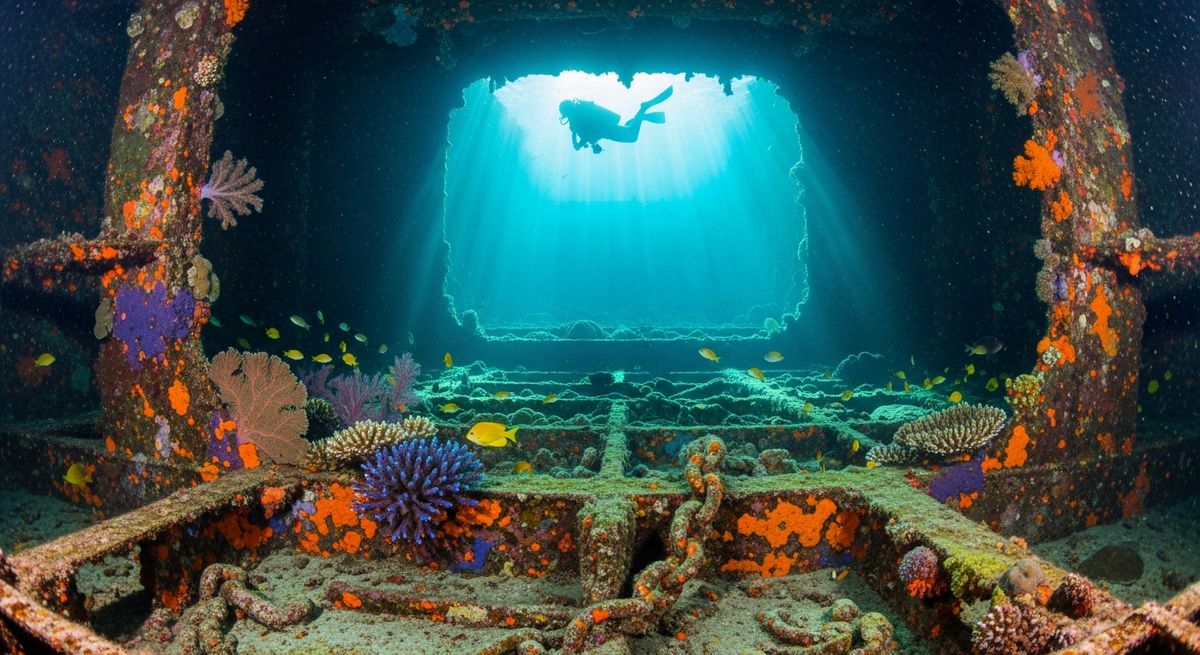
With 491+ marine species recorded in the area - including barracuda, blacktip reef sharks, dolphins, dwarf minke whales and eagle rays - Dry Rocks East offers some of Salt Island & Cooper Island's richest wreck diving. Water ranges 27-30°C, warmest August, September, October.
Dry Rocks East is one of those spots where you find yourself lingering, just watching the show. It’s a mini pinnacle, but don’t let the size fool you. The top of the rock sits shallow, maybe four or five metres, then slopes down to about 14 metres. We love dropping in on the deeper side and slowly working our way up. You’ll be surrounded by schools of fish, thick curtains of sergeant majors, grunts, and goatfish. Seriously, they’re everywhere. Keep an eye out for the smaller stuff too. We've often spotted red clingfish tucked into crevices and those tiny, perfectly camouflaged seaweed blennies bobbing on the rock. It’s a fantastic site for anyone who enjoys a leisurely dive with plenty to observe, whether you’re into macro details or just want to drift amongst big schools. Visibility averages around 15 metres, which is usually more than enough to appreciate the sheer number of fish. Our favourite time to visit is mid-morning, just after the first boats have left and before the lunch rush.
Typical Dry Rocks East Dive Profile
Illustrative profile based on site depth and type. Actual dive profiles vary - always follow your dive computer and training.
Safety Notes
Wreck site - avoid penetration without wreck diving certification. Watch for sharp metal and entanglement hazards.
Nearest Dive Centres to Dry Rocks East
Dive shops near Dry Rocks East
Sail Caribbean Divers
Turquoise Turtle Charters
Crabby's
Reviews for Dry Rocks East
Conditions
Ocean conditions, forecast and tides for Dry Rocks East
Dry Rocks East Ocean Conditions
Monthly averages for Dry Rocks East, sourced from Open-Meteo marine data - nearest station: Open-Meteo marine grid (18.37, -64.56) (2km away)
October Averages
Sea Temperature
30°C
86°F · Range: 28.9–31°C
Air Temperature
28°C
82°F
Wind Speed
7.7 m/s
15.0 knots
Atmospheric Pressure
1013.1 hPa
Based on 4 years of monitoring data · Data sources: Open-Meteo marine data
Plan & book
Ways to dive Salt Island & Cooper Island, from day trips to liveaboards.
Day trips & courses
via GetYourGuideGuided dives, courses and snorkel trips with instant booking.
Find dive trips in Salt Island & Cooper IslandPlaces to stay
via Booking.comHotels and dive resorts near Salt Island & Cooper Island.
Search stays in Salt Island & Cooper IslandDive insurance
Most travel insurance excludes or limits scuba. Check what you need before you go.
Dive insurance explainedPartner links: we may earn a commission if you book, at no extra cost to you. How we make money
Where to Stay near Dry Rocks East
Prices from Booking.com. We may earn a commission at no extra cost to you.