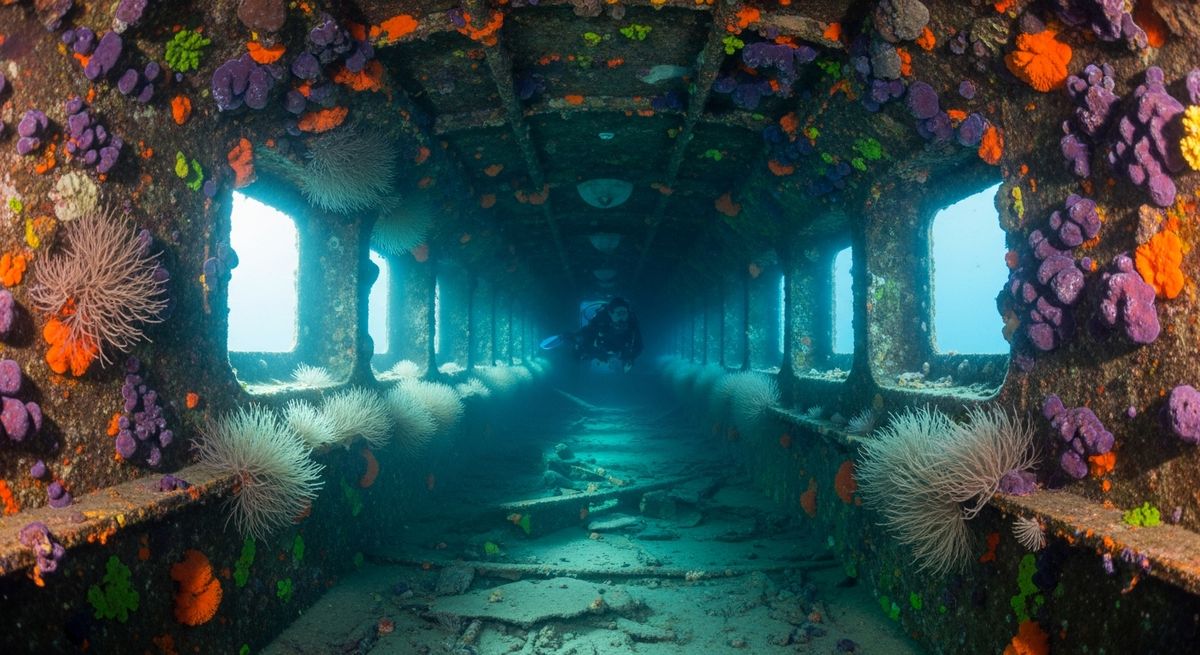
Wreck of the RMS Rhone
Protected Area
Frenchmans Cay
Why dive here
With 491+ marine species recorded in the area - including barracuda, blacktip reef sharks, dolphins, dwarf minke whales and eagle rays - Wreck of the RMS Rhone offers some of Salt Island & Cooper Island's richest wreck diving. Water ranges 27-30°C, warmest August, September, October.
The RMS Rhone is a classic for a reason. This British Royal Mail steamship, wrecked by a hurricane in 1867, offers a proper historical dive. We usually start at the stern section, shallow enough at 10m to explore the huge propeller and shaft, then follow the debris field to the deeper bow at 25m. Look for the giant wrenches and those distinctive black-and-white tiles scattered around. Over time, the Rhone has become home to plenty of schooling fish and a good number of moray eels tucked into its iron structure. It's a great wreck for divers who appreciate a bit of history and don’t mind splitting a dive between two distinct sections.
Safety Notes
Wreck site - avoid penetration without wreck diving certification. Watch for sharp metal and entanglement hazards.
Nearest Dive Centres to Wreck of the RMS Rhone
Dive shops near Wreck of the RMS Rhone
Crabby's
Turquoise Turtle Charters
Sail Caribbean Divers
Reviews for Wreck of the RMS Rhone
Conditions
Ocean conditions, forecast and tides for Wreck of the RMS Rhone
Wreck of the RMS Rhone Ocean Conditions
Monthly averages for Wreck of the RMS Rhone, sourced from Open-Meteo marine data - nearest station: Open-Meteo marine grid (18.37, -64.56) (2km away)
October Averages
Sea Temperature
30°C
86°F · Range: 28.9–31°C
Air Temperature
28°C
82°F
Wind Speed
7.7 m/s
15.0 knots
Atmospheric Pressure
1013.1 hPa
Based on 4 years of monitoring data · Data sources: Open-Meteo marine data
Plan & book
Ways to dive Salt Island & Cooper Island, from day trips to liveaboards.
Day trips & courses
via GetYourGuideGuided dives, courses and snorkel trips with instant booking.
Find dive trips in Salt Island & Cooper IslandPlaces to stay
via Booking.comHotels and dive resorts near Salt Island & Cooper Island.
Search stays in Salt Island & Cooper IslandDive insurance
Most travel insurance excludes or limits scuba. Check what you need before you go.
Dive insurance explainedPartner links: we may earn a commission if you book, at no extra cost to you. How we make money
Where to Stay near Wreck of the RMS Rhone
Prices from Booking.com. We may earn a commission at no extra cost to you.