Little Cayman
Protected Area
South Hole Sound (Little Cayman)
Why dive here
With 140+ marine species recorded in the area - including barracuda, orcas, sea turtles and pufferfish - Little Cayman offers some of Cayman Brac's richest reef diving. Water ranges 27-31°C, warmest August, September, October.
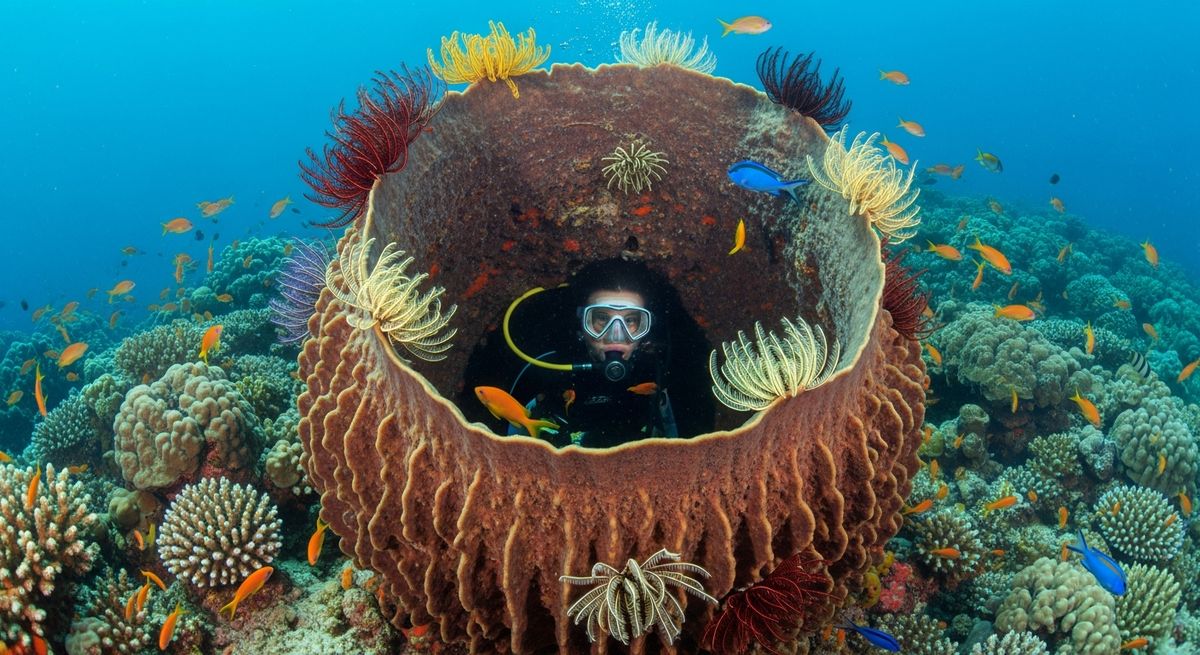
Little Cayman, off the coast of Cayman Brac, holds a special spot for us, especially when the conditions line up. Dropping in, you hit the top of the reef around 10-12 metres, a real sun-drenched plateau before the wall starts its gentle slope down to 22 metres. We love that golden hour light bouncing off the Boulder Brain Coral and the sprawling Lettuce Coral. Look closely in the nooks and crannies – we’ve spotted tiny Pearl Blennies popping their heads out, and the Concentric Ervilias often seem to carpet sections of the sandier patches. It’s not just the little stuff. Schools of Bluestriped Grunt and French Grunt drift lazily, sometimes parting for a lone Great Barracuda to glide through. We usually see a few turtles here too, often munching on the turtlegrass in the shallows. The visibility is usually excellent, letting you appreciate the scale of the wall without feeling rushed. It’s a comfortable dive, perfect for photographers who want time to compose shots, or anyone just wanting to unwind and absorb the quiet hum of the reef. If you find yourself in Cayman Brac, it’s worth the short boat ride over.
Nearest Dive Centres to Little Cayman
Dive shops near Little Cayman
Reef Divers
Little Cayman Divers
Reef Divers II - Cayman Brac
Scuba Shack
Reviews for Little Cayman
Conditions
Ocean conditions, forecast and tides for Little Cayman
Little Cayman Ocean Conditions
Monthly averages for Little Cayman, sourced from Open-Meteo marine data + Copernicus Marine (EU) - nearest station: Open-Meteo marine grid (19.68, -79.9) (4km away)
October Averages
Sea Temperature
31°C
87°F · Range: 29.5–31.7°C
Current Speed
3.61 cm/s
Direction: SW (213.7°)
Chlorophyll-a
0.043 mg/m³
Very clear (oligotrophic)
Salinity
36.19 PSU
Based on 4 years of monitoring data · Data sources: Open-Meteo marine data + Copernicus Marine (EU)
Plan & book
Ways to dive Cayman Brac, from day trips to liveaboards.
Day trips & courses
via GetYourGuideGuided dives, courses and snorkel trips with instant booking.
Find dive trips in Cayman BracPlaces to stay
via Booking.comHotels and dive resorts near Cayman Brac.
Search stays in Cayman BracDive insurance
Most travel insurance excludes or limits scuba. Check what you need before you go.
Dive insurance explainedPartner links: we may earn a commission if you book, at no extra cost to you. How we make money
Where to Stay near Little Cayman
Prices from Booking.com. We may earn a commission at no extra cost to you.