Deep Boulders
Protected Area
Big Cay Wildlife Reserve
Why dive here
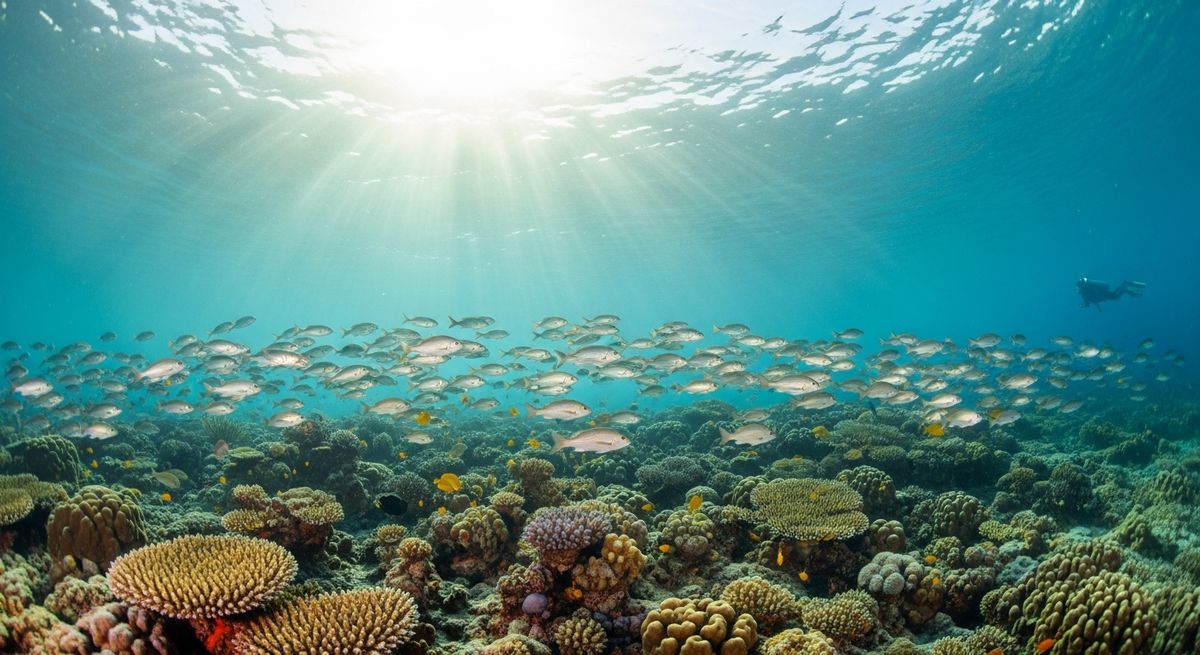
With 267+ marine species recorded in the area - including dolphins, humpback whales, nurse sharks, orcas and sea turtles - Deep Boulders offers some of St. Vincent's richest reef diving. Water ranges 27-30°C, warmest August, September, October.
Deep Boulders really delivers on its name. You drop onto a steep slope, then follow it down to these colossal rock formations, some of them the size of small cars, starting around 20 metres. We love how the light plays through the gaps and crevices down here, creating some dramatic shadows. Keep an eye out for the Dusky Cusk and the Saddle Stargazer – we’ve had some cracking encounters with both. Our favourite part is pushing a bit deeper, down to 27 metres, to a specific ledge where we often find nurse sharks resting. It's a proper hideaway for them. The dive finishes with a drift around the point into Moonhole, which is a nice gentle end after the deeper exploration. Visibility usually hits around 20 metres, so you’ve got good views of the schools of grunts and creole wrasse swirling around the boulders. It’s a site for those who appreciate a bit of topographical drama and aren’t afraid to go a little deeper to find those bigger creatures.
Nearest Dive Centres to Deep Boulders
Dive shops near Deep Boulders
View all dive centres in St. VincentReviews for Deep Boulders
Conditions
Ocean conditions, forecast and tides for Deep Boulders
Deep Boulders Ocean Conditions
Monthly averages for Deep Boulders, sourced from Open-Meteo marine data - nearest station: Open-Meteo marine grid (13.05, -61.21) (6km away)
October Averages
Sea Temperature
30°C
86°F · Range: 29–31.2°C
Air Temperature
28°C
82°F
Wind Speed
5.62 m/s
10.9 knots
Atmospheric Pressure
1012.3 hPa
Based on 4 years of monitoring data · Data sources: Open-Meteo marine data
Plan & book
Ways to dive St. Vincent, from day trips to liveaboards.
Day trips & courses
via GetYourGuideGuided dives, courses and snorkel trips with instant booking.
Find dive trips in St. VincentPlaces to stay
via Booking.comHotels and dive resorts near St. Vincent.
Search stays in St. VincentDive insurance
Most travel insurance excludes or limits scuba. Check what you need before you go.
Dive insurance explainedPartner links: we may earn a commission if you book, at no extra cost to you. How we make money
Where to Stay near Deep Boulders
Prices from Booking.com. We may earn a commission at no extra cost to you.