Brown’s Bay
Protected Area
Bequia Marine Conservation Area
Why dive here
With 267+ marine species recorded in the area - including dolphins, humpback whales, nurse sharks, orcas and sea turtles - Brown’s Bay offers some of St. Vincent's richest reef diving. Water ranges 27-30°C, warmest August, September, October.
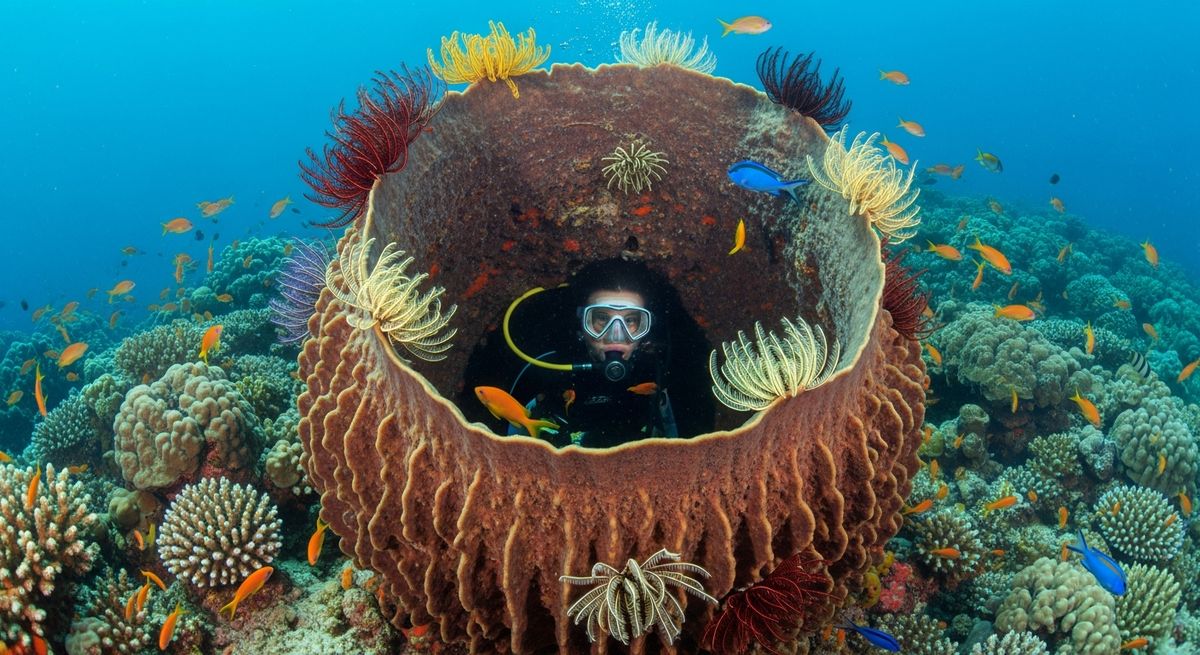
Brown’s Bay is one of those sites we always come back to when we want to just drift and watch the world go by. It’s a short boat ride from Port Elizabeth, a real easy entry, and then you’re just floating along. Usually, the current pushes you south to north, a gentle ride over a sloping reef that starts at about five metres and maxes out around 15m. We love the boulders here, covered in sea fans that sway with the current, and you’ll find some robust pillar and staghorn corals too. It’s a great spot for spotting some of the smaller, more unusual stuff if you take your time and really look. We’ve had fantastic luck finding Spinyhead Blennies tucked into crevices, and Goldline Blennies poking their heads out. Keep an eye out for Mottled Conger Morays in the deeper cracks; they’re a bit shyer than the usual green morays. It’s a perfect site for a relaxed dive, especially if you’re newer to drift diving, or just want to take it easy and let the reef come to you. You’ll be comfortable here, whether you’re making your first few dives or just fancy a mellow afternoon.
Nearest Dive Centres to Brown’s Bay
Dive shops near Brown’s Bay
View all dive centres in St. VincentReviews for Brown’s Bay
Conditions
Ocean conditions, forecast and tides for Brown’s Bay
Brown’s Bay Ocean Conditions
Monthly averages for Brown’s Bay, sourced from Open-Meteo marine data - nearest station: Open-Meteo marine grid (13.05, -61.21) (6km away)
October Averages
Sea Temperature
30°C
86°F · Range: 29–31.2°C
Air Temperature
28°C
82°F
Wind Speed
5.62 m/s
10.9 knots
Atmospheric Pressure
1012.3 hPa
Based on 4 years of monitoring data · Data sources: Open-Meteo marine data
Plan & book
Ways to dive St. Vincent, from day trips to liveaboards.
Day trips & courses
via GetYourGuideGuided dives, courses and snorkel trips with instant booking.
Find dive trips in St. VincentPlaces to stay
via Booking.comHotels and dive resorts near St. Vincent.
Search stays in St. VincentDive insurance
Most travel insurance excludes or limits scuba. Check what you need before you go.
Dive insurance explainedPartner links: we may earn a commission if you book, at no extra cost to you. How we make money
Where to Stay near Brown’s Bay
Prices from Booking.com. We may earn a commission at no extra cost to you.