Diving in St. Vincent
Why dive here
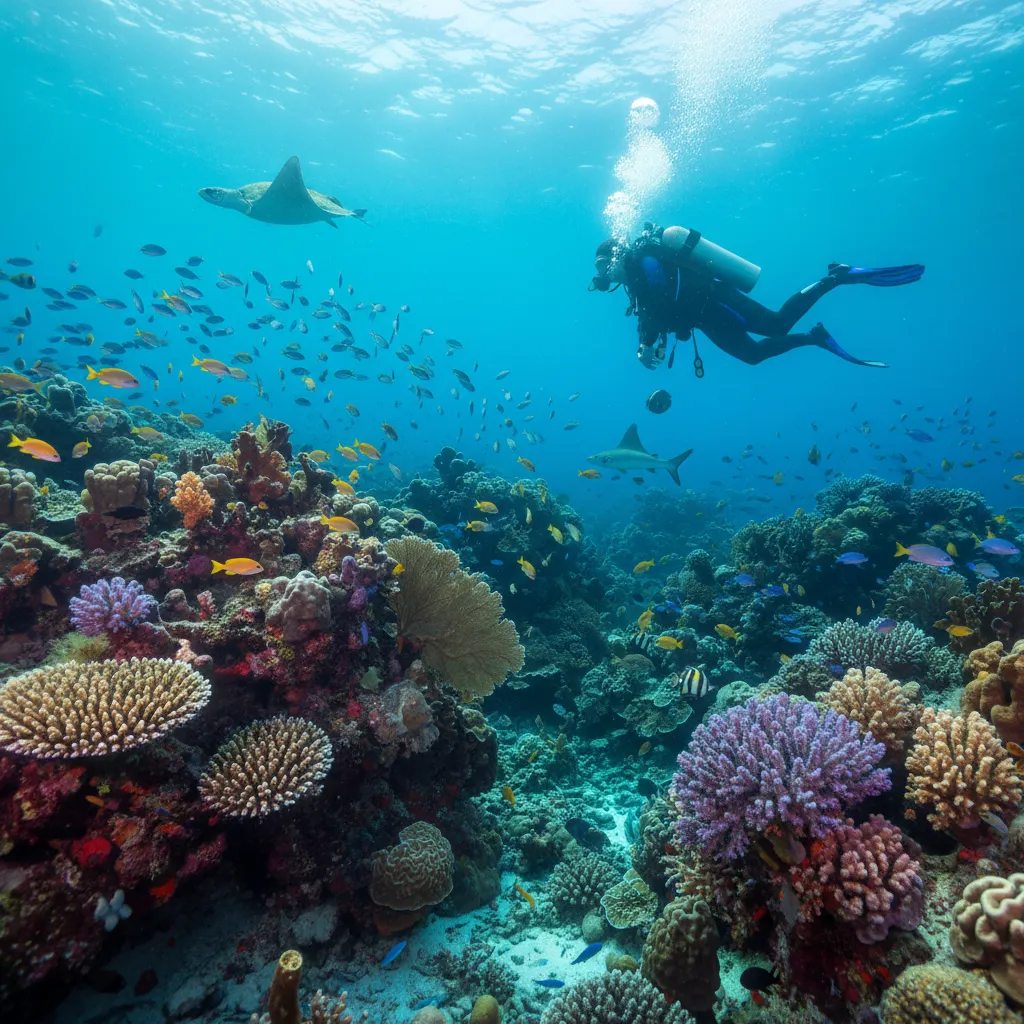
St. Vincent offers some of St. Vincent & the Grenadines's richest diving, with 267+ marine species recorded in the area - including dolphins, humpback whales, nurse sharks, orcas and sea turtles. Water sits around 28°C.
St. Vincent is a quiet surprise, often overshadowed by its Grenadine neighbours. But for divers who really look, it’s a macro heaven. We love the volcanic topography here; the dramatic slopes and swim-throughs are just begging to be explored. You’ll find walls draped in black coral, swaying gently in the current, and closer inspection reveals a staggering array of tiny residents. This isn’t about big pelagics, though a reef shark might cruise by. St. Vincent is for the patient observer. We’ve spent whole dives mesmerized by the hunt of an Inshore Lizardfish, or spotting the perfect camouflage of a Pacific Spotted Scorpionfish. Look for the Sawcheek Cardinalfish tucked into crevices and the tiny, almost invisible, Stippled Clingfish on sponges. The currents can be moderate, especially on drift dives, but they generally bring nutrients, making for active reef life. Early morning dives often offer the best visibility before the day heats up, and you’ll find more critters out and about before divers arrive. The wrecks are fun, but it’s the volcanic reef and its miniature inhabitants that truly capture our attention here.
St. Vincent Dive Site Map
Dive sites and dive centres in St. Vincent
St. Vincent Dive Sites
37 dive sites in St. Vincent
Almond Tree
Almond Tree is one of those St. Vincent sites we always look forward to, a gentle drift along a sloping reef that just feels right. You're usually heading south to north, carried by a mild current that makes the whole dive wonderfully relaxed. We love the gorgonian tree field here, a swaying forest of purple and orange against the blue, and it's where we often spot the more unusual residents. Keep an eye out for frogfish and seahorses, though they are masters of disguise. This is a dive that suits everyone, from newer divers enjoying their first drift to seasoned pros who appreciate a calm, productive exploration. The maximum depth of 21 metres keeps it comfortable, and the final safety stop among the shallow coral heads is always a good place to find a busy belt of cardinalfish or a curious hamlet. We've seen some impressive chain morays tucked into the coral here, and the sheer number of dwarf wrasse and clown wrasse keeps the shallows buzzing. Visibility averages 15 metres, which is perfectly good for taking in the slow-motion theatre.
Almond Tree
Almond Tree is one of those St. Vincent sites we always look forward to, a gentle drift along a sloping reef that just feels right. You're usually heading south to north, carried by a mild current that makes the whole dive wonderfully relaxed. We love the gorgonian tree field here, a swaying forest of purple and orange against the blue, and it's where we often spot the more unusual residents. Keep an eye out for frogfish and seahorses, though they are masters of disguise. This is a dive that suits everyone, from newer divers enjoying their first drift to seasoned pros who appreciate a calm, productive exploration. The maximum depth of 21 metres keeps it comfortable, and the final safety stop among the shallow coral heads is always a good place to find a busy belt of cardinalfish or a curious hamlet. We've seen some impressive chain morays tucked into the coral here, and the sheer number of dwarf wrasse and clown wrasse keeps the shallows buzzing. Visibility averages 15 metres, which is perfectly good for taking in the slow-motion theatre.
Anchor Reef
Anchor Reef feels like a secret garden, a calm, shallow spot that really surprised us on St. Vincent. It’s got a lovely, gentle slope from about five meters down to eighteen, making it a perfect easy dive. We love the way the sunlight filters through the water here, illuminating not just the corals, but also a scattering of old anchors, remnants from the 18th century, which give the place its name. The reef itself isn't a dramatic wall, but it’s dense with life. We’ve spent ages just watching the Bladed Wentletraps navigate the corals, or spotting the silvery flash of Silver Mojarras darting between overhangs. Keep an eye out for the Slender Parrotfish, they’re often busy grazing, and if you’re lucky, you might even catch a glimpse of a Glaucus, their delicate blue a real treat. This is our pick for a relaxed afternoon dive, maybe a second dive of the day, when you just want to soak it all in without fighting a current. It suits beginners perfectly, or anyone who appreciates a slower pace to really observe the smaller, quieter inhabitants of the reef.
Bequia Head
Bequia Head is a commitment, a proper trek by boat, so it's a two-tank minimum. We’ve only been out there a handful of times when the conditions align perfectly, and trust us, you need perfect conditions. This site is exposed to everything. That means negative entry, you're dropping onto a steeply sloping reef that goes down to 40m, and the current can be genuinely ripping. It’s a drift, plain and simple, and you'll want to be comfortable with your SMB deployment. When it all comes together, though, Bequia Head delivers. The reef here is healthy, vibrant, and the big draw for us is the sheer volume of pelagics. We’ve seen huge schools of snapper and jack, walls of them, often with the deeper shadows of Caribbean reef sharks cruising by. Keep an eye out for mottled conger morays tucked into crevices and the occasional saddle stargazer half-buried in the sand. It’s a proper rush, a high-octane dive for experienced divers only, but the reward is a truly wild, untamed Caribbean experience.
Bequia Head
Bequia Head is a commitment, a proper trek by boat, so it's a two-tank minimum. We’ve only been out there a handful of times when the conditions align perfectly, and trust us, you need perfect conditions. This site is exposed to everything. That means negative entry, you're dropping onto a steeply sloping reef that goes down to 40m, and the current can be genuinely ripping. It’s a drift, plain and simple, and you'll want to be comfortable with your SMB deployment. When it all comes together, though, Bequia Head delivers. The reef here is healthy, vibrant, and the big draw for us is the sheer volume of pelagics. We’ve seen huge schools of snapper and jack, walls of them, often with the deeper shadows of Caribbean reef sharks cruising by. Keep an eye out for mottled conger morays tucked into crevices and the occasional saddle stargazer half-buried in the sand. It’s a proper rush, a high-octane dive for experienced divers only, but the reward is a truly wild, untamed Caribbean experience.
BOSCO
The wreck of the BOSCO, a yacht sunk by fire in 1979, sits upright at 18 meters, making for a relaxed dive that’s perfect for those newer to wreck diving. She’s not massive, but the fire damage means she’s pretty open, so you can easily peek inside the cabin and engine room. Over the years, the metal has become a home for all sorts of critters. We’ve spotted moray eels tucked into crevices, plenty of schooling fish swirling around the mast, and often a few curious trumpetfish nosing about the deck. It’s a gentle introduction to wreck exploration in St. Vincent.
Brown’s Bay
Brown’s Bay is one of those sites we always come back to when we want to just drift and watch the world go by. It’s a short boat ride from Port Elizabeth, a real easy entry, and then you’re just floating along. Usually, the current pushes you south to north, a gentle ride over a sloping reef that starts at about five metres and maxes out around 15m. We love the boulders here, covered in sea fans that sway with the current, and you’ll find some robust pillar and staghorn corals too. It’s a great spot for spotting some of the smaller, more unusual stuff if you take your time and really look. We’ve had fantastic luck finding Spinyhead Blennies tucked into crevices, and Goldline Blennies poking their heads out. Keep an eye out for Mottled Conger Morays in the deeper cracks; they’re a bit shyer than the usual green morays. It’s a perfect site for a relaxed dive, especially if you’re newer to drift diving, or just want to take it easy and let the reef come to you. You’ll be comfortable here, whether you’re making your first few dives or just fancy a mellow afternoon.
Brown’s Bay
Brown’s Bay is one of those sites we always come back to when we want to just drift and watch the world go by. It’s a short boat ride from Port Elizabeth, a real easy entry, and then you’re just floating along. Usually, the current pushes you south to north, a gentle ride over a sloping reef that starts at about five metres and maxes out around 15m. We love the boulders here, covered in sea fans that sway with the current, and you’ll find some robust pillar and staghorn corals too. It’s a great spot for spotting some of the smaller, more unusual stuff if you take your time and really look. We’ve had fantastic luck finding Spinyhead Blennies tucked into crevices, and Goldline Blennies poking their heads out. Keep an eye out for Mottled Conger Morays in the deeper cracks; they’re a bit shyer than the usual green morays. It’s a perfect site for a relaxed dive, especially if you’re newer to drift diving, or just want to take it easy and let the reef come to you. You’ll be comfortable here, whether you’re making your first few dives or just fancy a mellow afternoon.
Cathedral
Cathedral is one of those St. Vincent sites we always look forward to, a bit of a sensory treat. You drop onto a reef that just keeps sloping, down to around 22 metres, where it flattens out to sand. The light here is what really gets us. It streams through the overhangs and cuts in the reef, creating these moving shafts you can swim through, almost like a real cathedral’s stained glass, just underwater. We usually find nimble spray crabs tucked in around the sea urchins, and if you’re patient, you’ll spot juvenile trunkfish hiding out there too. Our favourite time to dive Cathedral is mid-morning, when the sun is high enough to really play with those light effects. The currents can shift, so be ready to go with the flow, but it’s never anything too wild. You’ll drift past schools of southern sennet and chromis, often with jacks circling. Keep an eye on the sandy patches at the bottom for saddled blennies or a stargazer peeking out. This site is great for photographers chasing those dramatic light rays, and anyone who appreciates a dive with a real sense of atmosphere.
Coral Nursery
We love a dive site with a purpose, and the Coral Nursery off St. Vincent certainly fits. It’s an easy, shallow dive, maxing out at 17 metres, which makes it perfect for a relaxed afternoon. The PVC "trees" might sound a bit stark, but they're surprisingly effective as an artificial reef, already attracting quite the crowd. Look closely among the branching coral fragments and you'll spot juvenile reef fish everywhere – we've seen tiny Harlequin Bass darting between new growth and Sharpnose Puffers nibbling at algae. Our favourite find here is often the Stippled Clingfish, blending perfectly with the coral stalks. It's a fantastic spot for macro photography and a genuinely rewarding dive, knowing you're witnessing active conservation. It’s a great choice for newer divers or anyone keen to see coral restoration in action, especially if you chat with the dive shop about their ongoing projects.
Deep Boulders
Deep Boulders really delivers on its name. You drop onto a steep slope, then follow it down to these colossal rock formations, some of them the size of small cars, starting around 20 metres. We love how the light plays through the gaps and crevices down here, creating some dramatic shadows. Keep an eye out for the Dusky Cusk and the Saddle Stargazer – we’ve had some cracking encounters with both. Our favourite part is pushing a bit deeper, down to 27 metres, to a specific ledge where we often find nurse sharks resting. It's a proper hideaway for them. The dive finishes with a drift around the point into Moonhole, which is a nice gentle end after the deeper exploration. Visibility usually hits around 20 metres, so you’ve got good views of the schools of grunts and creole wrasse swirling around the boulders. It’s a site for those who appreciate a bit of topographical drama and aren’t afraid to go a little deeper to find those bigger creatures.
Devil's Table + dinghy mooring
Devil’s Table is one of our favourite dives in St. Vincent, mostly because it’s a bit of a trick. You drop onto what looks like a typical Caribbean reef, but then you hit the swim-throughs and small caves that honeycomb the volcanic rock. We love exploring these darker pockets, shining a torch into the crevices to find dusky cardinalfish hovering, their eyes catching the beam, or maybe a sleepy spotted trunkfish tucked away. It’s not about huge pelagics here; it's the smaller stuff, the stuff you have to look for. Keep an eye out for a saddle stargazer buried in the sand near the edges, just its eyes peeking out. The dinghy mooring itself doesn't add much, but the surrounding reef provides enough interesting ledges and overhangs to keep you busy. This site is great for divers who enjoy poking around, taking it slow, and appreciate the subtle beauty of a healthy, varied reef. It’s a relaxed dive, usually with minimal current, making it a good choice for a second dive of the day.
Show all 37 dive sites in St. Vincent
- ELIZABETH BOYE
- Flat Rock
- LADY ANGELA
- L’Anse Chemin/Long Point
- Larikai Point
- Middle Cay
- Moonhole
- New Guinea Reef
- New Moon
- North-West Point
- Petit Byahau
- Richmond Beach
- Richmond Vale Coral Nursery
- Robyn’s Reef
- Rock Side
- Rocky Bay
- Ship’s Stern
- Stratmann Wreck + dinghy mooring
- The Bullet
- The Wall - West Cay
- THREE BROTHERS
- Three Wrecks
- Troumaca Bay
- Tucker Shallow
- VICTORIA
St. Vincent Dive Centres
2 dive shops and operators in St. Vincent
Ocean Wildlife in St. Vincent
267 species recorded in St. Vincent
St. Vincent Daylight & Sunrise/Sunset
Sunrise and sunset times for St. Vincent, calculated from coordinates
Today - Sunday 11 October
Sunrise
05:55
Sunset
17:50
Daylight
11h 54m
Golden Hour
17:22
First light (dawn) at 05:34 · Last light (dusk) at 18:11
Monthly Averages
| Month | Sunrise | Sunset | Daylight |
|---|---|---|---|
| Jan | 06:32 | 17:57 | 11h 26m |
| Feb | 06:29 | 18:11 | 11h 42m |
| Mar | 06:14 | 18:16 | 12h 2m |
| Apr | 05:54 | 18:18 | 12h 25m |
| May | 05:41 | 18:24 | 12h 43m |
| JunLongest | 05:39 | 18:33 | 12h 53m |
| Jul | 05:46 | 18:36 | 12h 50m |
| Aug | 05:53 | 18:28 | 12h 34m |
| Sep | 05:55 | 18:08 | 12h 13m |
| OctNow | 05:56 | 17:47 | 11h 52m |
| Nov | 06:04 | 17:36 | 11h 32m |
| DecShortest | 06:20 | 17:41 | 11h 22m |
Times are approximate local times based on longitude. Actual times may vary slightly depending on the exact timezone observed in St. Vincent.
Where to Stay near St. Vincent
Prices from Booking.com. We may earn a commission at no extra cost to you.
Marine Protected Areas near St. Vincent
26 protected areas near St. Vincent - please respect local regulations when diving
Tobago Cays-Mayreau MP/MR/Wildlife Reserve
Tobago Cays-Mayreau MP/MR/Wildlife Reserve
Union-Palm Island Marine Conservation Area
Canouan Marine Reserve / Marine Conservation Area
Mustique Marine Reserve
Bequia Marine Conservation Area
South Coast Marine Park
Isle Quatre Marine Reserve / Marine Conservation Area
Petit St. Vincent Wildlife Reserve
Battowia Island Wildlife Reserve
Petit Canouan Wildlife Reserve
Chateaubelair Islet Wildlife Reserve
Showing 12 largest of 26
Getting to St. Vincent
Bequia
Kingstown
Vieux Fort
Plan & book
Ways to dive St. Vincent, from day trips to liveaboards.
Day trips & courses
via GetYourGuideGuided dives, courses and snorkel trips with instant booking.
Find dive trips in St. VincentPlaces to stay
via Booking.comHotels and dive resorts near St. Vincent.
Search stays in St. VincentDive insurance
Most travel insurance excludes or limits scuba. Check what you need before you go.
Dive insurance explainedPartner links: we may earn a commission if you book, at no extra cost to you. How we make money