Flat Rock
Protected Area
Bequia Marine Conservation Area
Why dive here
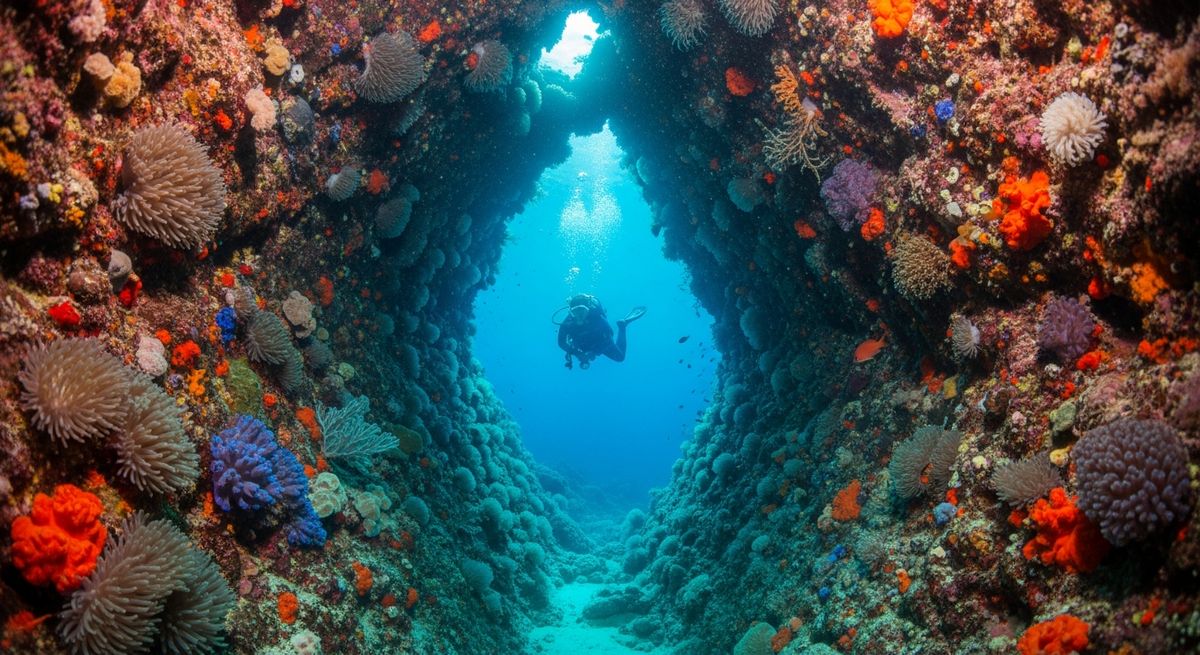
With 267+ marine species recorded in the area - including dolphins, humpback whales, nurse sharks, orcas and sea turtles - Flat Rock offers some of St. Vincent's richest cave diving. Water ranges 27-30°C, warmest August, September, October.
Flat Rock is one of those St. Vincent sites we always look forward to, mainly because it consistently delivers. It’s a classic Caribbean drift, starting you north and letting the current do the work. The maximum depth we usually hit is around 21m, but the real show is shallower, in the 10-15m range. Here, the reef slopes gently, a mix of rock and scattered coral. We love the way the light filters through the fan corals and the vibrant azure vase sponges; they really pop against the deeper blues. Keep an eye out for the smaller stuff here, not just the usual suspects. We’ve had great luck spotting juvenile drumfish tucked into crevices and occasionally an octopus trying its best to blend in. The puffers, especially the sharpnose variety, are pretty common, along with various wrasse species darting about. It’s a relaxed dive, perfectly suited for a lazy afternoon, and we’d suggest heading there when the north-south current is running smoothly to get the full drift experience.
Safety Notes
Overhead environment - never enter without proper cave/cavern training, redundant equipment, and a guideline.
Nearest Dive Centres to Flat Rock
Dive shops near Flat Rock
View all dive centres in St. VincentReviews for Flat Rock
Conditions
Ocean conditions, forecast and tides for Flat Rock
Flat Rock Ocean Conditions
Monthly averages for Flat Rock, sourced from Open-Meteo marine data - nearest station: Open-Meteo marine grid (13.05, -61.21) (6km away)
October Averages
Sea Temperature
30°C
86°F · Range: 29–31.2°C
Air Temperature
28°C
82°F
Wind Speed
5.62 m/s
10.9 knots
Atmospheric Pressure
1012.3 hPa
Based on 4 years of monitoring data · Data sources: Open-Meteo marine data
Plan & book
Ways to dive St. Vincent, from day trips to liveaboards.
Day trips & courses
via GetYourGuideGuided dives, courses and snorkel trips with instant booking.
Find dive trips in St. VincentPlaces to stay
via Booking.comHotels and dive resorts near St. Vincent.
Search stays in St. VincentDive insurance
Most travel insurance excludes or limits scuba. Check what you need before you go.
Dive insurance explainedPartner links: we may earn a commission if you book, at no extra cost to you. How we make money
Where to Stay near Flat Rock
Prices from Booking.com. We may earn a commission at no extra cost to you.