West Coast - Turneffe Atoll

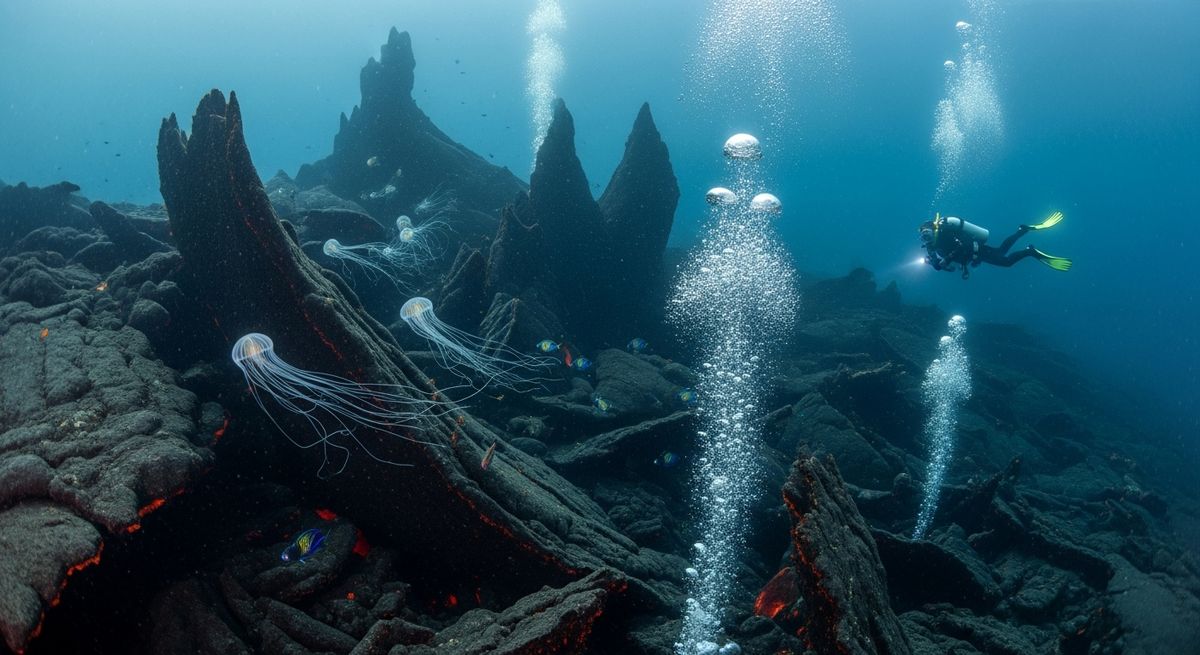
The West Coast of Turneffe Atoll offers a different flavour of Belizean diving. Here, you’ll find gentle, sloping reefs rather than dramatic walls, easing down from around 10-15 metres to a sandy bottom at 30 metres. It’s a calmer dive, often with less current, making it a good choice if you prefer a relaxed drift over exploring deep crevices. Look out for the healthy barrel sponges and brown tube sponges that dominate the steeper sections, and keep an ear out for dolphins – they’re often spotted playing from the boat in this area. It's a solid, pleasant dive for those who appreciate the subtle beauty of a thriving reef without the adrenaline rush.

Location
Turneffe Atoll, Belize, Central America
Coordinates
17.350000, -87.900000

Marine Protected Area: Caye Bokel, Turneffe Atolls

Best Time to Dive in Turneffe Atoll

The warmest water temperatures in Turneffe Atoll occur in January, averaging 27.4°C. The coolest conditions are in December at 27.4°C.

Monthly Water Temperatures

  • January: 27.4°C (air: 25.8°C)
  • February: 27.4°C (air: 25.7°C)
  • March: 27.4°C (air: 26.5°C)
  • April: 27.4°C (air: 27.3°C)
  • May: 27.4°C (air: 28.1°C)
  • June: 27.4°C (air: 28.4°C)
  • July: 27.4°C (air: 28.4°C)
  • August: 27.4°C (air: 28.4°C)
  • September: 27.4°C (air: 28.4°C)
  • October: 27.4°C (air: 27.9°C)
  • November: 27.4°C (air: 26.7°C)
  • December: 27.4°C (air: 26.0°C)

Nearby Dive Sites in Turneffe Atoll

Nearest Dive Centres to West Coast

Marine Life in Turneffe Atoll

Home to 383 recorded species including 318 reef fish, 27 hard corals, 14 sharks & rays, 6 whales & dolphins, 5 other, 2 jellyfish.

Notable Species

Recommended Packing List for West Coast

Based on average water temperature of 27.4°C.

  • Shorty or Rashguard - warm 27°C water needs minimal exposure protection
  • Mask - essential for every dive
  • Fins
  • BCD - buoyancy compensator
  • Regulator - your most safety-critical piece of gear
  • Dive Computer - tracks depth, time, and NDL
  • Surface Marker Buoy (SMB) - essential for boat pickups
  • Dive Torch - useful for crevices and colour at depth
  • Underwater Camera - capture your diving memories

Frequently Asked Questions

What are the typical dive depths and types of dive sites found along the West Coast?
The West Coast of Turneffe Atoll features dive sites primarily characterized as sloping reefs. Divers can explore gentle sloping gardens in the shallows, typically ranging from 35 to 50 ft (10-15m). These areas then transition into a steeper slope that descends to a sandy sea bed at 100ft (30m).
What unique marine life and underwater environments can divers expect to encounter when diving the West Coast?
When diving the West Coast, divers will encounter underwater environments of gentle sloping gardens and steeper reefs. The steeper slopes, particularly at sites like Black Pearl, are dominated by impressive barrel sponges, brown branching tube sponges, and sea whips. While on the boat, you might also be lucky enough to spot dolphins, adding to the rich marine life experience in this area.
How challenging is West Coast diving, particularly regarding entry points and overall dive conditions?
Diving along the West Coast of Turneffe Atoll is rated as an intermediate difficulty. While specific details about entry points are not provided, the area's mostly leeward geological location suggests generally calmer conditions. Divers with some experience should find the overall dive conditions manageable.
What is the best time of year to dive the West Coast for optimal conditions and marine life sightings?
The provided data does not specify the best time of year to dive the West Coast for optimal conditions or marine life sightings. For general information on seasonal diving in the region, please consult our When to Dive guide. We recommend checking with local dive operators for current conditions and specific seasonal recommendations.
What scuba diving certifications are typically recommended or required for diving the West Coast's colder and more challenging waters?
The provided data for the West Coast does not mention specific scuba diving certifications recommended or required. Furthermore, there is no indication of colder or particularly challenging waters; the difficulty is rated as intermediate. Divers should always ensure they have appropriate certification for the planned depths and conditions, and consider equipment suitable for tropical reef diving.
What are the usual water temperatures, visibility ranges, and common current conditions experienced when diving the West Coast?
The provided data for the West Coast does not include specific information on usual water temperatures, visibility ranges, or common current conditions. While the area is described as mostly leeward, suggesting potentially calmer conditions, divers should always consult local dive operators for the most up-to-date information before planning their dives.