Dive Rarotonga
Why dive here
With 134+ marine species recorded in the area - including humpback whales and pufferfish - Dive Rarotonga offers some of Rarotonga's richest diving. Water ranges 24-28°C, warmest February, March, April.
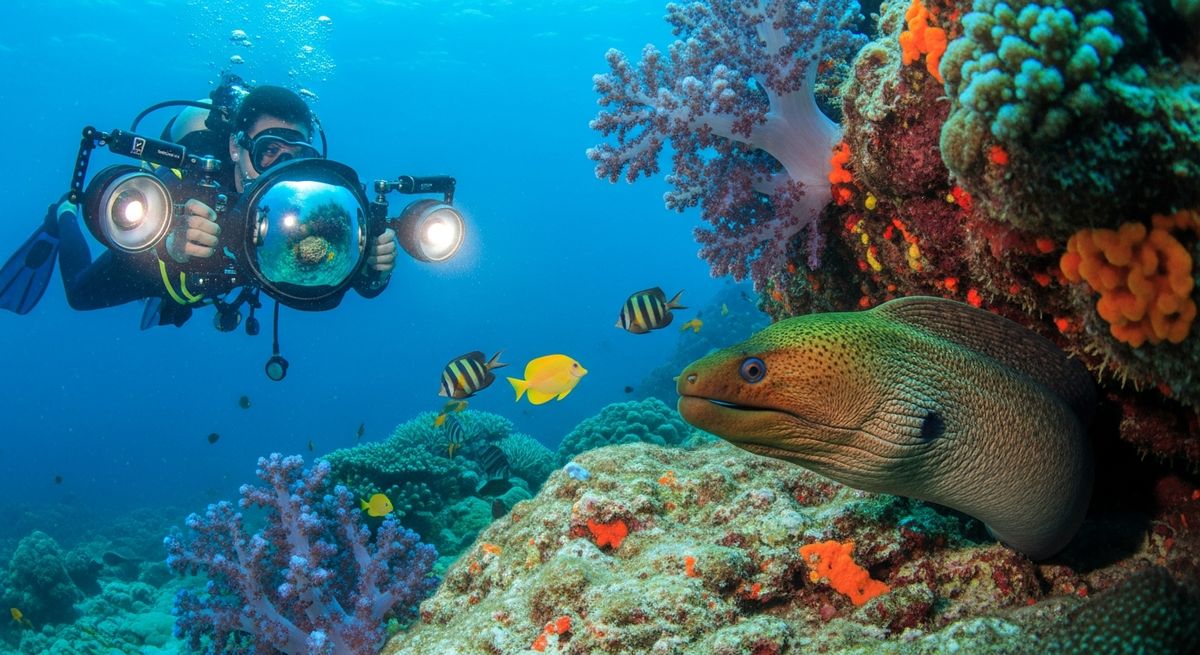
Dive Rarotonga, the site, often gets confused with the dive shop, but don't let that deter you. We're talking about the drift dive, just outside the main passage. You drop in near the reef cut, and the current, usually a gentle push, just carries you along the wall. It’s incredibly relaxing, like someone else is doing all the hard work. Look out into the blue for chances at reef sharks cruising by – we’ve had some great encounters there. The wall itself is a tapestry of hard corals, big staghorn tables, and plenty of crevices holding all sorts of smaller life. Keep an eye out for the Golden Cleaner Wrasse busy at their stations. The light penetration here is often fantastic, especially on a sunny morning, painting the reef in bright blues and greens. This drift is a fantastic way to ease into Raro’s diving, suitable for anyone comfortable with a bit of movement.
Nearest Dive Centres to Dive Rarotonga
Dive shops near Dive Rarotonga
Cook Island Divers
Adventure Cook Islands
Chantal's Concierge on the Beach
Pacific Divers
Reviews for Dive Rarotonga
Conditions
Ocean conditions, forecast and tides for Dive Rarotonga
Dive Rarotonga Ocean Conditions
Monthly averages for Dive Rarotonga, sourced from Open-Meteo marine data - nearest station: Open-Meteo marine grid (-21.2, -159.82) (1km away)
October Averages
Sea Temperature
24°C
76°F · Range: 23.3–26°C
Air Temperature
22°C
72°F
Wind Speed
9.54 m/s
18.5 knots
Atmospheric Pressure
1016.5 hPa
Based on 4 years of monitoring data · Data sources: Open-Meteo marine data
Plan & book
Ways to dive Rarotonga, from day trips to liveaboards.
Day trips & courses
via GetYourGuideGuided dives, courses and snorkel trips with instant booking.
Find dive trips in RarotongaPlaces to stay
via Booking.comHotels and dive resorts near Rarotonga.
Search stays in RarotongaDive insurance
Most travel insurance excludes or limits scuba. Check what you need before you go.
Dive insurance explainedPartner links: we may earn a commission if you book, at no extra cost to you. How we make money
Where to Stay near Dive Rarotonga
Prices from Booking.com. We may earn a commission at no extra cost to you.