Labyrinth
Why dive here
With 134+ marine species recorded in the area - including humpback whales and pufferfish - Labyrinth offers some of Rarotonga's richest cave diving. Water ranges 24-28°C, warmest February, March, April.
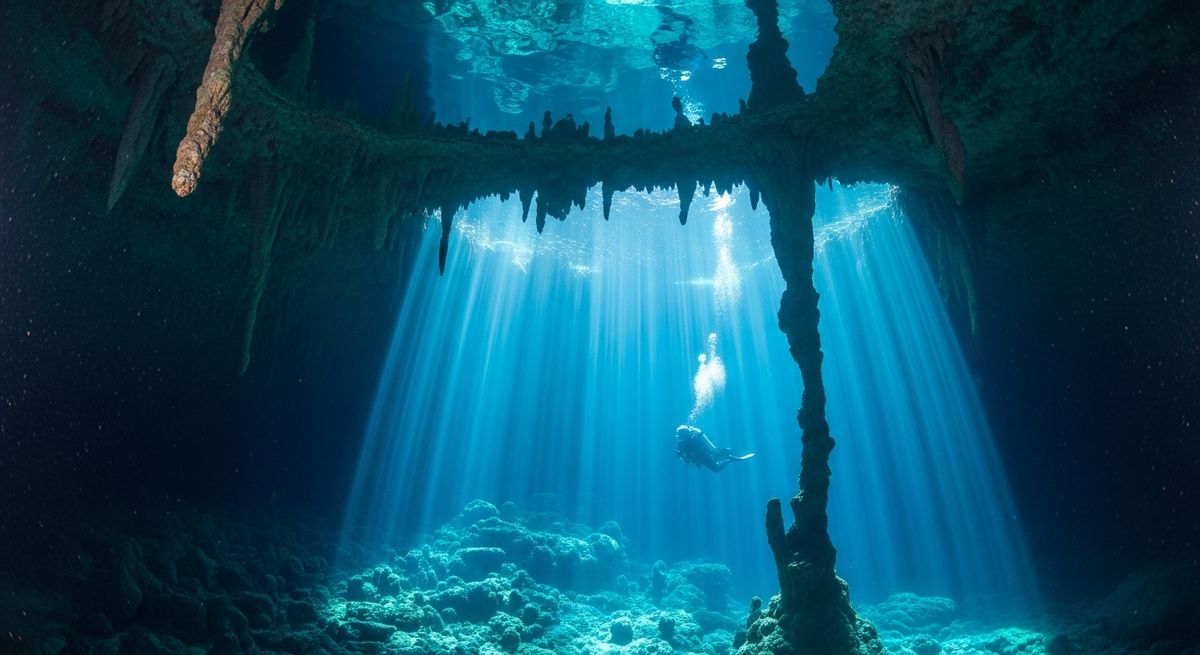
Labyrinth, or Dave’s Cave as some of us call it, really is something special when conditions line up. We’re talking about a shallow, intricate tunnel system that winds right underneath the surf zone, from the Runway all the way to Black Rock. You feel the surge gently pushing you through these openings, the light from the surface playing tricks, shafts of blue cutting through the gloom. It’s not a deep dive, maxing out around 18 metres, but the experience is about the journey through the rock. This is a site for calm days, absolutely no question. If there’s any chop, the surge inside can get a bit much, making it genuinely tricky to navigate some of the tighter spots. But when it’s flat, we love drifting through, keeping an eye out for lurking crayfish in the cracks and those lionfish that seem to appear out of nowhere. We’ve spotted eagle rays cruising just outside the entrances, and a whitetip or two has been known to make an appearance. Visibility averages 16 metres, which is plenty for appreciating the scale of the caverns. It suits divers comfortable with overhead environments and a bit of a squeeze.
Typical Labyrinth Dive Profile
Illustrative profile based on site depth and type. Actual dive profiles vary - always follow your dive computer and training.
Safety Notes
Overhead environment - never enter without proper cave/cavern training, redundant equipment, and a guideline.
Nearest Dive Centres to Labyrinth
Dive shops near Labyrinth
Cook Island Divers
Adventure Cook Islands
Pacific Divers
Chantal's Concierge on the Beach
Reviews for Labyrinth
Conditions
Ocean conditions, forecast and tides for Labyrinth
Labyrinth Ocean Conditions
Monthly averages for Labyrinth, sourced from Open-Meteo marine data - nearest station: Open-Meteo marine grid (-21.2, -159.82) (1km away)
October Averages
Sea Temperature
24°C
76°F · Range: 23.3–26°C
Air Temperature
22°C
72°F
Wind Speed
9.54 m/s
18.5 knots
Atmospheric Pressure
1016.5 hPa
Based on 4 years of monitoring data · Data sources: Open-Meteo marine data
Plan & book
Ways to dive Rarotonga, from day trips to liveaboards.
Day trips & courses
via GetYourGuideGuided dives, courses and snorkel trips with instant booking.
Find dive trips in RarotongaPlaces to stay
via Booking.comHotels and dive resorts near Rarotonga.
Search stays in RarotongaDive insurance
Most travel insurance excludes or limits scuba. Check what you need before you go.
Dive insurance explainedPartner links: we may earn a commission if you book, at no extra cost to you. How we make money
Where to Stay near Labyrinth
Prices from Booking.com. We may earn a commission at no extra cost to you.