Matavera Point
Why dive here
With 134+ marine species recorded in the area - including humpback whales and pufferfish - Matavera Point offers some of Rarotonga's richest reef diving. Water ranges 24-28°C, warmest February, March, April.
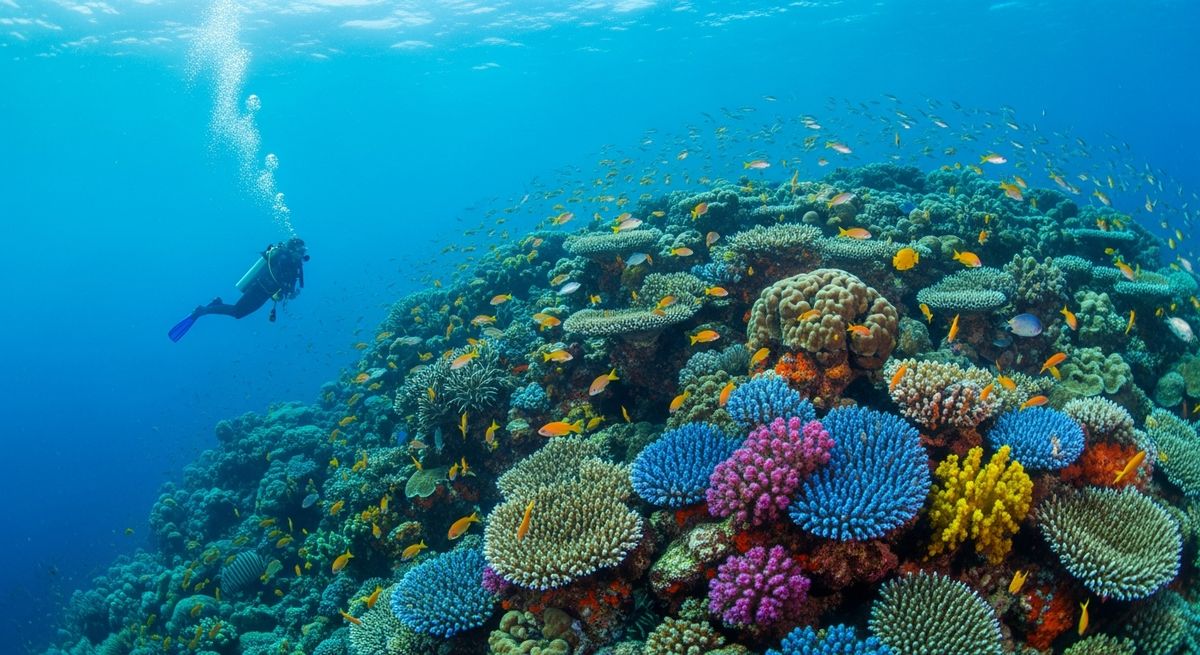
Matavera Point holds a special spot for us, a place where Rarotonga really shows off its stronger currents and bigger fish. We love how this reef plateau, sitting around 20 metres, just pushes out into the blue, creating a visible corner where the water masses collide. Drop down, and you’re on a proper vertical wall, not just a slope, that just keeps going. It’s where you’ll often feel a decent push, which means the pelagics often cruise past – we’ve seen eagle rays ghosting by more than once here. The schools of fusiliers and damsels on the wall are so thick they sometimes make the light ripple, and we often spot several types of wrasse darting in and out, like the colourful pearl-spotted and dusky wrasse. Keep an eye out for Isabel’s hermit crabs scuttling around, and the striking Achilles tang. This spot is definitely one for the more experienced diver who appreciates a bit of current and the potential for larger visitors. The visibility here is usually excellent, often pushing 35 metres, so you get a great sense of the wall’s scale.
Nearest Dive Centres to Matavera Point
Dive shops near Matavera Point
Pacific Divers
Chantal's Concierge on the Beach
Adventure Cook Islands
Cook Island Divers
Reviews for Matavera Point
Conditions
Ocean conditions, forecast and tides for Matavera Point
Matavera Point Ocean Conditions
Monthly averages for Matavera Point, sourced from Open-Meteo marine data - nearest station: Open-Meteo marine grid (-21.2, -159.82) (1km away)
October Averages
Sea Temperature
24°C
76°F · Range: 23.3–26°C
Air Temperature
22°C
72°F
Wind Speed
9.54 m/s
18.5 knots
Atmospheric Pressure
1016.5 hPa
Based on 4 years of monitoring data · Data sources: Open-Meteo marine data
Plan & book
Ways to dive Rarotonga, from day trips to liveaboards.
Day trips & courses
via GetYourGuideGuided dives, courses and snorkel trips with instant booking.
Find dive trips in RarotongaPlaces to stay
via Booking.comHotels and dive resorts near Rarotonga.
Search stays in RarotongaDive insurance
Most travel insurance excludes or limits scuba. Check what you need before you go.
Dive insurance explainedPartner links: we may earn a commission if you book, at no extra cost to you. How we make money
Where to Stay near Matavera Point
Prices from Booking.com. We may earn a commission at no extra cost to you.