Ngatangiia School
Why dive here
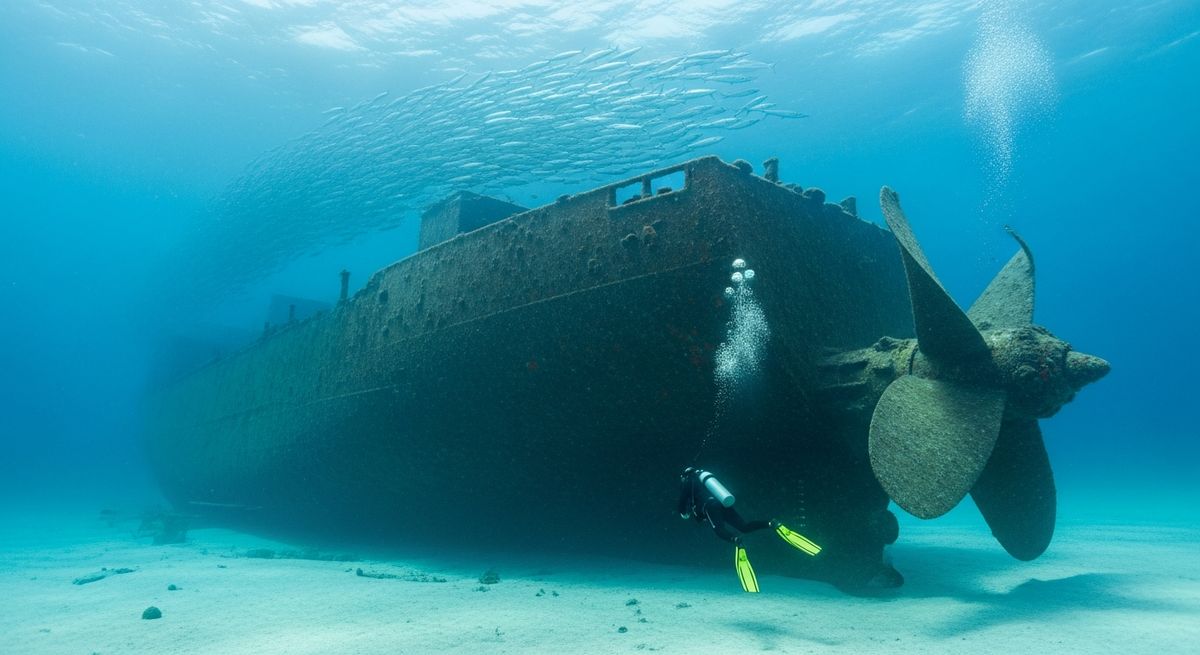
With 134+ marine species recorded in the area - including humpback whales and pufferfish - Ngatangiia School offers some of Rarotonga's richest wreck diving. Water ranges 24-28°C, warmest February, March, April.
Ngatangiia School might sound like an odd name for a dive site, but it’s one of our favourite spots on Rarotonga's south side, especially if you’re looking for a relaxed wall dive that still delivers on the fish front. We’re talking a gentle slope that drops from around 15 metres down to 20, making it very approachable for anyone comfortable with a bit of depth. The reef here, while showing some past cyclone scars, has bounced back nicely, draped in corals that sway with the gentle surge. What we really love here are the smaller details. Keep your eyes peeled for the resident Spotted Hawkfish perched on coral heads, and we always spot a few Coral Blennies darting amongst the crevices. The schools of Blackstriped Cardinalfish can be quite dense, sometimes seeming to shimmer as they move. We’ve had some cracking encounters with Achilles Tangs here too, their vibrant orange spots a flash against the blue. While the deeper swim-through is beyond our 20m limit here, the shallower sections are packed with enough to hold your attention. We find this site is best in the morning before any afternoon chop picks up, with visibility often stretching to a generous 30 metres, giving you that classic Raro wide-angle view.
Safety Notes
Wreck site - avoid penetration without wreck diving certification. Watch for sharp metal and entanglement hazards.
Nearest Dive Centres to Ngatangiia School
Dive shops near Ngatangiia School
Pacific Divers
Chantal's Concierge on the Beach
Adventure Cook Islands
Cook Island Divers
Reviews for Ngatangiia School
Conditions
Ocean conditions, forecast and tides for Ngatangiia School
Ngatangiia School Ocean Conditions
Monthly averages for Ngatangiia School, sourced from Open-Meteo marine data - nearest station: Open-Meteo marine grid (-21.2, -159.82) (1km away)
October Averages
Sea Temperature
24°C
76°F · Range: 23.3–26°C
Air Temperature
22°C
72°F
Wind Speed
9.54 m/s
18.5 knots
Atmospheric Pressure
1016.5 hPa
Based on 4 years of monitoring data · Data sources: Open-Meteo marine data
Plan & book
Ways to dive Rarotonga, from day trips to liveaboards.
Day trips & courses
via GetYourGuideGuided dives, courses and snorkel trips with instant booking.
Find dive trips in RarotongaPlaces to stay
via Booking.comHotels and dive resorts near Rarotonga.
Search stays in RarotongaDive insurance
Most travel insurance excludes or limits scuba. Check what you need before you go.
Dive insurance explainedPartner links: we may earn a commission if you book, at no extra cost to you. How we make money
Where to Stay near Ngatangiia School
Prices from Booking.com. We may earn a commission at no extra cost to you.