Panama
Why dive here
With 134+ marine species recorded in the area - including humpback whales and pufferfish - Panama offers some of Rarotonga's richest reef diving. Water ranges 24-28°C, warmest February, March, April.
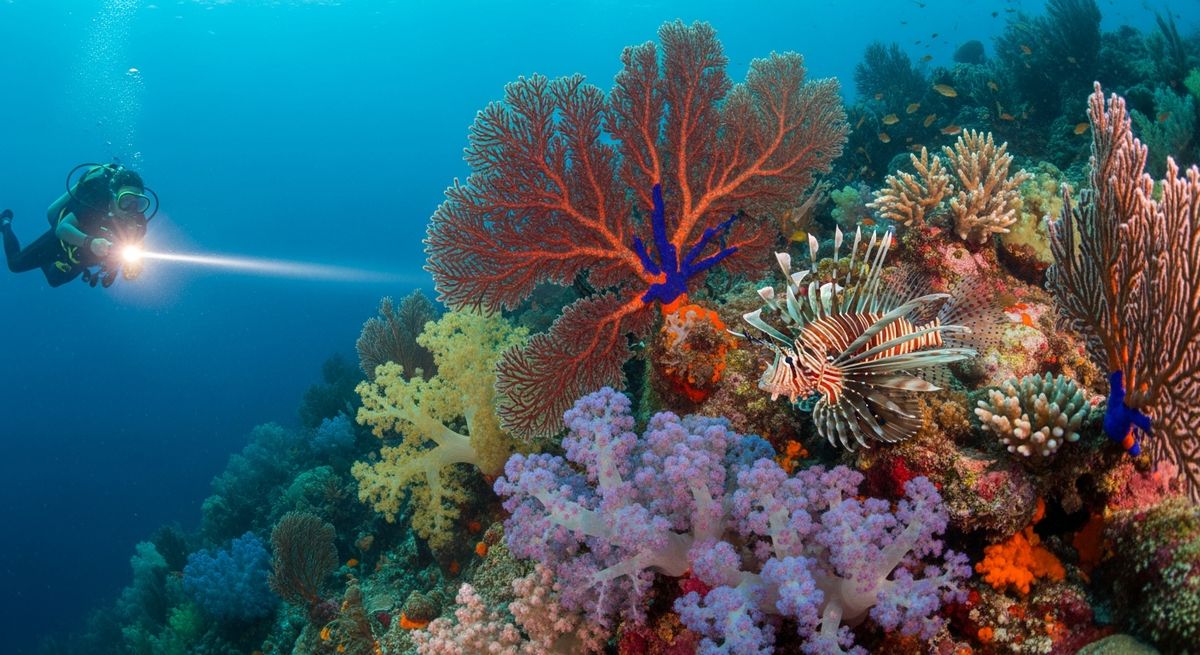
Panama, just west of Avatiu harbour, is one of our favourite little spots on Rarotonga’s fringing reef. It’s got a bit of a local legend feel, named for the graveyard on shore – don't worry, the vibe underwater is far from spooky. We love dropping onto the hard coral formations here, particularly the large Porites bommies and the bright, stinging fire corals that seem to glow. It’s an easy dive, topping out at 17 metres, making it perfect for a relaxed afternoon. Keep your eyes peeled in the sandy patches between the coral; we’ve had some fantastic encounters with Darkglove Hermit Crabs scuttling about and the occasional shy Bristletoothed Surgeonfish. There's a decent chance of seeing False-eyed Pufferfish eyeing you suspiciously, or the distinctive Blackbelly Triplefin darting in and out of the crevices. We often find ourselves drifting slowly here, just enjoying the quiet, punctuated by the occasional Parrotfish crunching on coral. If you appreciate the smaller, more intricate life on a reef, rather than chasing big pelagics, Panama is definitely worth your time.
Nearest Dive Centres to Panama
Dive shops near Panama
Cook Island Divers
Adventure Cook Islands
Pacific Divers
Chantal's Concierge on the Beach
Reviews for Panama
Conditions
Ocean conditions, forecast and tides for Panama
Panama Ocean Conditions
Monthly averages for Panama, sourced from Open-Meteo marine data - nearest station: Open-Meteo marine grid (-21.2, -159.82) (1km away)
October Averages
Sea Temperature
24°C
76°F · Range: 23.3–26°C
Air Temperature
22°C
72°F
Wind Speed
9.54 m/s
18.5 knots
Atmospheric Pressure
1016.5 hPa
Based on 4 years of monitoring data · Data sources: Open-Meteo marine data
Plan & book
Ways to dive Rarotonga, from day trips to liveaboards.
Day trips & courses
via GetYourGuideGuided dives, courses and snorkel trips with instant booking.
Find dive trips in RarotongaPlaces to stay
via Booking.comHotels and dive resorts near Rarotonga.
Search stays in RarotongaDive insurance
Most travel insurance excludes or limits scuba. Check what you need before you go.
Dive insurance explainedPartner links: we may earn a commission if you book, at no extra cost to you. How we make money
Where to Stay near Panama
Prices from Booking.com. We may earn a commission at no extra cost to you.