Pue Coral Gardens
Why dive here
With 134+ marine species recorded in the area - including humpback whales and pufferfish - Pue Coral Gardens offers some of Rarotonga's richest reef diving. Water ranges 24-28°C, warmest February, March, April.
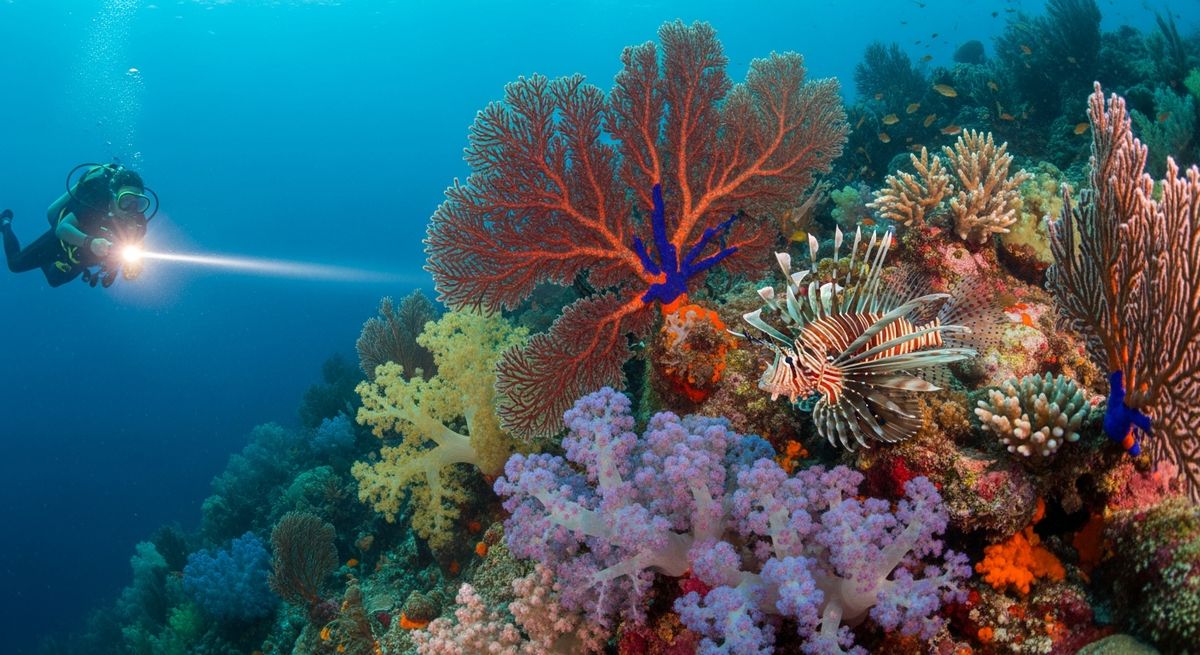
Pue Coral Gardens, just east of Ngatipa, is one of those spots that just makes us smile. It's a proper coral showcase, dominated by these enormous porites bommies, some of them ancient, towering up from the seafloor. We love drifting over the sandy patches between them, keeping an eye out for honeycomb filefish trying to blend in, or a shy slender maori wrasse darting into the coral. The depth here is perfect for a long, relaxed dive, maxing out at 20m. Visibility often stretches out to 25m, letting you appreciate the sheer scale of the hard coral formations. Keep an eye out for greenfish flitting around the staghorn coral. There are a few small swim-throughs too, nothing too challenging, but a nice little extra to explore. You’ll spot Christmas tree worms everywhere, pulling back instantly if you get too close, and we’ve seen some seriously massive pineapple sea cucumbers here. It’s a beautifully calm dive, ideal for photographers or anyone who just wants to soak in the health of a vibrant reef.
Nearest Dive Centres to Pue Coral Gardens
Dive shops near Pue Coral Gardens
Cook Island Divers
Pacific Divers
Adventure Cook Islands
Chantal's Concierge on the Beach
Reviews for Pue Coral Gardens
Conditions
Ocean conditions, forecast and tides for Pue Coral Gardens
Pue Coral Gardens Ocean Conditions
Monthly averages for Pue Coral Gardens, sourced from Open-Meteo marine data - nearest station: Open-Meteo marine grid (-21.2, -159.82) (1km away)
October Averages
Sea Temperature
24°C
76°F · Range: 23.3–26°C
Air Temperature
22°C
72°F
Wind Speed
9.54 m/s
18.5 knots
Atmospheric Pressure
1016.5 hPa
Based on 4 years of monitoring data · Data sources: Open-Meteo marine data
Plan & book
Ways to dive Rarotonga, from day trips to liveaboards.
Day trips & courses
via GetYourGuideGuided dives, courses and snorkel trips with instant booking.
Find dive trips in RarotongaPlaces to stay
via Booking.comHotels and dive resorts near Rarotonga.
Search stays in RarotongaDive insurance
Most travel insurance excludes or limits scuba. Check what you need before you go.
Dive insurance explainedPartner links: we may earn a commission if you book, at no extra cost to you. How we make money
Where to Stay near Pue Coral Gardens
Prices from Booking.com. We may earn a commission at no extra cost to you.